

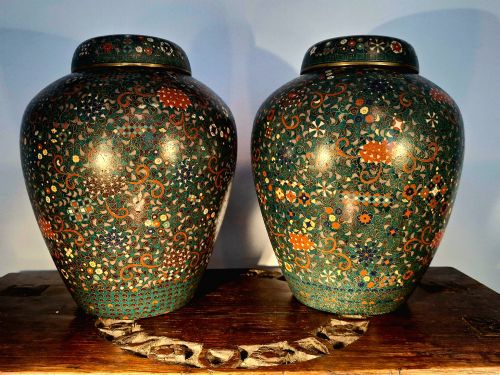


Antique Metal Lidded Jar
An antique metal lidded jar brings enduring utility and material weight to a room, offering a tactile container shaped by centuries of decorative craft.
Antique Metal Lidded Jar
When you search for an antique metal lidded jar, you find a diverse group of lidded containers spanning the eighteenth, nineteenth, and early twentieth centuries. These pieces encompass decorative ginger jars, biscuit barrels, tea caddies, incense burners, and small presentation boxes.
The objects originate from varied traditions, including Japanese Meiji and late Edo periods, Chinese workshops, and European makers. Brass, copper, bronze, and silver-plate dominate the forms, frequently paired with enamel or glass.
You are most likely to encounter Japanese cloisonne enamel ginger jars and gourd pots alongside European brass and silver-plated containers. These vessels served practical storage roles or stood as ornamental works in period interiors.
Judging quality and craftsmanship
Quality rests in the crispness of the metalwork, the precision of the fitting lids, and the fineness of surface decoration. Master artisans achieved tighter wirework in cloisonne and more expressive, deeply worked chasing on bronze and brass.
The integrity of the materials distinguishes finer examples, whether through heavy gauge cast bronze or substantial silver plating over a sturdy base. Decorative ambition, such as mixed metal inlay or Latin inscriptions, elevates the distinction of a piece.
Proportion and balance dictate the visual success of the vessel, where lids align seamlessly with the body and decorative motifs maintain harmonious execution across the entire form.
Antique Metal Lidded Jar Retail Price Guide 2026
Typical asking prices for metal lidded jar among the pieces listed under this phrase on Sellingantiques today, from the lower quarter to the upper quarter. They describe what is for sale here now, not the wider market.
Materials represented include bronze, brass, copper, enamel, silver plate, stone, and nickel silver.
THOMAS BRADBURY·W.M.F.
The Antique Metal Lidded Jar Glossary
- Cloisonne
- A decorative metalwork technique where fine wires are soldered to a metal base to form cells filled with enamel paste.
- Koro
- A traditional Japanese incense burner typically featuring a pierced lid and three or more feet.
- Ginger jar
- A wide-mouthed storage vessel with a domed lid, originally designed for spices and preserved ginger.
- Sheffield Plate
- An early form of composite metal made by fusing a thin sheet of silver to a thicker copper ingot.
- Biscuit barrel
- A covered container used in the nineteenth and early twentieth centuries to serve dry biscuits at the table.
Antique Metal Lidded Jar: Frequently Asked Questions
What were antique metal lidded jars used for?
These vessels served diverse utilitarian and decorative purposes within domestic and ceremonial settings. Many stored dry goods, tea, biscuits, or incense, while others functioned as presentation boxes or purely ornamental mantel pieces.
The inclusion of secure lids protected sensitive contents from moisture and air. Over time, their roles shifted towards display, celebrated for their intricate metalwork and cultural motifs.
How do I identify a Meiji period piece?
Meiji period items typically date from the late nineteenth to the early twentieth century and frequently showcase Japanese craftsmanship such as cloisonne enamel or mixed metal work. Look for precise wirework and depictions of flora, fauna, or traditional motifs.
These pieces often display a high degree of technical mastery in their surface decoration. Comparing the weight and the depth of the enamel cells helps distinguish them from later reproductions.
Are silver-plated jars durable?
Silver-plated containers utilise a durable base metal, such as nickel silver or copper, beneath a thin layer of applied silver. This construction provided the appearance of solid silver while maintaining structural strength for everyday use.
Careful cleaning preserves the plating over decades of handling. The thickness of the original plate determines how well the surface resists wear across raised details.
How should I clean my metal jar?
Maintenance depends entirely on the specific material of the vessel, as bronze, brass, enamel, and silver-plate require distinct approaches. Gentle dusting with a soft cloth removes everyday debris without disturbing patinated surfaces.
Avoid harsh chemical dips, particularly on cloisonne enamel or plated surfaces where aggressive agents damage the finish. Professional guidance ensures historic patinas remain intact.