





Antique Mercury Weather Glass
An antique mercury weather glass reads the pressure of the air through a column of liquid metal, bringing domestic science into the parlour.
Antique Mercury Weather Glass
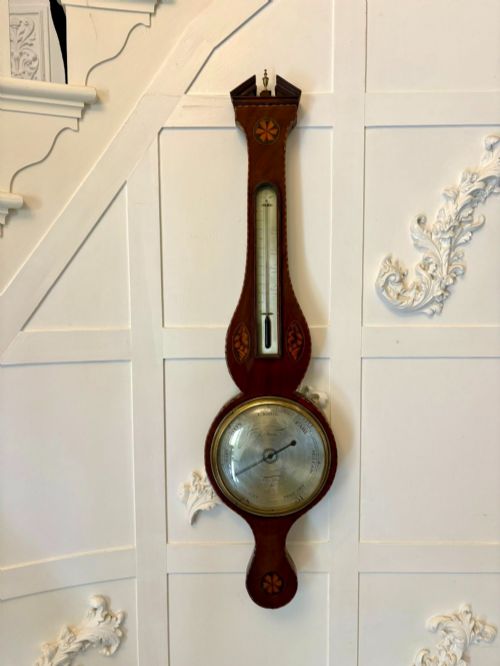
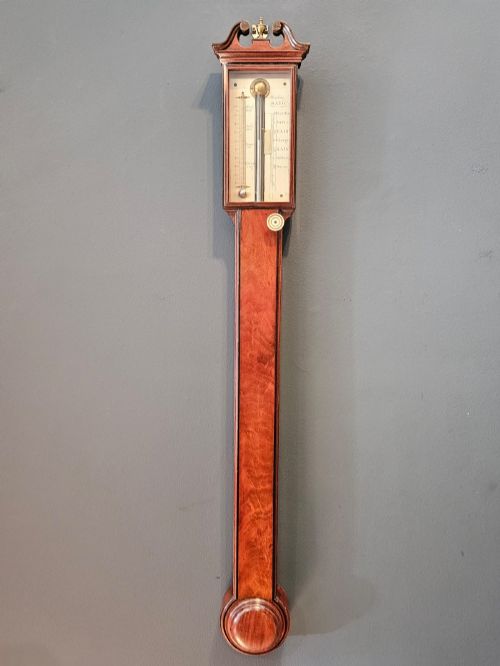
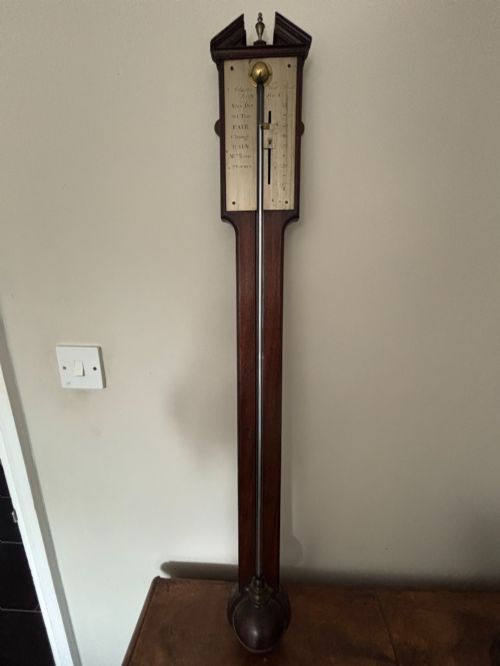
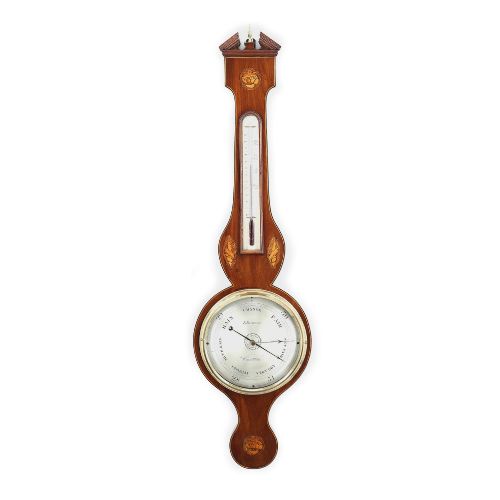
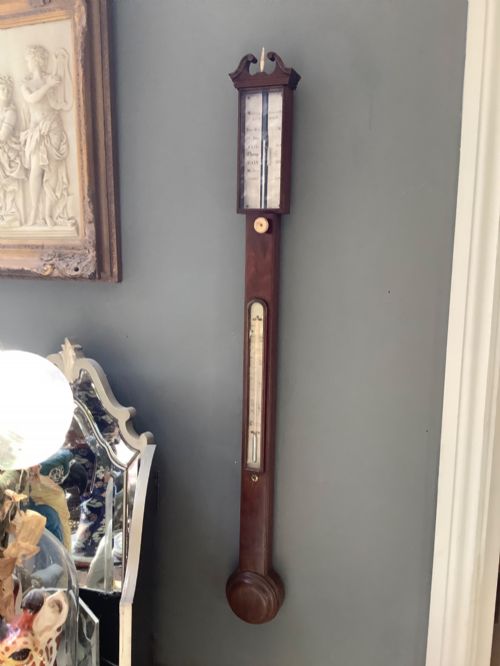
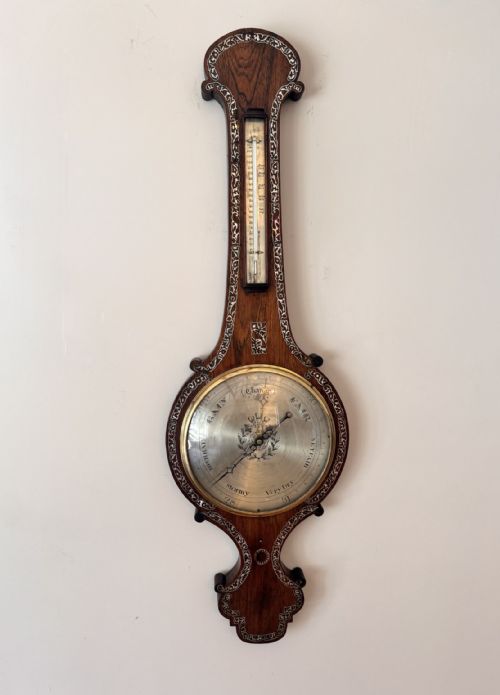
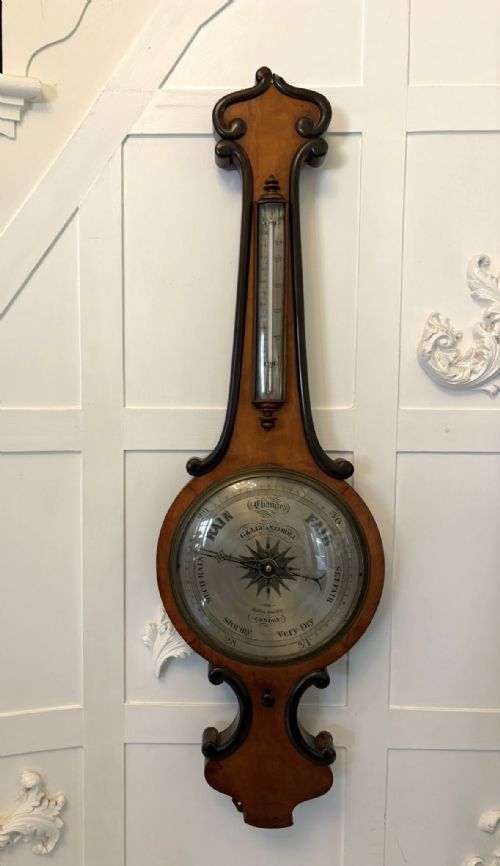
An antique mercury weather glass takes the form of a stick barometer or a wheel barometer, housed in timber frames from the Georgian, Regency, and Victorian periods. These instruments measure atmospheric pressure to predict the weather, appearing as tall, slender wall pillars or wider, dial-faced banjo shapes.
The stick barometer dominates the earlier Georgian examples, constructed with simple mahogany or walnut trunks that expose the glass tube. Wheel barometers and banjo barometers emerge more frequently by the nineteenth century, often decorated with shell inlay, mother-of-pearl, and paired thermometer scales.
Materials and construction
Cabinetmakers built the cases using dense hardwoods like mahogany, rosewood, oak, and walnut, frequently shaping them with veneers and parquetry. Dial faces and cistern covers employ brass, silvered metal, and carved bone.
The fragile working core relies on hand-blown glass filled with liquid mercury, sealed to respond precisely to atmospheric shifts.
Listings feature mahogany, rosewood, oak, and walnut cases housing mercury columns across the eighteenth and nineteenth centuries.
Judging the work
Quality rests in the precision of the cabinetwork and the legibility of the maker's signature on the silvered dial. Finer examples feature crisp shell marquetry, mother-of-pearl inlay, and well-proportioned architectural pediments rather than plain, utilitarian boxes.
The integrity of the original glass tube and the preservation of the engraved brass scale plates separate superior instruments from standard domestic pieces.
George Adams London·Negretti & Zambra·Bate of London·Ronchetti Of Holborn
The Antique Mercury Weather Glass Glossary
- Stick barometer
- A tall, narrow wall instrument where the mercury column is read directly against a vertical scale. It offers a direct and sensitive reading of atmospheric pressure.
- Wheel barometer
- A dial instrument that translates the movement of mercury into the rotation of a pointer across a circular face. Often called a banjo barometer due to its distinctive outline.
- Silvered metal
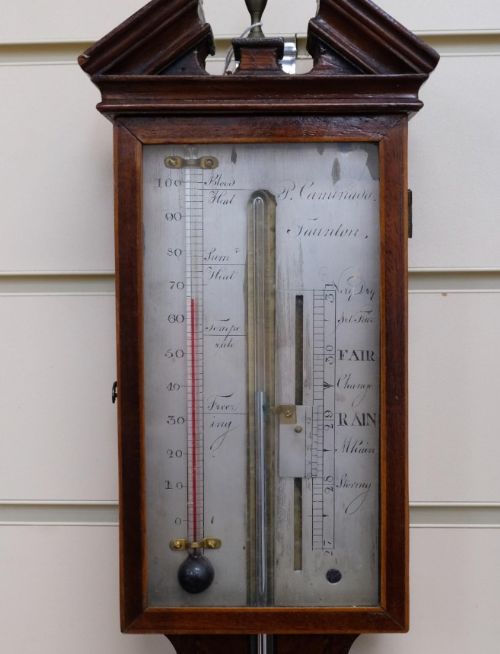
- Brass treated to produce a frosted silver finish, used for the engraved dials and vernier scales. This surface allows the maker's graduations to remain sharp and readable.
- Cistern
- The enclosed reservoir at the base of the glass tube that holds the reserve of mercury. Its design protects the liquid metal while exposing it adequately to atmospheric changes.
Antique Mercury Weather Glass: Frequently Asked Questions
How do I read an antique mercury weather glass?
Observe the position of the mercury column or the dial pointer in relation to the engraved weather words. Rising levels typically indicate settling, fair weather, whilst falling levels point towards rain and wind.
Compare the primary indicator against the secondary dial, often a thermometer, to gauge temperature changes alongside pressure shifts.
Where should I hang a wall barometer?
Mount the instrument on an interior wall away from direct sunlight, central heating radiators, and heavy vibrations. Stable ambient temperatures ensure the mercury and the timber case do not experience undue stress.
Ensure the wall fixing supports the weight securely, particularly for larger rosewood and mahogany banjo models.
How do I identify a Georgian stick barometer?
Look for a narrow, understated mahogany or walnut trunk without the elaborate dial faces seen in later Victorian designs. The emphasis rests on clean architectural lines and simple brass scales.
Check for maker signatures engraved directly onto the brass plate near the top of the open glass column.
Can these barometers still be calibrated?
Most antique mercury instruments retain their mechanical sensitivity if the glass tube remains unbroken and air-free. Minor adjustments can sometimes be made via the screw linked to the internal cistern.
Consult a specialist conservator if the mercury column separates or requires resetting before hanging.