
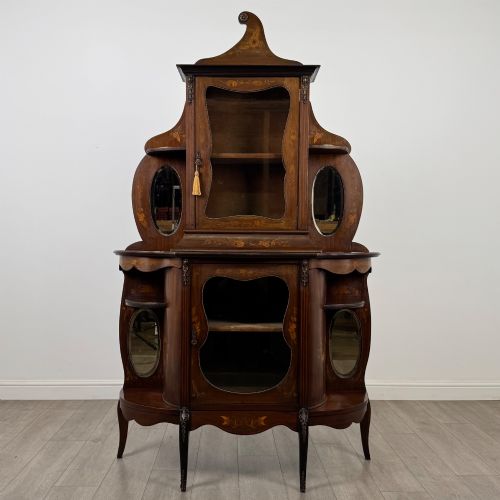
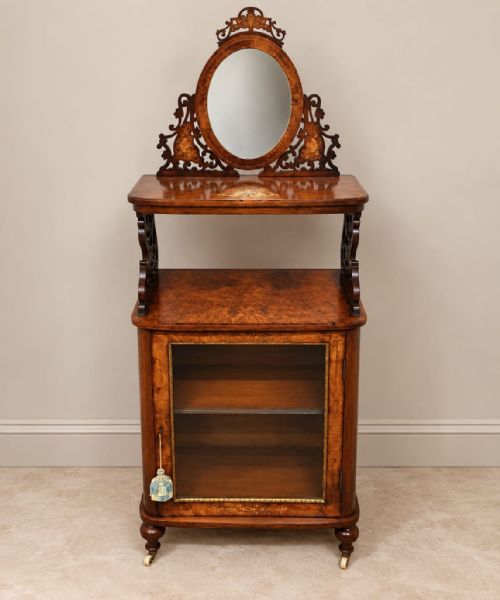
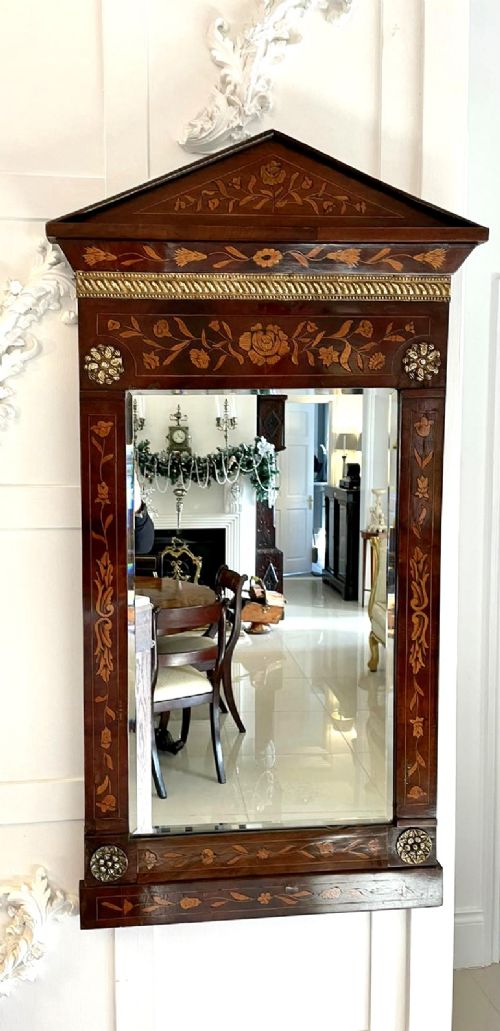
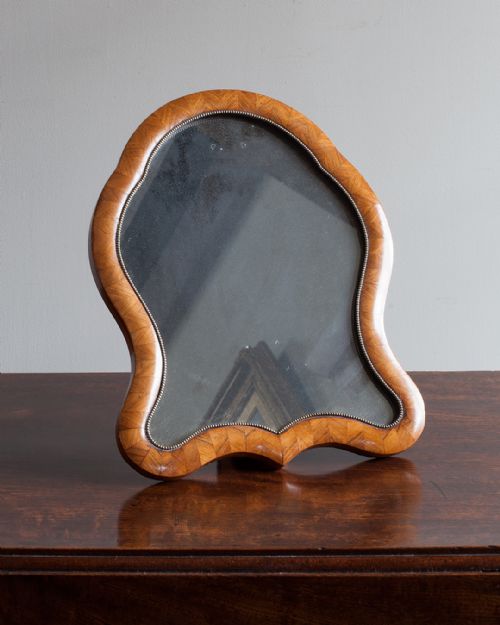
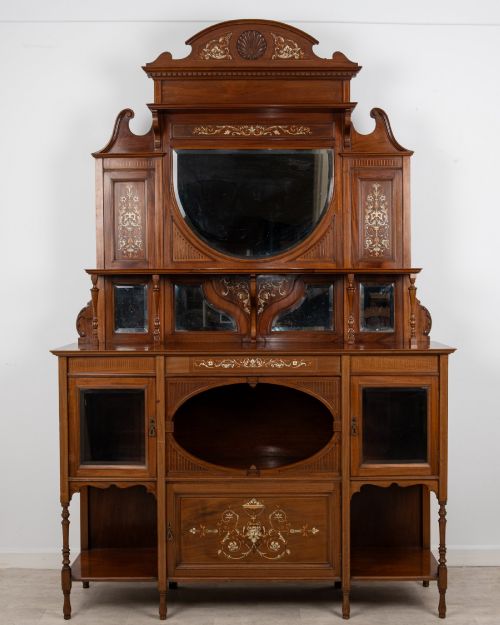
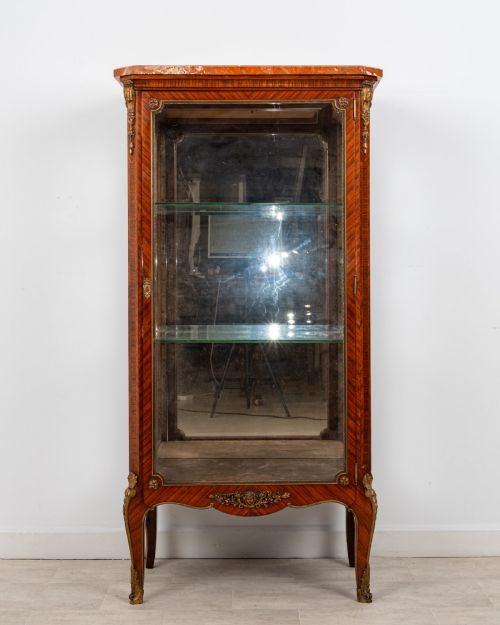
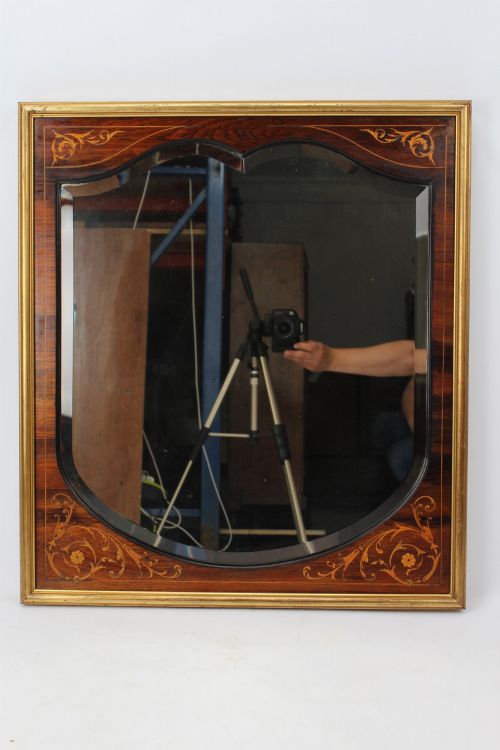

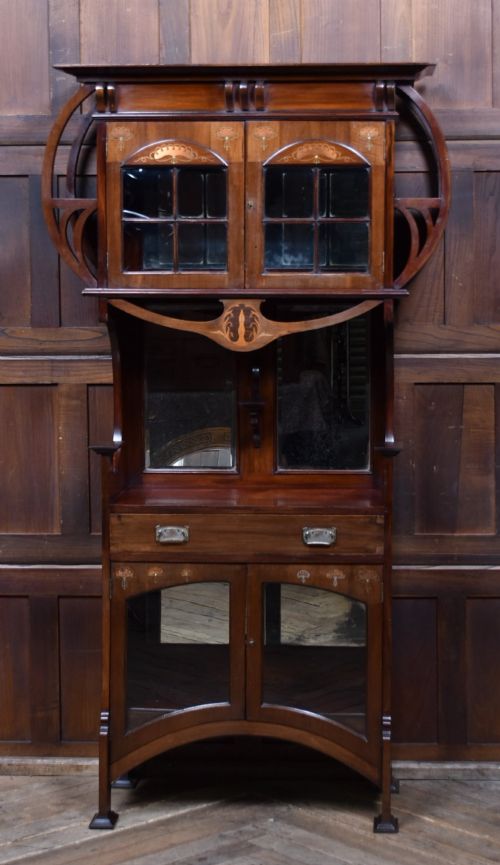


Antique Marquetry Glass Mirror
An antique marquetry glass mirror brings together precise floral or geometric wood inlay and clear glass, offering a focal point for any room.
Antique Marquetry Glass Mirror
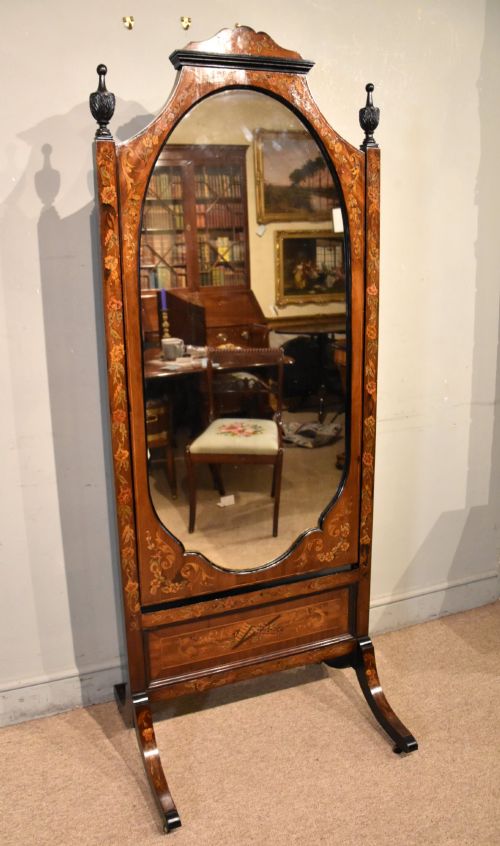
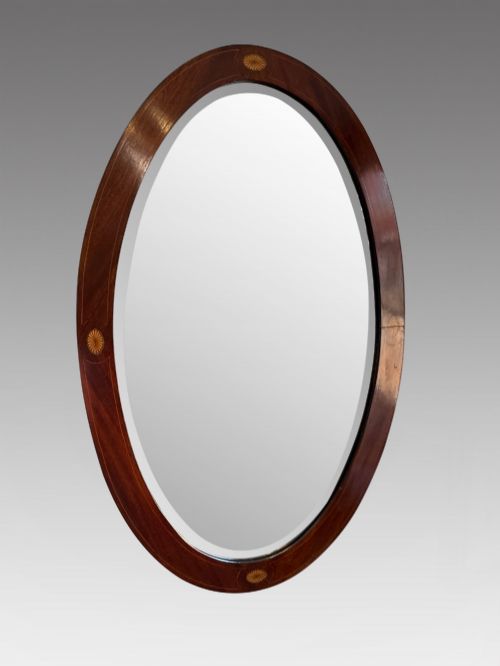
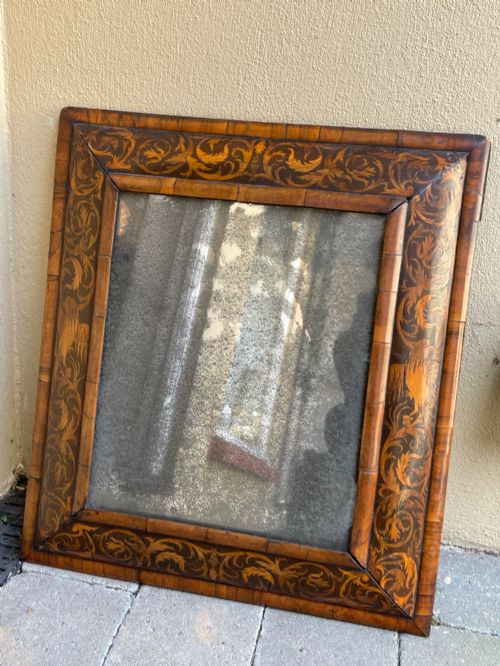
An antique marquetry glass mirror is a wall hanging, dressing table glass or overmantel piece decorated with patterned wood veneers. When you search for this phrase, you encounter pieces spanning the seventeenth century through to the Edwardian era.
The versions most commonly met on this page include Victorian wall mirrors, Edwardian rosewood overmantels, and dressing table swing glasses framed in mahogany, satinwood or walnut. Dutch marquetry and Sheraton Revival styles frequently appear among the selections.
Many items combine reflective glass with detailed floral or foliage inlay, sometimes accompanied by ormolu mounts or gilt frames. These objects range from compact toilet mirrors to substantial overmantels designed for nineteenth-century reception rooms.
Materials and construction methods
Maker workshops built these frames using solid timbers such as mahogany, walnut and oak, applying fine veneers of satinwood, harewood or kingwood to the visible surfaces. Marquetry cutters then sliced contrasting woods to form pictorial or geometric patterns set directly into the ground timber.
Glass plates were silvered using traditional methods, often held within rebated frames secured by wooden slips or brass fixings. Ormolu mounts and brass hardware occasionally accent the corners and crests of Victorian and Edwardian examples.
Some eighteenth-century dressing mirrors hide tiny secret drawers behind their swing plates for storing rings and powder.
Judging the quality of the work
Quality rests principally on the crispness of the marquetry cutting and the choice of timbers used for contrast. Superior examples display tight, seamless joins in the veneer without lifting or shrinkage cracks across the floral motifs.
The depth and clarity of the mirror plate itself contribute heavily to the standard of the piece, alongside the weight and solidity of the supporting frame. Finer items show careful attention to secondary timbers and hand-finished mounts that remain secure within the woodwork.
François Linke·G. Durand
The Antique Marquetry Glass Mirror Glossary
- Marquetry
- Decorative veneer work arranged in intricate patterns or pictorial scenes using various coloured woods. It differs from inlay by covering the entire surface rather than resting in hollowed-out recesses.
- Overmantel mirror
- A large horizontal looking glass designed to hang specifically above a fireplace mantelpiece. These often incorporate gilt frames and marquetry panels.
- Cheval mirror
- A full-length dressing glass suspended on a vertical swiveling frame between four pillars or legs. They allow the viewer to see their entire outfit.
- Satinwood
- A lustrous, hard timber native to Ceylon and India with a yellowish sheen. It served as a pale contrasting veneer in Sheraton Revival and Edwardian pieces.
- Ormolu
- Gilt bronze mounts cast and chased for decorative effect on nineteenth-century furniture and mirror frames. The technique involves applying a mercury and gold amalgam to bronze.
Antique Marquetry Glass Mirror: Frequently Asked Questions
How do I hang a heavy overmantel mirror?
Heavy overmantel mirrors require secure fixings anchored directly into the wall studs or masonry rather than standard plaster plugs.
Professional mirror plates or substantial concealed brackets distribute the weight safely along the lower and upper frame corners.
Are these mirror plates original?
Many Victorian and Edwardian pieces retain their original silvered glass, which often exhibits minor foxing, spotting or light oxidisation around the edges.
Original plates display a slight waviness and depth that modern glass seldom replicates, adding authenticity to the piece.
How should I clean the wooden frame?
Dust the marquetry regularly with a soft, dry lint-free cloth to prevent particulate accumulation in the veneer crevices.
Apply a microcrystalline wax sparingly once or twice a year to nourish the timber without clouding the polished finish.
What is the difference between a toilet mirror and a cheval mirror?
A toilet mirror sits atop a dressing table or chest of drawers, featuring a small swivelling glass supported by side posts.
A cheval mirror stands independently on the floor as a large, full-length adjustable looking glass.