


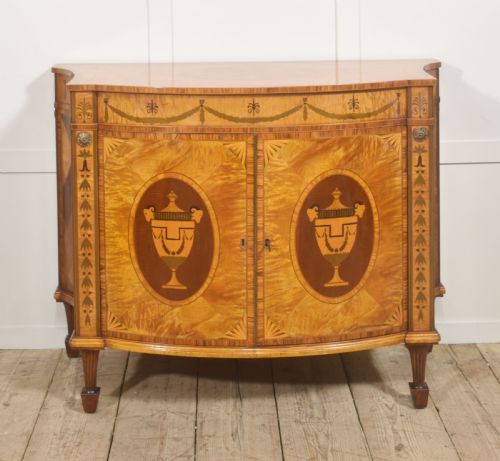


Antique Marquetry Demi Lune
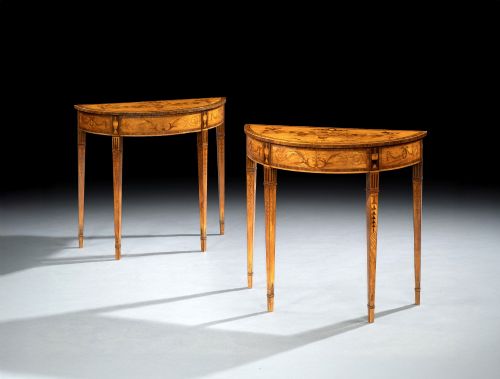
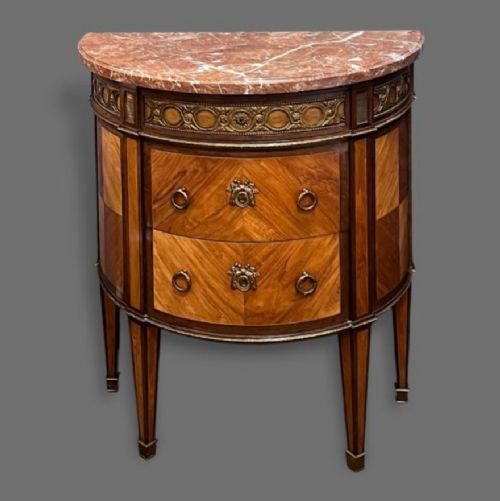
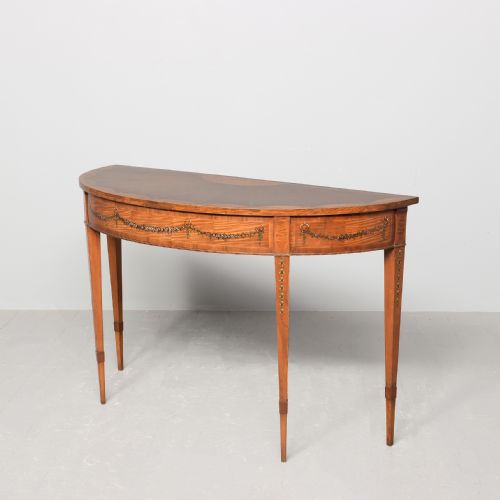
These antique marquetry demi lune pieces combine sweeping semicircular forms with intricate wood inlay, offering both functional surface area and decorative presence.
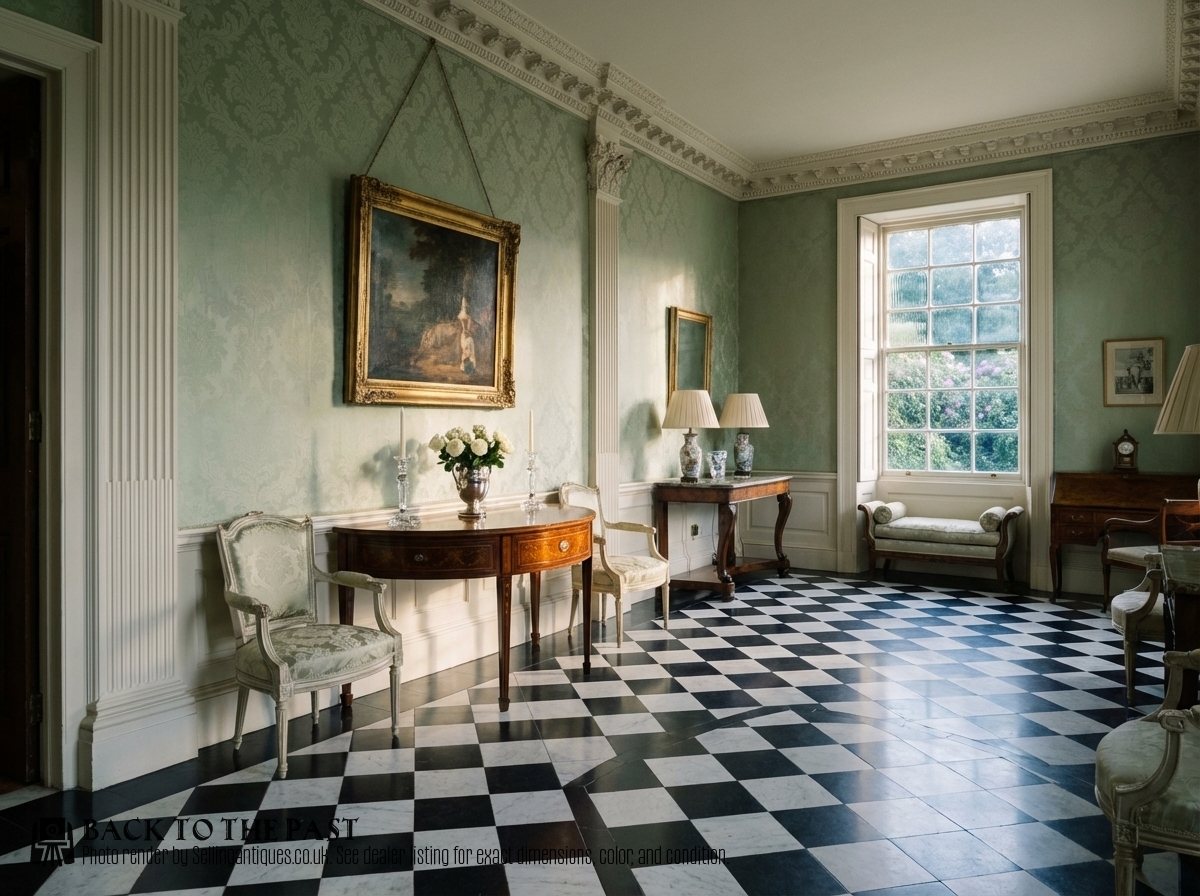
Antique Marquetry Demi Lune
An antique marquetry demi lune takes the form of a half-circle or crescent, designed to sit flush against a wall in a hallway, drawing room or parlour. The inventory spans several distinct centuries and stylistic revivals, capturing the shift from eighteenth-century George III elegance through nineteenth-century French tastes to early twentieth-century interpretations.
The objects themselves serve multiple purposes within domestic spaces, appearing most frequently as console tables, card tables, games tables, side cabinets, commodes and display cabinets. Buyers encounter both single statement pieces and matched pairs, built from timbers like mahogany, satinwood, kingwood and walnut.
Origins stretch across English workshops and continental makers, particularly French and Italian studios working in Neoclassical, Louis XV Revival, Louis XVI Style and Sheraton idioms. The half-moon footprint makes these items practical for narrow spaces while providing a broad top surface for display or card play.
Materials and construction
Cabinetmakers constructed the carcase using structural timbers such as mahogany, oak or pine, then applied fine veneers and contrasting timbers to the curved surfaces. Marquetry compositions utilised delicate slices of satinwood, boxwood, kingwood, rosewood and burr woods, hand-cut and fitted together to form elaborate floral, urn or geometric pictorial motifs.
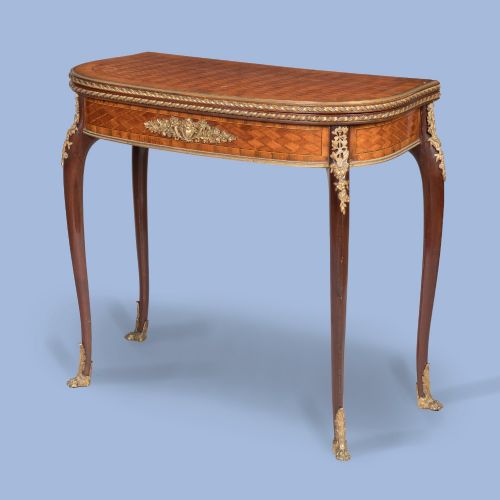
Surfaces often incorporated decorative metalwork, mounting items with cast or chased ormolu details around borders, aprons and legs. Marble tops appeared frequently on continental commodes and console tables, providing a heavy, cool contrasting counter-surface to the warm tones of the inlaid wood beneath.
Several demi lune tables hide folding mechanisms designed specifically to accommodate nineteenth-century card games.
Judging quality
Quality rests upon the precision of the marquetry cutter and the harmony of the timber selection. Finer examples display tight, seamless joints where contrasting veneers meet, with minimal reliance on painted shading to make up for clumsy cutting.
Structural integrity of the curved carcase and the crispness of the bronze or ormolu mounts dictate the upper tier of pieces. The depth of colour in the underlying woods, such as rich satinwood or figured mahogany, separates standard production items from exhibition grade work.
François Linke·Joseph-Emmanuel Zwiener·Pietro Ferrario·Edwards & Roberts
The Antique Marquetry Demi Lune Glossary
- Demi-lune
- French for half-moon, describing the characteristic semicircular shape of these tables and cabinets. This profile allows the furniture to stand flat against a wall.
- Marquetry
- The art of applying decorative pieces of veneer to a structural structure to form pictorial or geometric designs. Craftsmen select varied timbers to create natural shading and colour contrast.
- Ormolu
- Gilded bronze mounts applied to furniture edges, legs and aprons for decorative effect. This technique was particularly prevalent in French furniture of the eighteenth and nineteenth centuries.
- Parquetry
- Geometric wood inlay forming repeating patterns such as cubes or chequers. Unlike marquetry, it relies on strict geometric repeats rather than pictorial scenes.
- Console table
- A wall-mounted or freestanding table designed to stand against a vertical surface. Many demi-lune forms take this shape to serve as decorative ledges in entrance halls.
Antique Marquetry Demi Lune: Frequently Asked Questions
Where should I place a demi lune table?
These semicircular pieces sit flat against a wall, making them suited for narrow hallways, landings or behind sofas where a full round table would obstruct movement.
They also function effectively beneath a mirror or painting in a dining room or drawing room, providing a surface for lamps or decorative objects without jutting far into the room.
How do I distinguish George III from later revival styles?
George III pieces originate from the late eighteenth century and typically employ solid mahogany or satinwood with restrained Neoclassical inlay motifs like husks, urns and paterae.
Later nineteenth-century revival pieces often display heavier proportions, more exuberant ormolu mounts, or different secondary woods beneath the surface veneers.
What is the difference between marquetry and parquetry?
Marquetry involves cutting and assembling varied veneers to create pictorial scenes, floral sprays or urns using natural grain variations for shading.
Parquetry uses geometric shapes like diamonds, squares or cubes arranged in strict repeating patterns across the surface of the cabinet or table top.
Can card tables still be opened and used?
Many card and games tables feature folding or rotating tops supported by swing legs designed for playing surfaces.
While the hinges and folding mechanisms remain functional on well-preserved examples, collectors generally treat them with care to protect the aged timber and delicate hinge fittings.