


Antique Marquetry Coffer
An antique marquetry coffer brings centuries of patterned woodcraft into a room, offering both robust storage and intricate decorative detail.
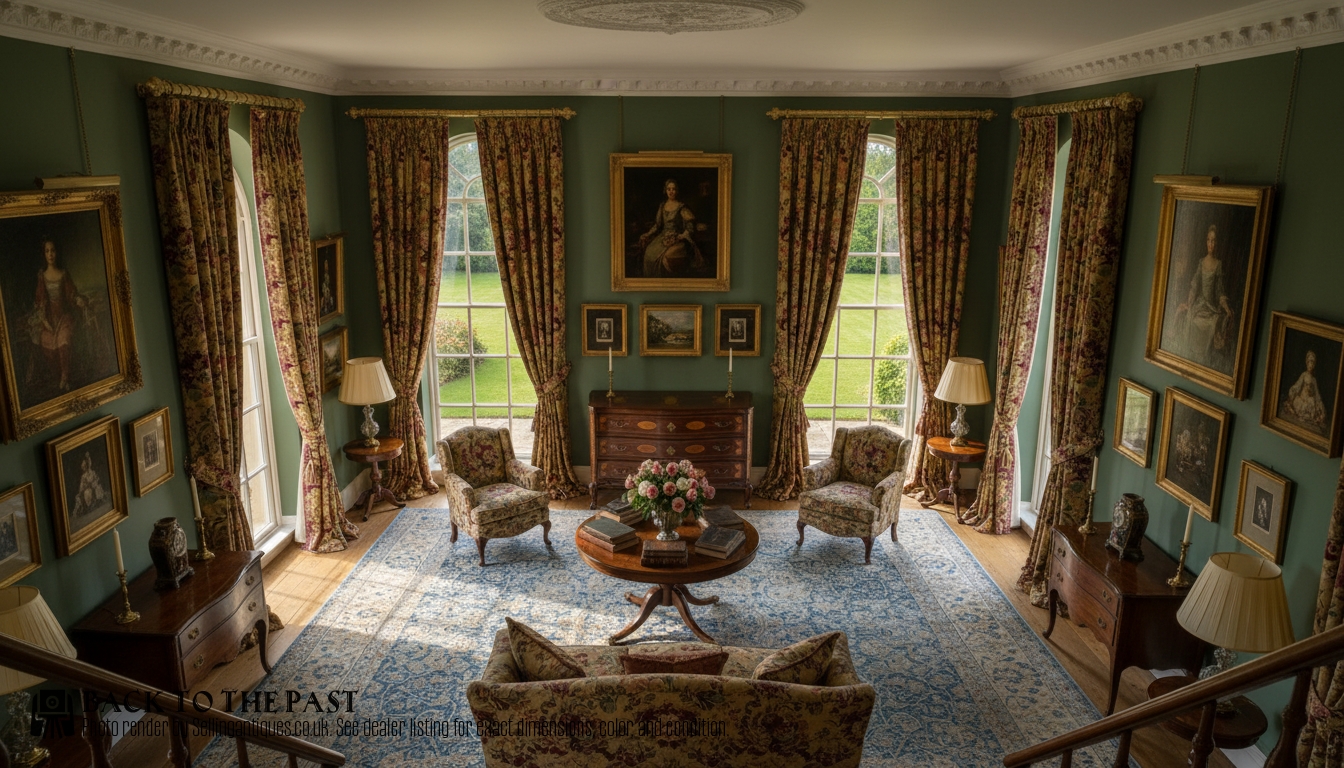
Antique Marquetry Coffer
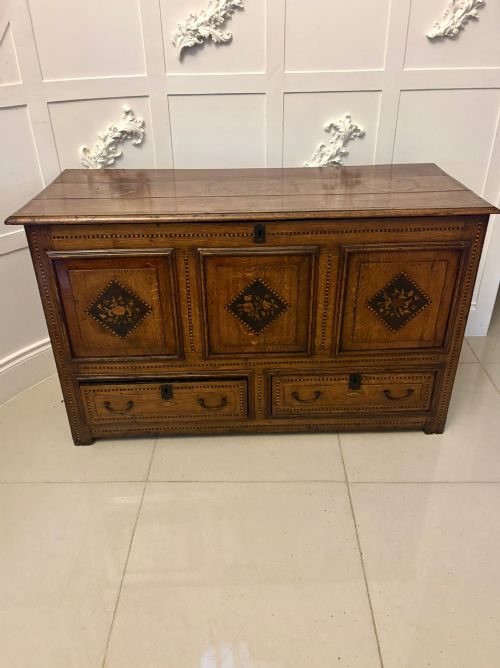
An antique marquetry coffer is a sturdy storage chest decorated with fitted wood veneers, often appearing as oak or walnut structures accented by intricate patterned inlays. You will frequently encounter seventeenth century English and continental examples, alongside later nineteenth century revivals featuring diverse regional styles.
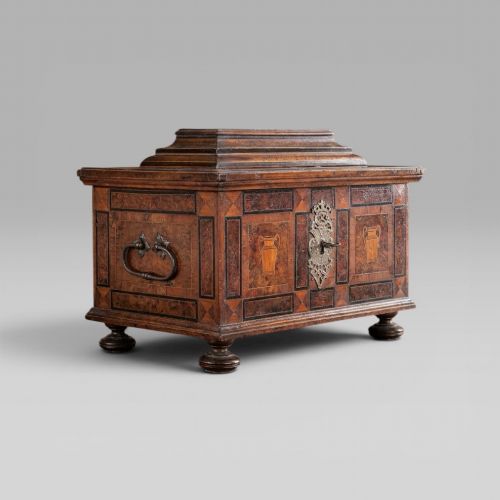
Beyond the standard coffer or mule chest, the category embraces related forms such as caskets, trunks, and tabletop cabinets. These pieces range from substantial hall storage to miniature boxes, reflecting varied domestic and travelling uses across different centuries.
How they were made
Cabinet makers constructed the primary carcasses from durable timbers like oak and walnut, providing a solid structural foundation for external decoration. They then applied decorative veneers in fruitwood, mahogany, and burr walnut to create contrasting surface patterns.
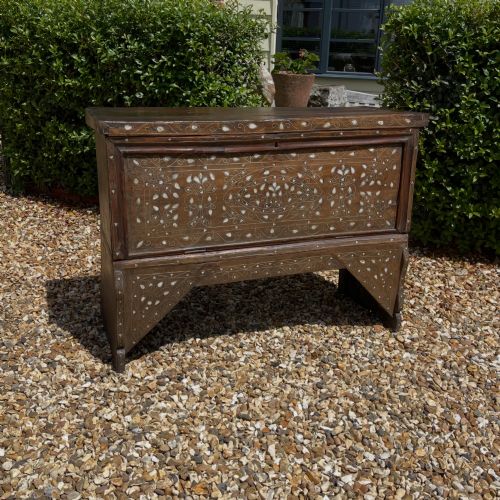
Detailed embellishment often involved complex inlay techniques using bone, brass, and iron hardware. These added contrasting textures and reinforced the corners and locks of the storage pieces.
Travel cabinets from the early nineteenth century ensured that even rough journeys required intricately inlaid miniature drawers.
What varies in quality
The sophistication of the surface decoration determines much of the distinction between pieces, particularly the precision of the fitted wood veneers and the variety of contrasting materials utilised. Executions featuring detailed bone or metal inlays alongside complex floral or geometric patterns denote higher levels of craftsmanship.
The choice of primary timber and the integrity of the original construction also separate standard utility items from exhibition grade works. Pieces retaining their early ironwork, fitted interiors, and stable joinery represent the finer end of the surviving range.
Whytock & Reid
The Antique Marquetry Coffer Glossary
- Marquetry
- The art of applying decorative pieces of veneer to a structure to form intricate pictorial or geometric designs. This technique defines the visual character of these storage pieces.
- Mule chest
- A traditional storage chest featuring one or two drawers beneath the main compartment. This form bridges the design gap between a standard coffer and a chest of drawers.
- Coffer
- A large, heavy wooden chest used historically for storing valuables, documents, or garments. These sturdy items typically feature hinged lids and robust framing.
- Casket
- A smaller decorative box or chest designed for precious items or documents. They frequently exhibit elaborate surface decoration and refined joinery.
- Arcaded
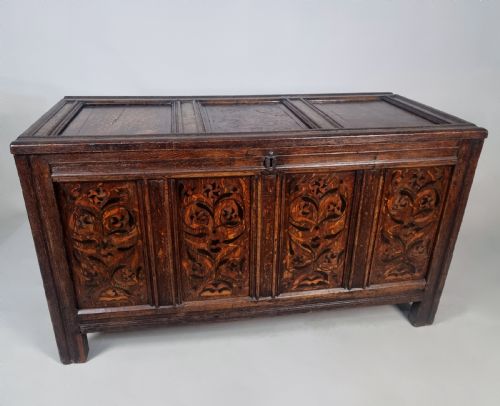
- Decorated with a series of arches supported by piers or columns, often carved into the wooden panels of early furniture. This architectural detail appears on seventeenth century examples.
Antique Marquetry Coffer: Frequently Asked Questions
What were antique coffers used for?
These large wooden chests served as primary storage for household valuables, textiles, and important documents before fitted wardrobes became common.
Their robust construction also allowed wealthy households to transport belongings securely during travel.
How do I date an antique coffer?
Dating relies on examining the primary timber species, construction methods, and the style of any carved or inlaid decoration. Seventeenth century pieces often display simpler oak framing with arcaded panels, while later centuries introduced complex veneers and varied hardware.
Changes in hinge types, lock mechanisms, and the presence of internal drawers also help narrow down the period of manufacture.
Where should I place a coffer at home?
A coffer functions well at the foot of a bed for storing blankets or acts as a striking focal point in a hallway. Their flat lids also make them suitable for use as occasional display surfaces.
Positioning them away from direct heat sources protects the delicate wood veneers and prevents the timber from splitting.
How do I care for marquetry surfaces?
Maintain the wood by applying a quality beeswax periodically to nourish the dry timber and protect the intricate veneer work. Avoid excessive moisture and harsh chemical cleaners which can lift the delicate inlays.
Gentle dusting with a soft cloth preserves the historical finish without abrading the surface details.