


Vintage Marquetry Dresser
A vintage marquetry dresser brings layered wood veneers and floral patterns into a room, offering both surface display and deep storage.
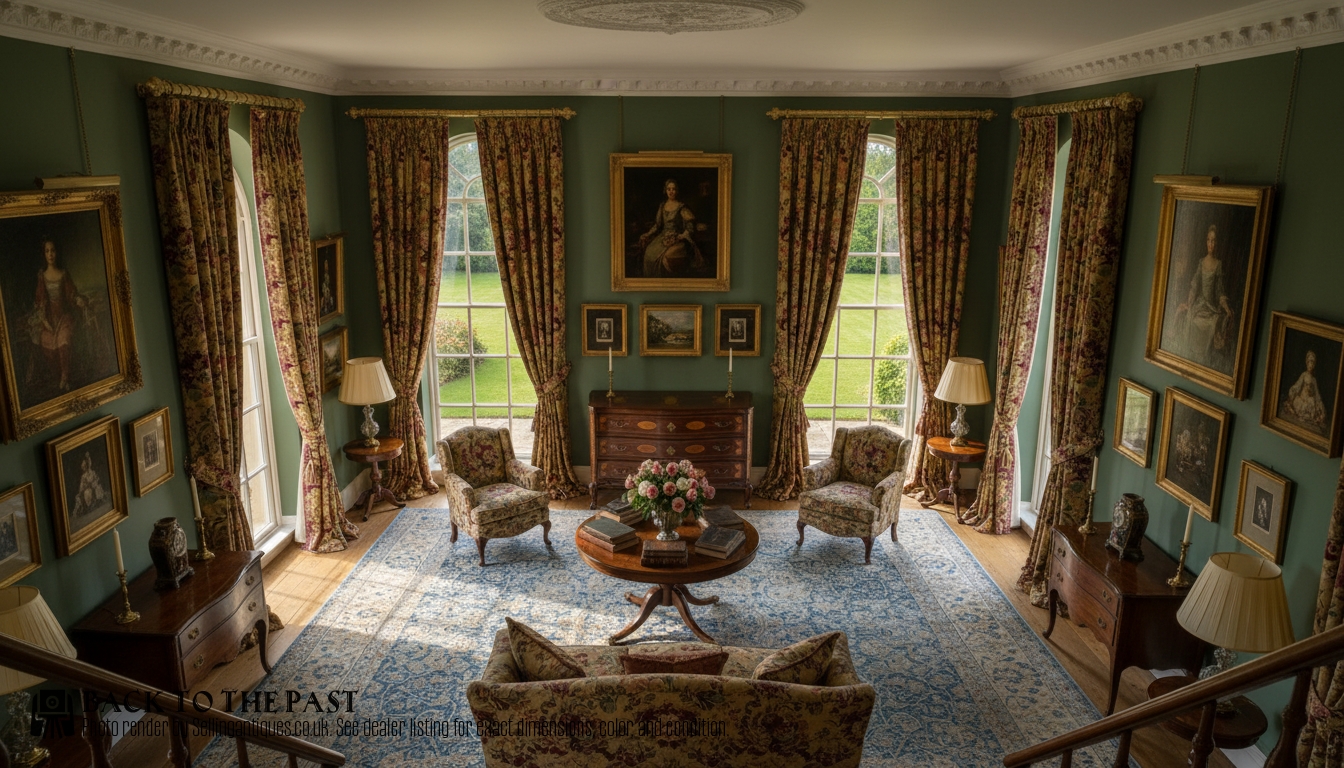
Vintage Marquetry Dresser
When you search for a vintage marquetry dresser, you encounter commodes, chests of drawers, and dressing tables spanning from the seventeenth century through to the early twentieth century. These pieces combine utilitarian storage with intricate pictorial wood inlay, appearing most frequently in eighteenth and nineteenth century French and Dutch designs.
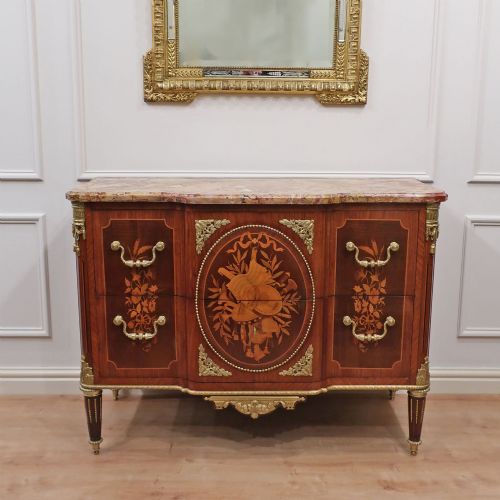
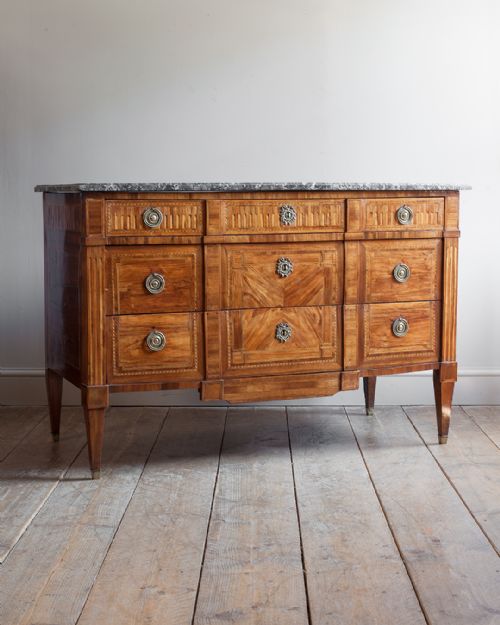
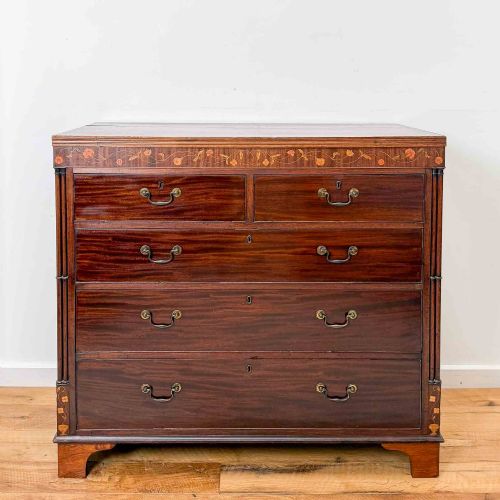
The forms range from serpentine-fronted marble top commodes to William and Mary chests on stand and oak dressers. French styles such as Louis XV and Louis XVI dominate, alongside Georgian and Victorian English interpretations utilising figured timbers.
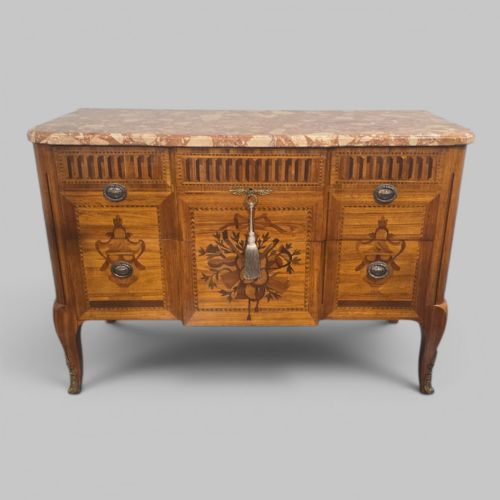
Makers and craftsmen applied botanical motifs, floral patterns, and geometric banding across walnut, mahogany, satinwood, and kingwood surfaces. Each piece balances practical drawer space with decorative veneered panels that define the character of the furniture.
How they were made
Cabinetmakers constructed these pieces using dense foundational timbers such as oak, mahogany, and walnut, applying delicate veneers of rosewood, satinwood, kingwood, and amboyna to the exterior surfaces. Artisans cut thin slices of contrasting woods to create pictorial marquetry and floral inlay details.
Mounts and hardware cast in brass and ormolu often accent the corners, handles, and apron borders of French commodes and chests. Many nineteenth-century and earlier pieces incorporate shaped marble tops fitted directly above the primary drawer tiers.
The furniture spans distinct regional traditions, linking English Georgian oak with French Louis XVI marble-topped commodes.
What varies in quality
The sophistication of the marquetry cutting and the choice of contrasting timbers distinguish simpler examples from finer works. Precision in the geometric or floral veneer layout dictates the visual depth of the facade.
The integration of secondary materials, such as heavy carved marble slabs and cast ormolu mounts, separates standard drawer units from high-status French and Dutch commodes. Construction methods, including secret drawers and secondary timber choices inside the carcass, reflect the workshop standards of the period.
The Vintage Marquetry Dresser Glossary
- Marquetry
- Decorative veneer work arranged in pictorial or geometric patterns using various coloured woods. This technique requires meticulous hand-cutting and fitting of timber slices.
- Commode
- A low chest of drawers originating in France during the seventeenth century. These pieces frequently feature marble tops and shaped serpentine fronts.
- Ormolu
- Gilded bronze mounts used for decorative handles, feet, and corner accents on European furniture. The technique involves applying a mercury and gold amalgam to bronze.
- Kingwood
- A dense, heavily figured South American timber utilised in eighteenth-century cabinet making. Its rich dark grain makes it ideal for contrasting marquetry panels.
- Oyster veneer
- Circular wood sections cut cross-wise from small branches to create an intricate repeating pattern. This method appears on seventeenth and eighteenth-century English chests.
Vintage Marquetry Dresser: Frequently Asked Questions
How do I clean a marquetry surface?
Dust gently with a soft dry cloth to prevent accumulation in the veneer seams. Avoid applying modern liquid polishes that can seep into the timber joints.
Feed the wood periodically with appropriate wax to maintain the moisture and sheen of the antique finish without lifting the delicate inlay.
Where should I place a marble top commode?
Position the piece away from direct sunlight and heat sources to protect the underlying timber veneers from drying and cracking. Ensure the floor is level so the heavy marble top rests evenly.
These units function well in bedrooms or living spaces where the surface resists daily wear while offering substantial drawer storage.
How can I tell a Dutch marquetry chest from a French one?
Dutch examples often display dense, overall floral marquetry covering the entire facade including the sides and drawer dividers. The floral urn and bird motifs tend to be robust and pictorial.
French commodes of the Louis styles frequently employ quarter-veneered panels with central marquetry medallions, complemented by shaped ormolu mounts and marble tops.
What is the difference between a dresser and a commode?
A commode typically refers to a low, ornate chest of drawers on short legs, often featuring European styling and a stone top. Dressers in these selections encompass broader forms including oak sideboards and dressing tables.
Both categories provide storage, but commodes lean towards decorative reception room display while dressers serve dining and dressing functions.