



Antique Marquetry Bedstead
These antique marquetry bedstead pieces offer striking inlaid woodwork for a bedroom, bringing period craft and character straight to your sleeping space.
Antique Marquetry Bedstead
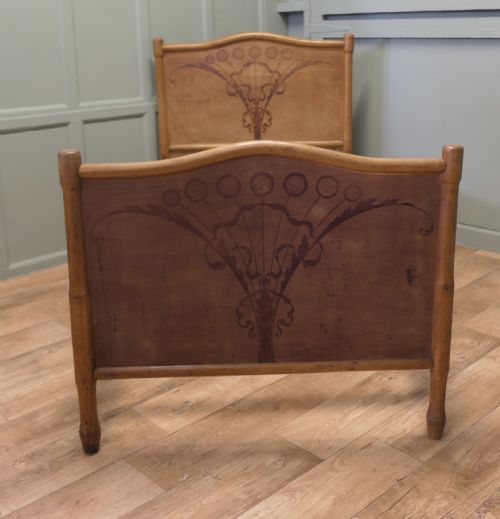
An antique marquetry bedstead brings patterned wood veneers into the bedroom, using contrasting timbers to form pictorial or geometric designs. When you search for an antique marquetry bedstead, you encounter French revival designs from the nineteenth and twentieth centuries alongside Edwardian and Art Deco pieces.
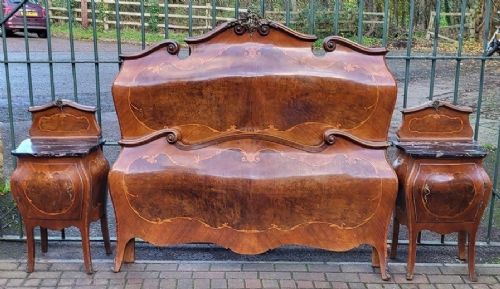
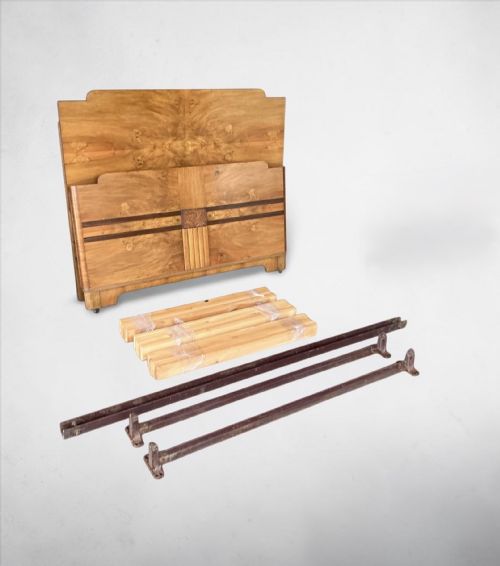
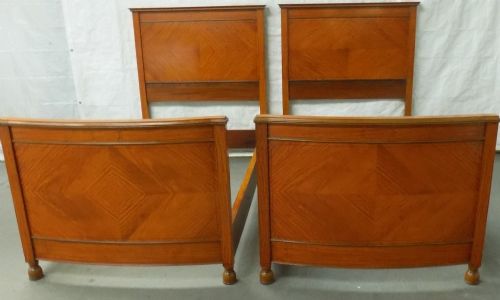
The selections on this page range from generous king-size frames to pairs of single bedsteads and bow-ended satinwood models. Many examples arrive paired with matching marble-top bedside cabinets or nightstands to complete a bedroom suite.
Makers and designers of these beds utilised rich woods like walnut, mahogany, burr walnut, and fruitwood, often accented with ormolu or brass details. Forms span from Louis XVI revival styles and Italian bombé shapes to clean-lined Art Deco frames.
How They Were Made
Cabinetmakers constructed these bedframes using solid carcases of mahogany or walnut overlaid with fine wood veneers. Thin slices of satinwood, fruitwood, and burr walnut were hand-cut and fitted together to create the intricate marquetry patterns seen on the headboards and footboards.
Metal mounts in brass and ormolu were cast and applied to corners and rails, while some pieces incorporated marble tops on associated bedside furniture. Joinery relied on traditional framing techniques to support the substantial weight of these large wooden structures.
Antique Marquetry Bedstead Retail Price Guide 2026
Typical asking prices for marquetry bedstead among the pieces listed under this phrase on Sellingantiques today, from the lower quarter to the upper quarter. They describe what is for sale here now, not the wider market.
The periods represented span from the 1800s through Edwardian times and into the Art Deco era.
What Varies in Quality
The standard of an antique marquetry bedstead depends on the precision of the veneer work and the depth of the timber selection. Finer pieces display tight, seamless joints within the marquetry pattern and employ richly figured burr woods or satinwood rather than plain veneers.
Construction solidity also dictates worth, separating robustly framed mahogany and walnut structures from lighter builds. The integration of quality cast metal mounts and well-matched accompanying bedside cabinets further distinguishes the finer examples.
Louis Majorelle
The Antique Marquetry Bedstead Glossary
- Marquetry
- The art of applying small pieces of veneer to a structure to form decorative patterns. Craftsmen used various tinted woods to build up pictorial motifs on headboards.
- Ormolu
- Gilded bronze used for decorative mounts on furniture. It appears on French revival frames to accent corners and borders.
- Bombé
- A swelling, outward-curved shape found on furniture fronts. This curvaceous profile appears on larger continental bedframes.
Antique Marquetry Bedstead: Frequently Asked Questions
Will these antique beds fit modern mattresses?
Many older bedframes were constructed to nineteenth or early twentieth-century sizing conventions which can differ from current standards. It is wise to check the internal dimensions of the rails before purchasing a mattress.
Custom slats or base adjustments are frequently employed by buyers to accommodate standard modern mattress widths safely inside these historic wooden frames.
How do I care for wood veneer?
Wood veneer requires protection from direct sunlight and excessive changes in room humidity to prevent the thin surface timbers from lifting or drying out. Regular dusting with a soft, dry cloth keeps the polish intact.
Applying a quality furniture wax occasionally helps nourish the walnut, mahogany, or satinwood surfaces without building up heavy chemical residues.
Are bedside cabinets usually included?
Certain listings pair the main bedstead with matching nightstands or marble-top bedside cabinets as part of an original bedroom suite. These coordinated pieces share the same timber and inlay vocabulary.
Other bedsteads are offered entirely on their own, allowing you to source independent tables or focus solely on the statement frame.
How do I identify French revival styles?
French revival pieces often draw inspiration from the reigns of Louis XV and Louis XVI, displaying characteristic symmetry, marquetry panels, and classical brass or ormolu mounts. The woodwork tends to emphasise ornate curves or straight tapered legs depending on the specific sub-period.
Comparing the decorative motifs against known historical design books helps clarify whether a piece leans toward Rococo fluidity or neoclassical restraint.