





Antique Maritime Monocular
An antique maritime monocular is a portable optical instrument designed for navigation and scouting, offering a direct link to the seafaring past.
Antique Maritime Monocular
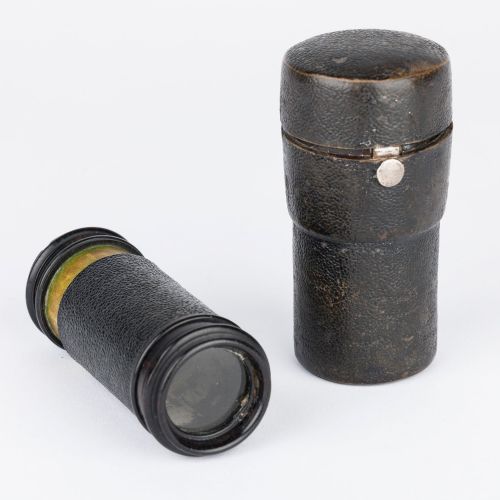
When you search for an antique maritime monocular, you encounter pocket spyglasses, single-draw hexagonal marine telescopes, and multi-draw navigational instruments. These portable optical devices span periods from the eighteenth century through the Victorian era and the Edwardian period, alongside Regency and Georgian examples. They served officers of the watch and explorers who required reliable magnification at sea or ashore.
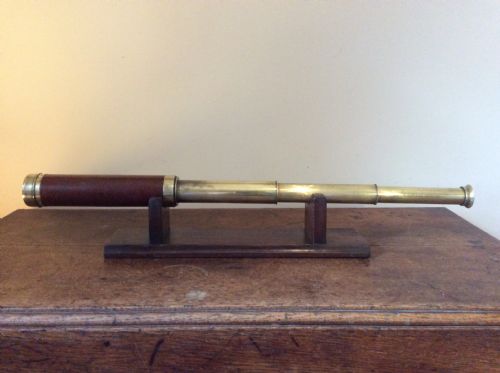
The versions most frequently met on this page are brass and leather two-draw and three-draw telescopes. English makers produced many of these scientific instruments, housing them in mahogany or oak cases when intended for cased presentation. Form follows function precisely, with draw tubes allowing the glass to collapse into a compact cylinder for pocket or belt carriage.
How they were made
Maker workshops constructed these instruments primarily from turned brass and optical glass, often wrapping the main body tubes in stitched leather or enclosing them in wood such as mahogany, walnut, or oak. Some simpler nineteenth-century or pocket examples utilised cardboard within their construction alongside brass draws. Component parts were machined and hand-fitted to ensure smooth extension of the draw tubes without slack.
Lenses were ground and mounted to provide day or night viewing capability, particularly in naval and officer of the watch patterns. Makers inscribed their signatures and locations directly onto the draw tubes or terminal brass collars using fine engraving tools.
Antique Maritime Monocular Retail Price Guide 2026
Typical asking prices for maritime monocular among the pieces listed under this phrase on Sellingantiques today, from the lower quarter to the upper quarter. They describe what is for sale here now, not the wider market.
Object types span pocket spyglasses, single-draw hexagonal marine telescopes, and multi-draw navigational instruments made by English and continental makers.
What varies in quality
The distinction between ordinary and superior pieces rests on the optical clarity of the glass and the precision of the brass work. Telescopes bearing signatures from established makers demonstrate finer finishing in the threading, engraving, and internal lens alignment. The choice of materials also marks this division, moving from basic card and brass to substantial walnut, mahogany, and robust leather cladding.
Proportion and mechanical integrity dictate the enduring utility of each monocular. A well-preserved instrument extends smoothly across its draws with minimal play, maintaining focus and structural rigidity when fully deployed.
Ross of London·Voigtländer and Sohn AG·Richardson·Newton and Co
The Antique Maritime Monocular Glossary
- Monocular
- An optical instrument designed for magnification using a single eyepiece, unlike binoculars which use two. These portable devices were standard issue for naval officers and travellers.
- Draw
- A sliding tubular section of a telescope that collapses into the main body. Multi-draw instruments incorporate two, three, or more nested tubes to reduce overall length.
- Spyglass
- A common historical term for a small, portable refracting telescope. They were widely used by mariners for spotting land or other vessels.
- Day or night
- A specific optical configuration featuring larger objective lenses to gather more light in low visibility conditions. These were essential for watchkeeping at dawn, dusk, or night.
- Objective lens
- The primary lens at the front of the telescope that gathers light and forms the initial image. Its diameter directly influences the brightness and clarity of the view.
Antique Maritime Monocular: Frequently Asked Questions
How do I use an antique telescope?
Extend all the draw tubes fully until the instrument locks firmly into position. Adjust the final eyepiece section slowly while sighting a distant object until the image sharpens.
Keep the optical surfaces clean using a soft brush. Store the instrument in a dry environment to protect the internal glass and exterior leather or wood.
What periods do these instruments cover?
The available pieces span from the Georgian and Regency eras through the Victorian period and Edwardian times, up to the early twentieth century. Each era exhibits distinct proportions, materials, and engraving styles.
Georgian and Regency examples often feature warm wood barrels like walnut or mahogany. Victorian and Edwardian instruments frequently combine polished brass with stitched leather coverings.
Were these used exclusively at sea?
While primarily designed as naval telescopes and officer of the watch instruments for maritime navigation, many served explorers and travellers on land. Pocket spyglasses were carried by individuals for general observation and leisure.
Naval variants were built to withstand harsh marine environments using robust brass and protective leather. Explorer variants often emphasised compact portability for terrestrial journeys.
How are makers identified on them?
Maker details, names, and locations are typically engraved directly onto the brass draw tubes or terminal collars. Examining the inscription near the eyepiece often reveals the workshop origin and production date.
Some instruments include specific military or naval designations alongside the maker signature. These engravings provide direct evidence of the workshop history and original context.