



Antique Marble Vanity
These antique marble vanity pieces combine stone tops with timber frames to offer both practical surface space and period character.
What these pieces are
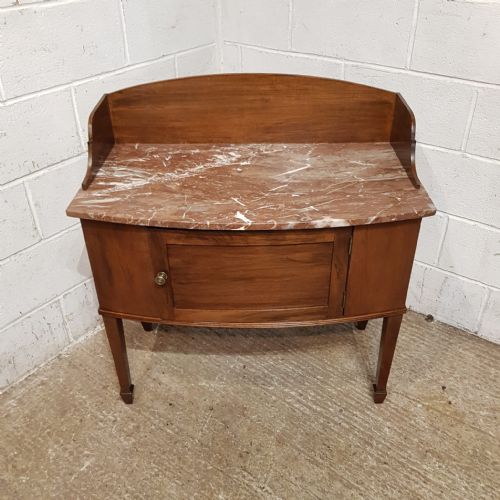
An antique marble vanity primarily takes the form of a washstand, dressing table, or washing unit designed for domestic hygiene and grooming. These items emerge from the Victorian, Edwardian, and nineteen-hundred periods, utilising timber frames paired with stone tops.
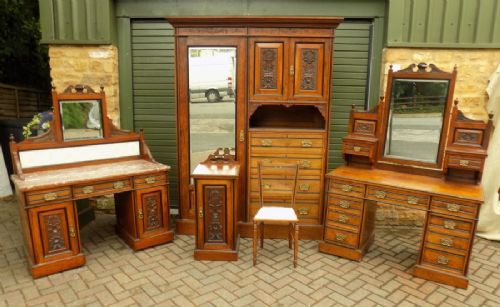
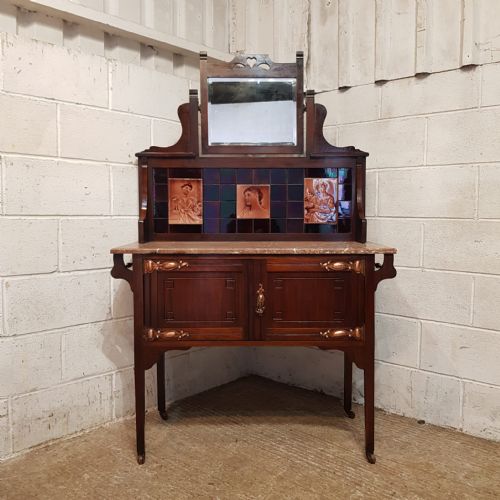
The versions most commonly met on this page are mahogany washstands featuring marble surfaces. Examples span styles from Victorian and Edwardian to Art Nouveau, French Provincial, and the Aesthetic Movement.
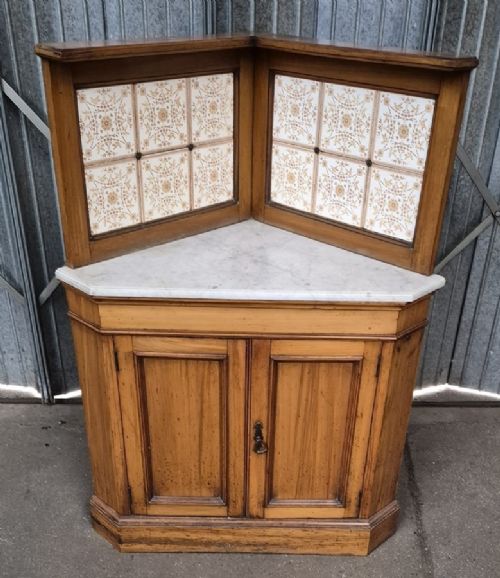
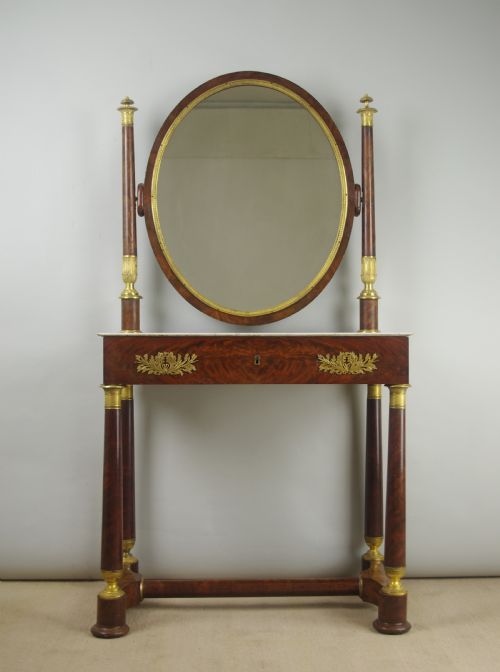
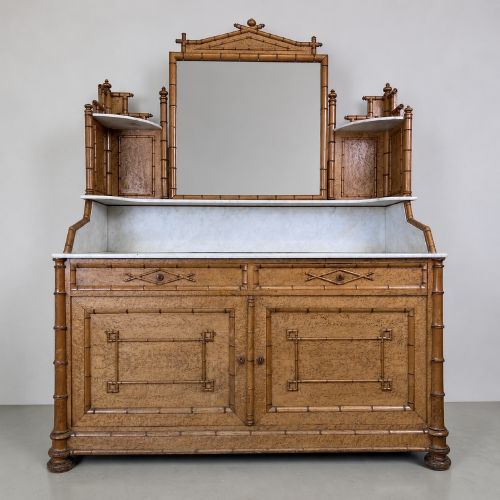
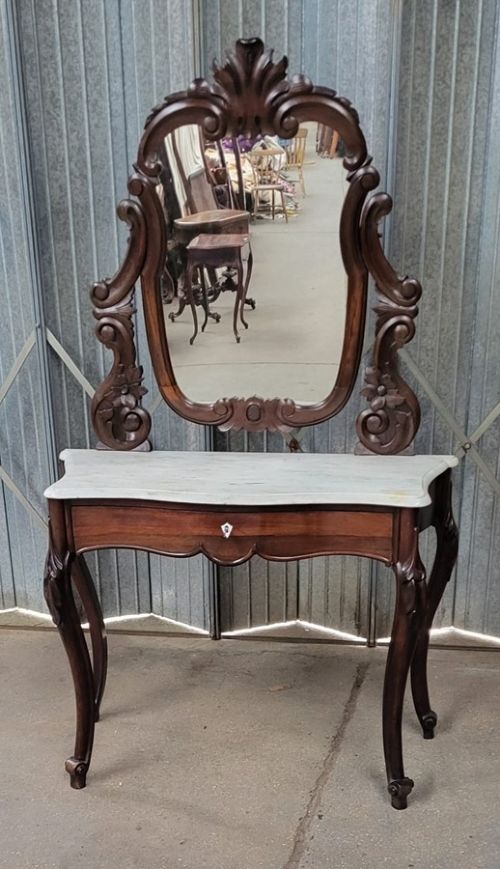
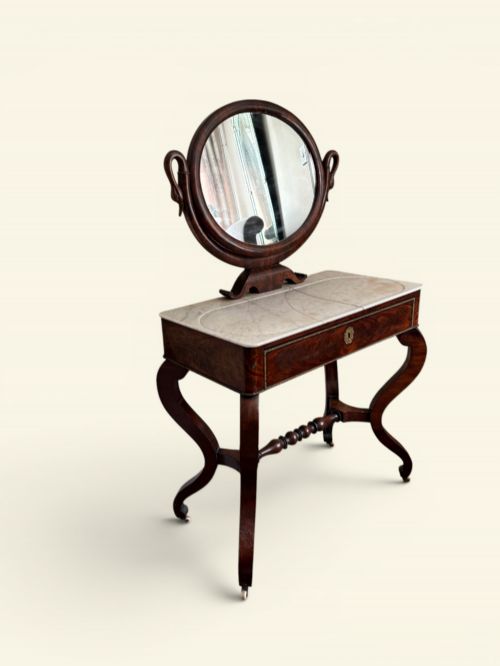
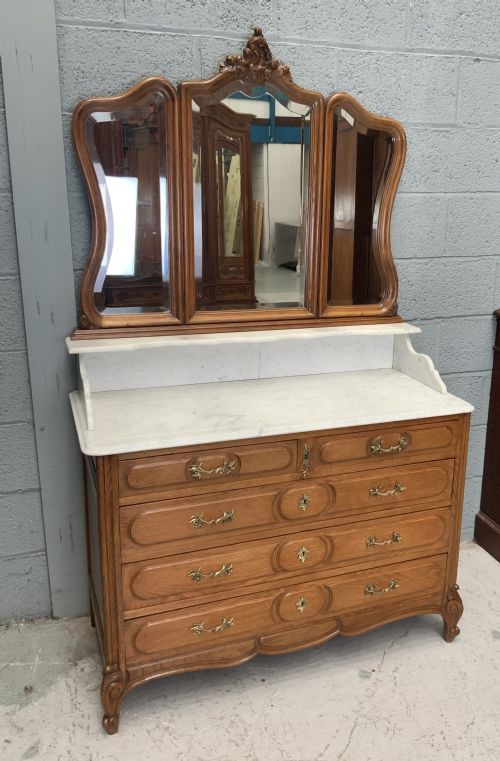
Earlier iterations often include dressing swings or mirror backs, whilst later examples incorporate tiled backs, over-shelves, or twin drawers. Some pieces survive complete with ceramic jugs and bowls.
Makers and builders of these items utilised diverse timbers alongside marble, creating functional furniture that served bedrooms and dressing rooms before plumbed bathrooms became standard.
How they were made
Construction relies upon solid and veneered hardwoods, notably mahogany, satinwood, and satinbirch, matched with heavy marble slabs. Workshops also incorporated bamboo for specific lightweight frames.
Metal elements in brass and copper appear as hardware, handles, or towel rails, whilst glass forms the adjustable mirrors on dressing swings. Ceramic components include fitted tiles on splashbacks and accompanying wash jugs and basins.
Retail Price Guide 2026
Typical UK retail prices for marble vanity, calculated from the Sellingantiques database of over a million retail prices indexed since 2003. This retail price guide relies exclusively on Sellingantiques data; no external sources or auction records are used, so the figures do not describe the wider market.
Listings feature pieces spanning the Victorian, nineteen-hundred, and Edwardian periods.
What varies in quality
Quality rests upon the choice of timber and the thickness and figuring of the marble slab. Finely grained mahogany or satinwood paired with richly veined stone distinguishes the finer examples from standard utility pieces.
The Antique Marble Vanity Glossary
- Washstand
- A piece of furniture designed to hold a basin, jug, and washing accessories. They typically feature waterproof tops made of marble to handle splashes.
- Duchess washstand
- A grander variant of the standard washing or dressing table. These often incorporate mirrors, drawers, and raised over-shelves.
- Aesthetic Movement
- A late nineteenth-century design style focusing on visual and material beauty over heavy moral or narrative interpretation. Pieces in this style emphasise craftsmanship and artistic form.
- Satinbirch
- A pale, lustrous timber derived from birch trees, utilised for its distinctive sheen in cabinetry. It appears on lighter bedroom furniture from the Victorian era.
- Dressing swing
- A pivoting mirror mounted on a frame, designed to tilt for the user. These frequently sit atop chests of drawers or dressing tables.
Frequently Asked Questions
What is an antique marble vanity?
An antique marble vanity is a piece of nineteenth or early twentieth-century bedroom furniture designed for washing and grooming. These items typically combine a sturdy timber frame with a heavy stone top intended to resist water.
Most examples function as washstands or dressing tables, sometimes including mirrors, tiled splashbacks, or matching ceramic jugs and bowls.
How were they used originally?
Before plumbed indoor bathrooms became common, these pieces served as the centrepiece for personal hygiene in bedrooms and dressing rooms. Users placed a ceramic basin and water jug on the marble surface for morning washing.
Drawers, shelves, and towel rails provided storage for linens, shaving gear, and washing accessories close to hand.
How do I care for marble tops?
Marble requires gentle cleaning with mild, non-acidic soap and water to preserve the polished surface. Harsh chemicals or acidic liquids can etch the stone and dull its finish over time.
Using coasters or mats beneath water jugs and glass items helps prevent surface staining and moisture rings on older stone.
How do I tell Victorian from Edwardian?
Victorian pieces tend to feature heavier proportions, darker mahogany timbers, and richer ornamentation such as carved details or Aesthetic Movement styling. They frequently date from the mid-to-late nineteenth century.
Edwardian examples often display lighter woods like satinwood or satinbirch, cleaner lines, and simpler forms that reflect early twentieth-century tastes.