

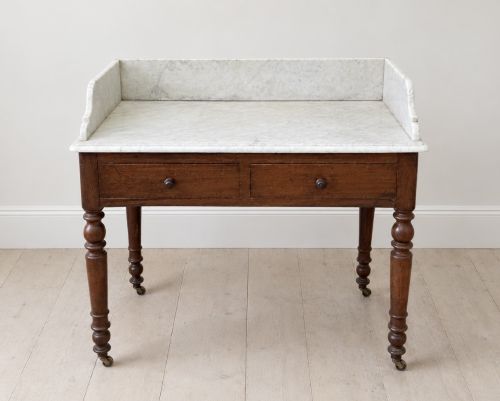
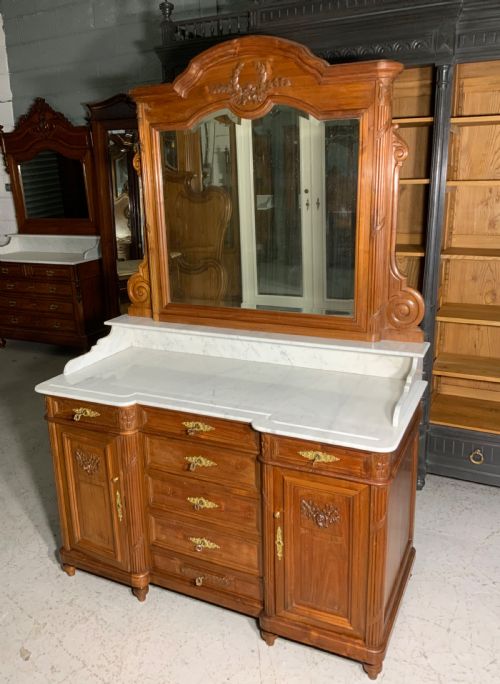
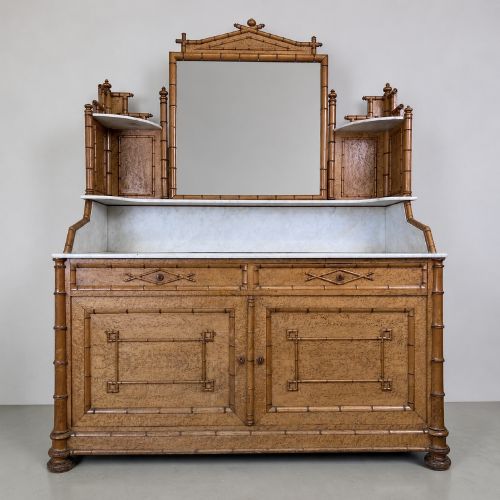
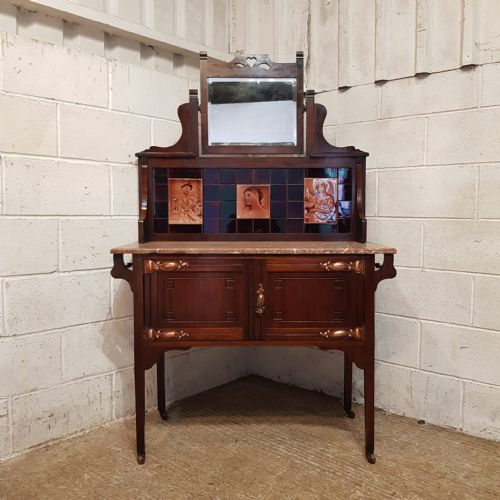


Antique Marble Vanity Unit
An antique marble vanity unit brings solid stone tops and period woodwork together to anchor a bedroom or bathroom with weight and history.
Antique Marble Vanity Unit
When you search for an antique marble vanity unit, you are looking at washstands and dressing tables that combine a stone slab with timber framing from the nineteenth and early twentieth centuries. These pieces served personal hygiene and grooming before indoor plumbing became built into modern rooms.
The versions you are most likely to meet on this page span Victorian, Edwardian, and early twentieth century periods, alongside French regional pieces. They appear in mahogany, walnut, oak, satinwood, and painted pine, often carrying tiled backs or brass fittings.
Makers and workshops from English and continental traditions produced these items to suit various scales of townhouse and country bedroom. Their forms shift from simple pine wash stands to elaborate French dressing cabinets and ormolu-mounted Empire tables.
How they were made
Cabinet makers joined native and imported timbers such as mahogany, oak, and pine using traditional dovetail and mortise construction to support heavy stone. Frames frequently incorporate turned or carved supports, mirror brackets, and tiled splashbacks.
Marble slabs, selected for their veining and colour, were cut and polished to fit precisely over the wooden carcass. Brass, ormolu, and ceramic components were added as handles, towel rails, and basins.
Antique Marble Vanity Unit Retail Price Guide 2026
Typical asking prices for marble vanity unit among the pieces listed under this phrase on Sellingantiques today, from the lower quarter to the upper quarter. They describe what is for sale here now, not the wider market.
What varies in quality
The grade of the marble and the selection of the timber dictate the baseline quality of each piece. Finely figured mahogany or satinwood inlay marks out workshop pieces from simpler pine utility items.
Carving depth, brass casting standard, and the integrity of the stone slab distinguish standard production furniture from superior cabinet work.
Gillows
The Antique Marble Vanity Unit Glossary
- Washstand
- A piece of bedroom furniture designed for morning ablutions, usually featuring a waterproof top and space for a basin and pitcher. They evolved into the marble-topped vanity units seen later.
- Dressing Table
- A low table with drawers and a mirror used while arranging hair and applying cosmetics. Many examples share forms with washstands from the same eras.
- Aesthetic Movement
- A late nineteenth century design style emphasising visual beauty over narrative content. It produced furniture with clean lines and Japanese-inspired details.
- Ormolu
- Gilt bronze mounts applied to furniture for decoration. It appears frequently on continental tables and cabinets.
- Satinwood
- A durable, lustrous timber with a golden sheen used for fine cabinet work and inlay. It takes a high polish.
Antique Marble Vanity Unit: Frequently Asked Questions
What is an antique marble vanity unit?
These pieces are nineteenth and early twentieth century washstands and dressing tables featuring stone tops. They were built from timbers like mahogany, oak, and pine to hold washing basins and grooming supplies.
Today, buyers repurpose them as bathroom sink bases or hallway consoles, keeping the original stone and woodwork intact while adapting them to modern plumbing.
How do I clean antique marble?
Marble requires gentle cleaning with warm water and a neutral, non-abrasive soap. Avoid acidic substances like vinegar or lemon juice, which etch the polished surface.
Dry the stone thoroughly after wiping to prevent water spots and maintain the natural lustre of the material over time.
Were these units used for plumbing?
Original nineteenth century washstands held ceramic basins and pitchers filled by hand from jugs. They were moveable bedroom furniture rather than fixed plumbing fixtures.
Plumbing modifications are typically twentieth century additions made when owners convert the timber framework to accept modern basin waste pipes and taps.
How do I date an Edwardian washstand?
Edwardian pieces, dating from roughly nineteen hundred to nineteen ten, often display lighter timbers, satinwood inlay, or simpler Arts and Crafts lines. They lack the heavy dark ornamentation typical of earlier Victorian output.
Check for construction clues such as machine-sawn backboards, brass stampings, and secondary woods like pine or birch which indicate the manufacturing era.