

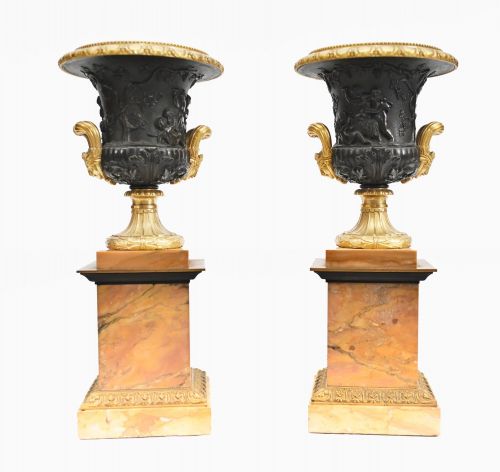


Antique Marble Plinth Urns
These antique marble plinth urns bring classical form and substantial stone weight into a room, offering the refined presence of the Grand Tour.
Antique Marble Plinth Urns
Antique marble plinth urns combine classical vessel forms with stone bases, drawing on Neoclassical and French Empire styles. These decorative pieces emerge frequently from nineteenth-century workshops inspired by archaeological discoveries across Italy.
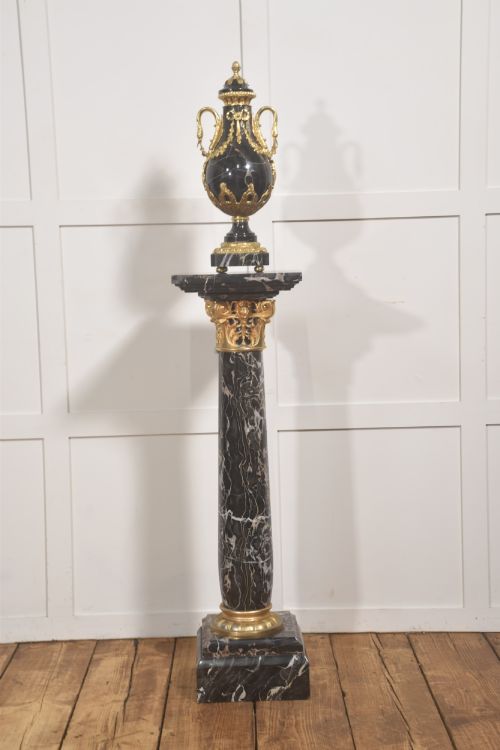
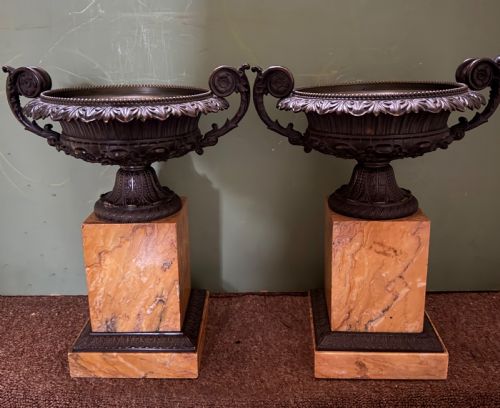
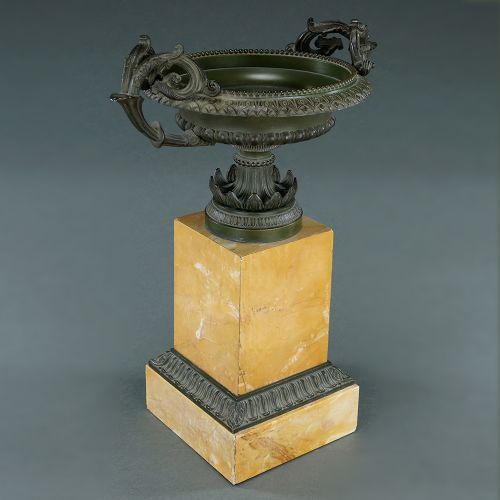
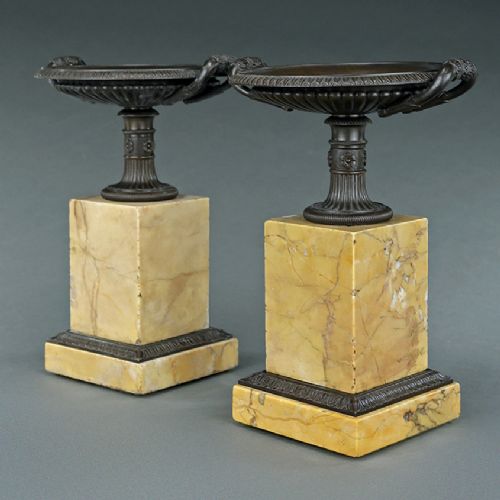
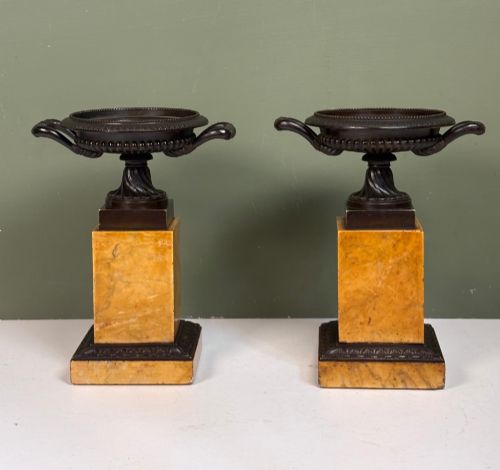
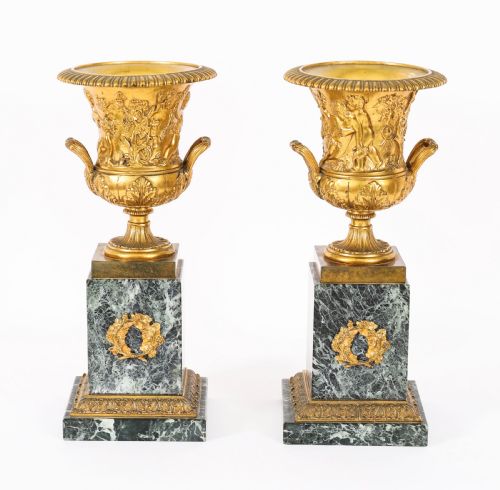
The selection ranges from bronze and Siena marble tazzas to green marble pedestals and carved columns. Examples often manifest as matched pairs designed for display on mantelpieces or library tables.
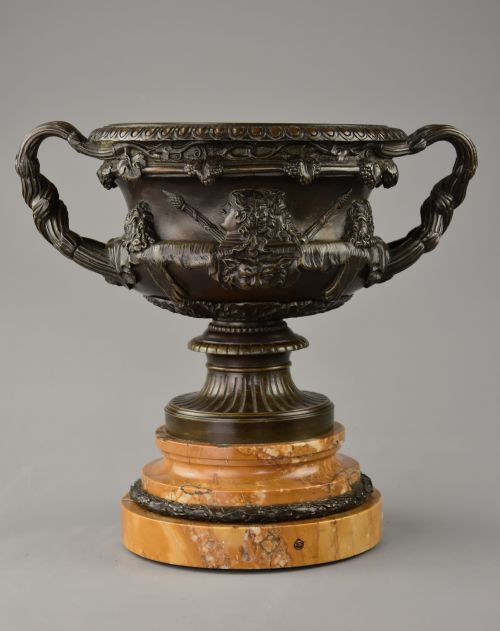
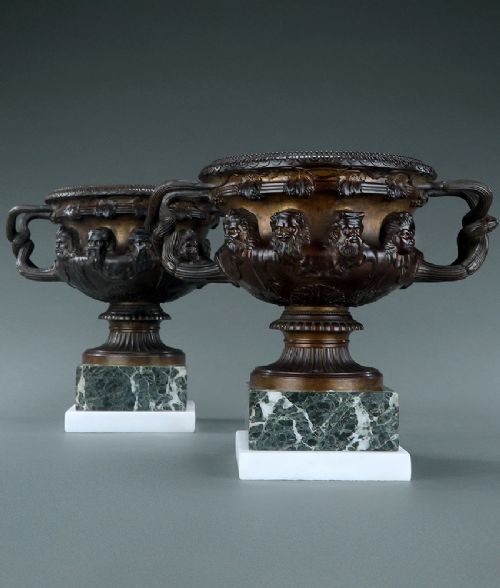
Many items echo famous antiquities such as the Warwick Vase or Albani Vases, brought home as souvenirs by travellers on the Grand Tour. Makers such as Selim Bright occasionally appear alongside unmarked pieces produced in Italy and France.
How they were made
Craftsmen shaped solid blocks of green, white, and Siena marble into columns, plinths, and urn bodies using precision turning and hand carving. These stone elements provide a dense, cool foundation that anchors the composition.
Foundries cast bronze and gilt bronze or ormolu mounts to adorn the stone vessels with classical figures, Bacchic motifs, and foliate handles. Artisans then joined the mixed media components with pins and internal fixings.
Antique Marble Plinth Urns Retail Price Guide 2026
Typical asking prices for marble plinth urns among the pieces listed under this phrase on Sellingantiques today, from the lower quarter to the upper quarter. They describe what is for sale here now, not the wider market.
Listings feature nineteenth-century pieces alongside rarer eighteenth-century items, utilising green marble, white marble, Siena marble, and bronze.
What varies in quality
The distinction between standard decorative items and exceptional pieces lies in the crispness of the bronze chasing and the rich variegation of the marble. Superior examples display sharply defined figures and harmonious natural veining within the stone.
Proportion and scale dictate the visual weight of a plinth urn, where balanced heights between the base and the vessel create an authentic classical harmony. Heavy ormolu mounts with deep fire-gilding signal higher workshop standards than light brass plating.
The integration between the bronze components and the marble plinth reveals the maker's hand, with tight joints and well-finished undersides distinguishing masterworks from commercial souvenirs.
Selim Bright
The Antique Marble Plinth Urns Glossary
- Tazza
- A shallow cup or vase on a pedestal foot, frequently used as a decorative centerpiece in classical interiors. These vessels often sit atop square marble plinths.
- Grand Tour
- A traditional trip of Europe undertaken by upper-class European young men of sufficient means flourished during the eighteenth and nineteenth centuries. Souvenirs from this journey included bronze reductions of ancient vases.
- Ormolu
- Gilt bronze produced by applying a mixture of mercury and gold leaf to bronze, then firing to drive off the mercury. This technique creates a rich, enduring golden lustre on metal mounts.
- Campana
- A crater-shaped ancient urn with an inverted bell profile and flaring rim, named after the classical shape recovered in Italy. These vessels appear frequently in bronze and marble iterations.
- Siena marble
- A yellow decorative limestone with dark grey or purple veins, quarried in Tuscany. It provides a striking, warm-toned base for bronze mounts on nineteenth-century pieces.
Antique Marble Plinth Urns: Frequently Asked Questions
Where were these urns made?
Many of these decorative objects originated in Italy and France during the nineteenth century. Italian workshops catered directly to foreign travellers seeking classical souvenirs.
French foundries also produced high-end bronze and marble vessels in the Empire and Neoclassical styles. These items combined local stone turning with specialised metal casting.
How do I style them at home?
These pieces function well on mantelpieces, sideboards, or dedicated columns where their sculptural forms can be appreciated from multiple angles. Pairs look balanced when placed at either end of a long surface.
Keep surrounding decor simple to let the natural stone and bronze details stand out. Ensure heavy marble items rest on sturdy furniture capable of supporting significant stone weight.
How do I tell nineteenth century pieces apart?
Differentiation relies on observing the casting quality of the bronze and the specific type of marble used in the plinth. Nineteenth-century items often feature hand-chased bronze details and authentic period patination.
Earlier eighteenth-century examples display different joinery methods and heavier hand-carved stone construction. Comparing the mineral patterns helps identify regional stone varieties like Siena or green marble.