





Antique Marble Mantel Urns
Antique marble mantel urns bring neoclassical balance to a room, combining carved stone bodies with cast metal mounts.
Antique Marble Mantel Urns
When you search for antique marble mantel urns, you encounter ornamental vessels designed to sit upon fireplaces alongside matching garnitures and clocks. These objects emerge predominantly from nineteenth-century French workshops, drawing heavily on classical antiquity and Grand Tour aesthetics.
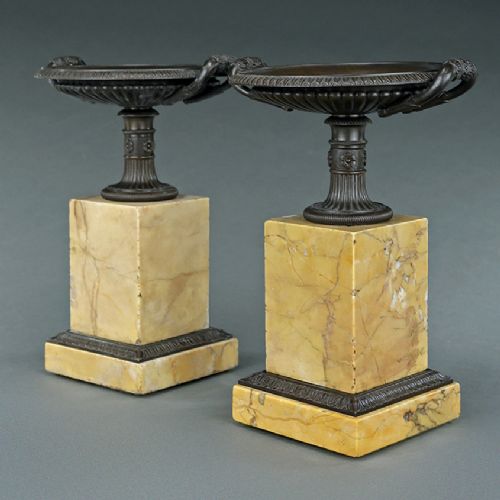
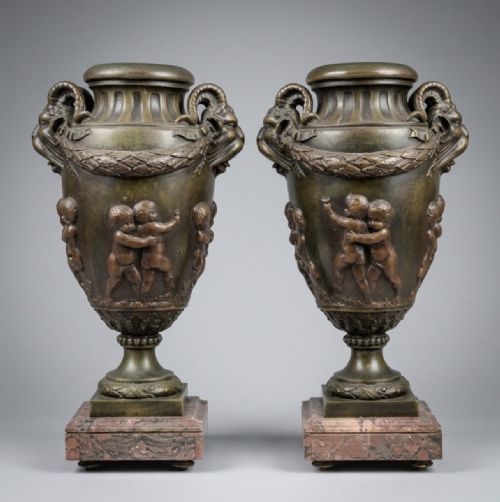
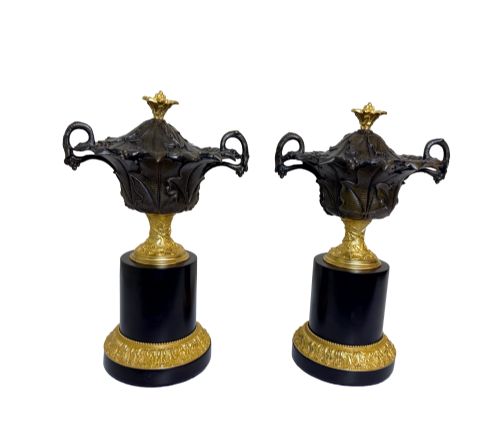
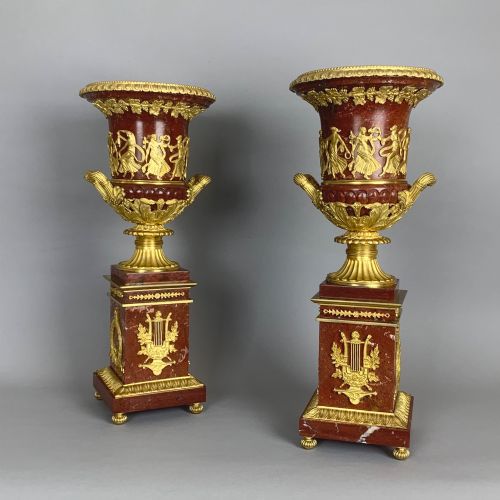
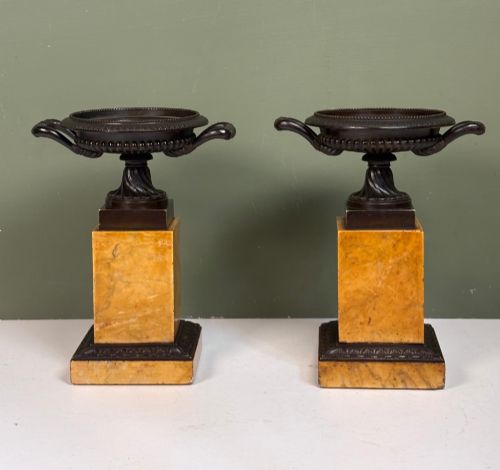
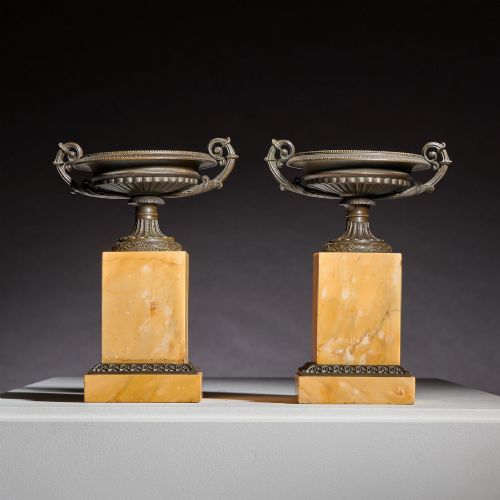
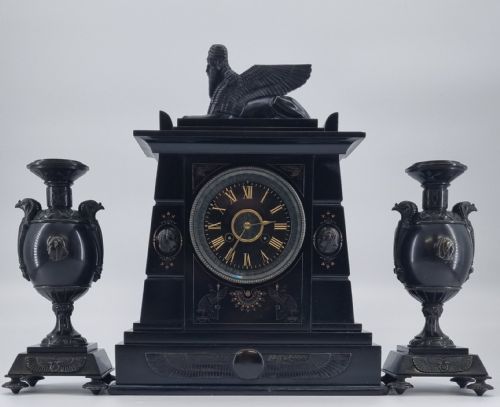
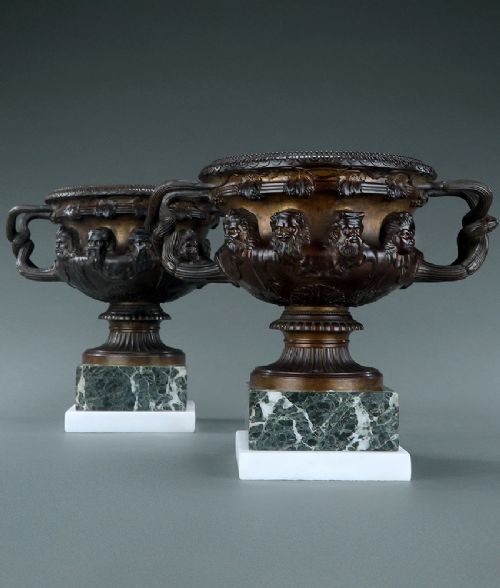
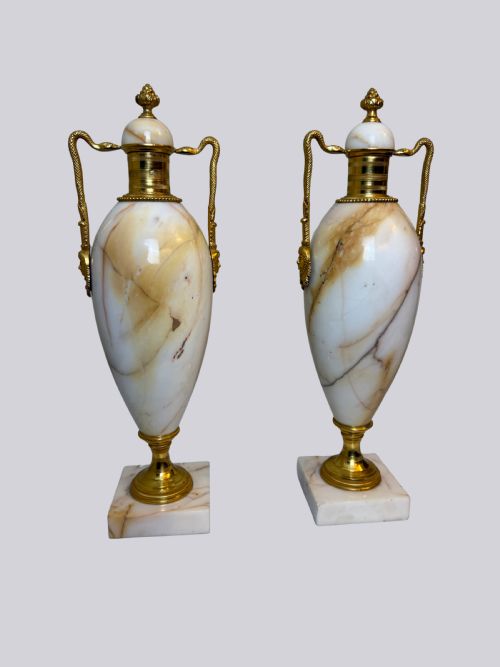
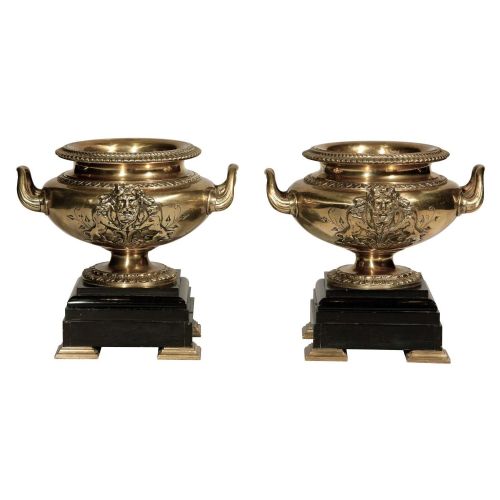
The selection here includes pairs of cassolettes, tazzas, and lidded vases carved from white, black, green, rouge, and Sienna marble. Many pieces incorporate gilt bronze, ormolu, or brass mounts, reflecting Neoclassical, Louis XVI Revival, and Egyptian Revival design vocabulary.
How they were made
Masons turned stone blocks on lathes to form the bodies of these vessels, hand-finishing details and polishing the surfaces to a smooth lustre. Foundational materials include various coloured marbles, black slate, and white onyx.
Metal components such as handles, bases, and collars utilised bronze, brass, and gilt bronze, cast and chased before fire-gilding or bronzing. Artisans then joined the stone and metal elements with threaded rods and pins.
Some nineteenth-century travellers hauled heavy Italian stone vases across Europe so their mantelpieces could look like Roman temples.
What varies in quality
The crispness of the bronze chasing and the depth of the fire-gilding separate standard decorative objects from superior works. Finer examples display sharp architectural details, well-articulated acanthus leaves, and tight joints between stone and metal.
The selection of the marble itself indicates grade, with rich natural veining, uniform colour saturation, and absence of major mineral flaws marking the better specimens. Balanced proportions in the turning and matching pairs of stone further distinguish the upper tier.
Japy Frères·Louis Goret·Sacre·Achille Brocot·Selim Bright
The Antique Marble Mantel Urns Glossary
- Cassolette
- A dual-purpose decorative vase featuring a reversible lid that transforms the piece from an urn into a burner or candle holder. These often display pierced metal galleries.
- Tazza
- A shallow bowl or vase raised on a high foot and pedestal base, frequently utilised in pairs on nineteenth-century mantelpieces. They derive their form from classical drinking vessels.
- Garniture
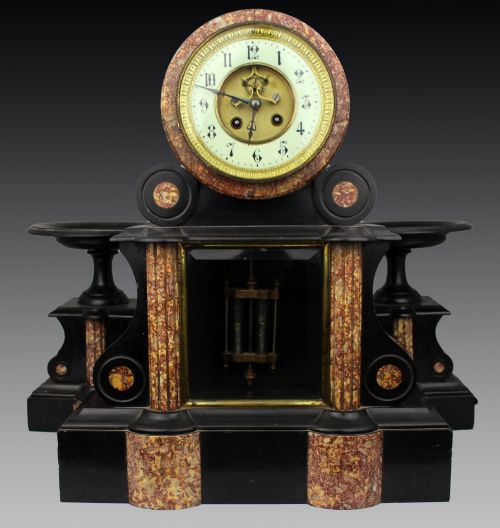
- A set of three or more matching mantel ornaments, typically comprising a central clock flanked by two matching urns, vases, or candelabras. They create symmetry when arranged across a fireplace.
- Ormolu
- Finely chopped gold dissolved in mercury and applied to a bronze base, which is then heated to drive off the mercury and leave a durable golden coating. This technique creates a warm, lasting finish on French mountings.
- Grand Tour
- A cultural journey undertaken by nineteenth-century elites across Europe, returning with classical souvenirs such as marble and bronze vases. These objects frequently inspired later domestic reproductions.
Antique Marble Mantel Urns: Frequently Asked Questions
How were marble mantel urns used?
These vessels served as decorative ornamentation on drawing room mantelpieces, frequently displayed as matching pairs flanking a clock. Some variations functioned as cassolettes or perfume burners.
Over time, their primary role became purely aesthetic, anchoring the symmetry of a fireplace display in nineteenth-century interiors.
How do I clean antique marble?
Dust surfaces regularly with a soft, dry cloth to prevent accumulation in carved crevices. Avoid chemical cleaners or acidic substances that etch polished stone.
Keep metal mounts separate from moisture to protect gilt bronze and ormolu finishes from corrosion.
What is a clock garniture set?
A garniture set consists of a central mantel clock accompanied by two matching side pieces, such as urns, candelabras, or vases. They were designed to create a balanced display across a fireplace.
Sets often share identical marble types and bronze mounts, indicating they were produced together.
How can I tell the period?
Stylistic cues such as Louis XVI Revival motifs or Egyptian Revival elements help narrow down the manufacturing era. Materials like black slate and white onyx frequently point toward nineteenth-century production.
Maker signatures on clock movements or bronze castings provide more exact chronological anchors.