



Antique Map Stand
An antique map stand holds the world or the sheet, offering a practical anchor for geographical study and archival storage in a library.
Antique Map Stand
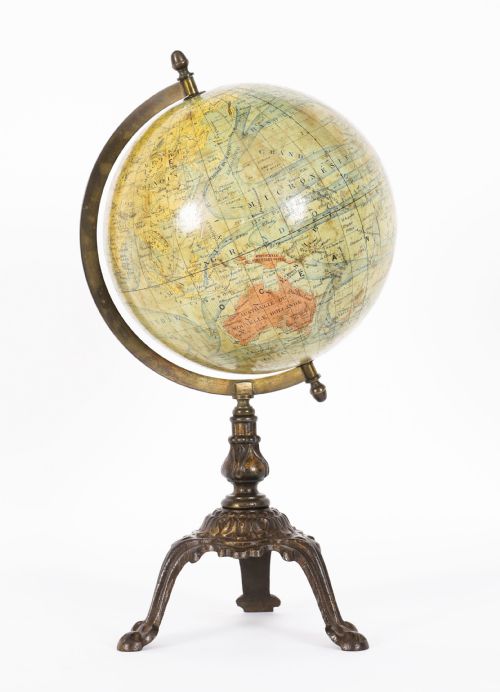
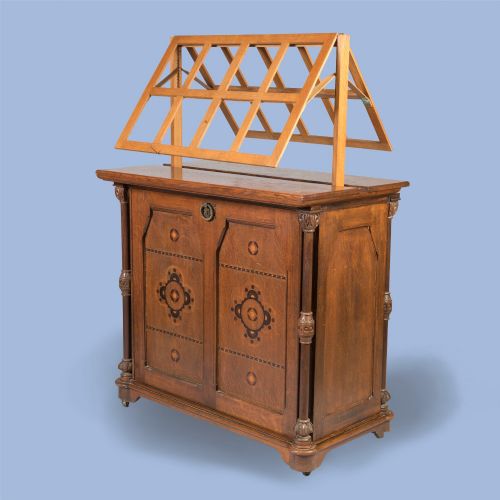
When searching for an antique map stand, collectors encounter two distinct forms designed for geographical study and paper preservation: globes on dedicated bases and adjustable wooden folio stands or cabinets.
Folio stands and cabinets emerge primarily from the Regency, George III, and Victorian periods, constructed in rich timbers to hold large maps and architectural prints.
Joinery and mechanisms
Master cabinet work separates standard utility furniture from finer pieces through the crispness of timber turnings, dovetail joinery, and patination on woods like birds-eye maple.
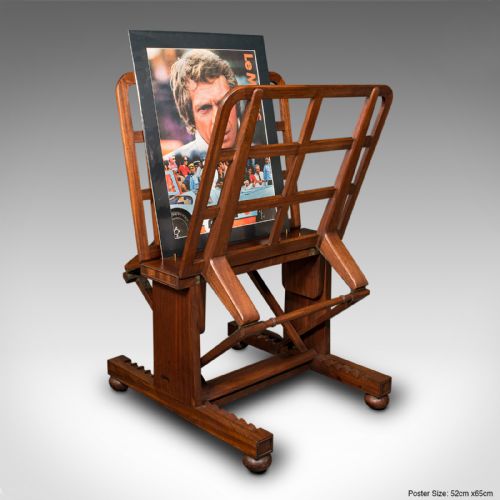
Mechanical complexity defines the better folio stands, where working brass ratchets and hinged folding frames operate smoothly after centuries of use.
Miniature German globes measure just four inches across, packing the entire nineteenth-century world into a pocket-sized sphere.
Benjamin Taylor And Sons·Lebegue And Cie·M Vivien·Raths Physikalischer
The Antique Map Stand Glossary
- Folio stand
- A trestle-style rack with adjustable sides designed to hold large unbound maps, prints, and architectural drawings. These pieces allow documents to be viewed flat or tilted at an angle.
- Terrestrial globe
- A spherical map representing the earth mounted on a stand with a graduated brass meridian ring. The surface paper is typically applied in curved printed segments known as gores.
- Gore
- A tapering printed paper segment applied to the sphere of a globe. Several pieces combine to cover the curved surface accurately.
- Scroll stand
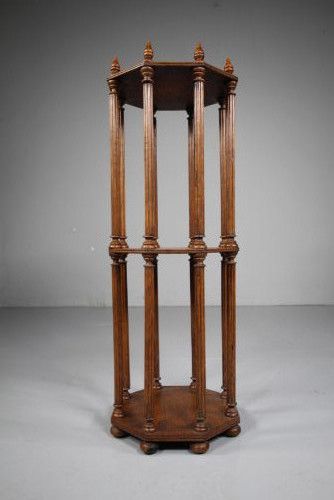
- A compact wooden rack designed for rolling or holding documents and scrolls. They appear in libraries and offices of the nineteenth century.
Antique Map Stand: Frequently Asked Questions
How do I use a folio stand?
Adjust the wooden ratchets to angle the frame, then rest large prints, maps, or folios across the open slats for display and browsing.
The design keeps large documents flat and accessible without creasing the paper.
Where were globes placed historically?
Floor-standing globes sat in studies, libraries, and drawing rooms where scholars and gentlemen could consult geographical boundaries.
Smaller models sat on desks for quick reference during daily correspondence.
How do I date a globe?
Inspect the printed cartography on the sphere for political borders, shipping routes, and specific geographical names.
Makers often included publication dates near the cartouche, though surrounding styles of the brass meridian and wooden base offer secondary clues.
What wood is best for a stand?
Mahogany and walnut predominate in nineteenth-century library furniture due to their strength and rich grain patterns.
Lighter timbers like satinwood and birds-eye maple appear on decorative pieces made for refined drawing rooms.