

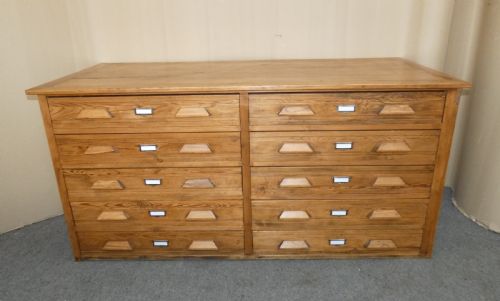

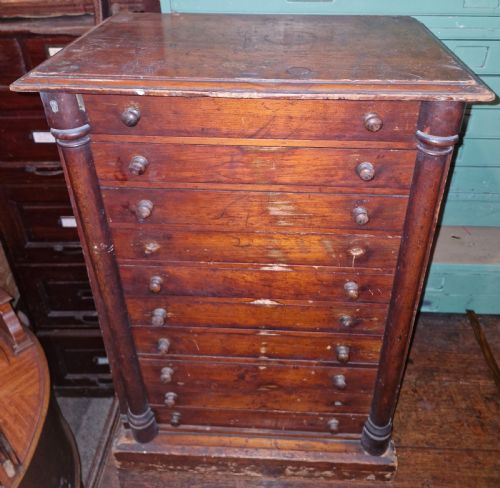


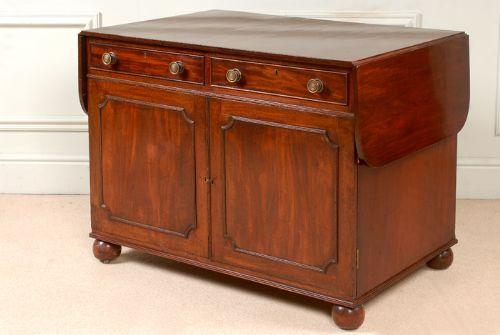
Antique Map Drawer Cabinet
An antique map drawer cabinet provides deep, compartmentalised storage designed for plans, specimens, and documents, offering serious collectors enduring utility and character.
Antique Map Drawer Cabinet
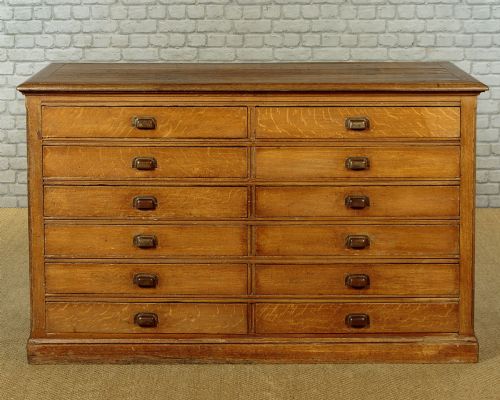
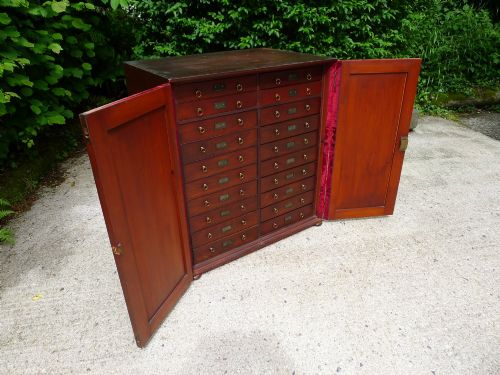
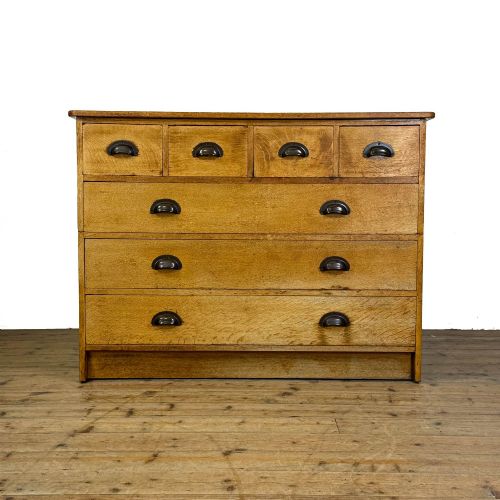
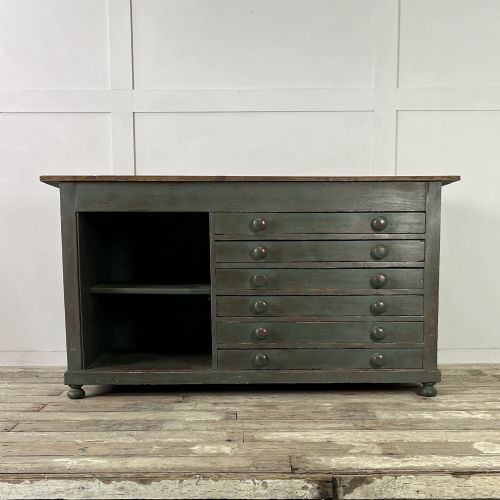
An antique map drawer cabinet brings together tall banks of shallow drawers originally built for map storage, architects' plans, or specimen archiving. When searching for an antique map drawer cabinet, you encounter varied forms including plan chests, folio cabinets, and multi-drawer collectors' units from the eighteenth century through to the mid-twentieth century.
The pieces appearing on this page span the Victorian and Edwardian eras alongside earlier Georgian examples and industrial utility pieces. Most common among these are sturdy timber banks of drawers in pine, mahogany, and deal, often designed with numerous shallow tiers to lay papers and specimens flat.
Makers such as Brady of Edmonton and Standish appear in the records, alongside uncredited institutional and domestic workshop pieces. Buyers choose these cabinets to organise collections or to anchor a room with functional, historic furniture.
What varies in quality
The timber selection and the density of the drawer configuration set the structural tier of each piece. Cabinets constructed from solid mahogany or burr walnut with numerous uniform drawers represent higher workshop output compared to utility pine or deal variants.
Attribution to documented makers like Brady of Edmonton or Standish elevates the standing of a cabinet. The precision of the drawer runners and the preservation of original brass hardware further distinguish fine archival pieces from utilitarian workshop survivors.
Listings feature mahogany, pine, oak, and deal cabinets spanning the George III period through Victorian and Edwardian eras to mid-century industrial utility pieces.
Brady of Edmonton·Standish
The Antique Map Drawer Cabinet Glossary
- Plan chest
- A wide, low piece of furniture featuring multiple shallow drawers designed for holding architectural drawings and large maps flat without folding.
- Folio cabinet
- A tall or floor-standing cabinet built to store large bound volumes, loose prints, and paper folios.
- Specimen chest
- A compact chest of small drawers intended for botanical, geological, or entomological samples.
- Deal
- A softwood timber, typically pine or fir, commonly used for the carcases and internal drawer construction of utilitarian nineteenth-century furniture.
Antique Map Drawer Cabinet: Frequently Asked Questions
What were map drawer cabinets used for?
These cabinets served offices, artists' studios, and libraries to keep large sheets of paper, charts, and drawings flat and protected from light. The shallow depth prevented documents from rolling or creasing during storage.
Over time, collectors adapted them to hold natural history specimens, coins, and textiles. Their internal division made them ideal for organising vast quantities of flat items.
How do I date an antique cabinet?
Dating relies on timber choices, construction methods, and hardware styles across the piece. Georgian examples show distinct hand-cut dovetailing and primary hardwoods, while Victorian pieces often incorporate turned pulls and deal linings.
Maker stamps, stamps on brass pulls, and regional trade labels provide further chronological markers. Comparing the drawer lining thickness and carcass assembly helps distinguish mid-nineteenth-century work from later Edwardian production.
Are all these cabinets made of mahogany?
While mahogany and burr walnut feature prominently in high-status collector pieces, many cabinets use utilitarian timbers. Pine, oak, and deal appear frequently in industrial utility and nineteenth-century workshop examples.
Makers selected timbers based on the intended environment and budget of the original commission. Secondary softwoods often form the internal carcase even when primary facades use fine hardwoods.
How do I care for antique drawer runners?
Maintaining smooth operation involves keeping the timber runners clean and free from accumulated dust or grit. Traditional drawers rely on wood-on-wood sliding surfaces that benefit from minimal interference rather than heavy modern lubricants.
Controlling room humidity prevents the timber from expanding or contracting excessively, which ensures drawers continue to slide easily within their frames.