



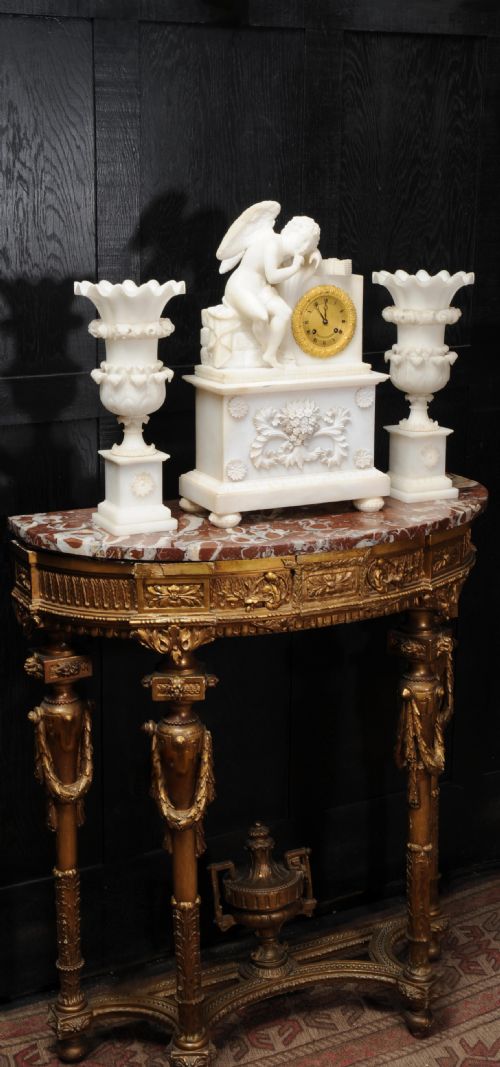

Antique Mantle Piece Clock
These antique mantle piece clock pieces bring mechanical timekeeping and architectural presence to a room, ranging from simple mahogany cases to elaborate multi-piece garnitures.
Antique Mantle Piece Clock
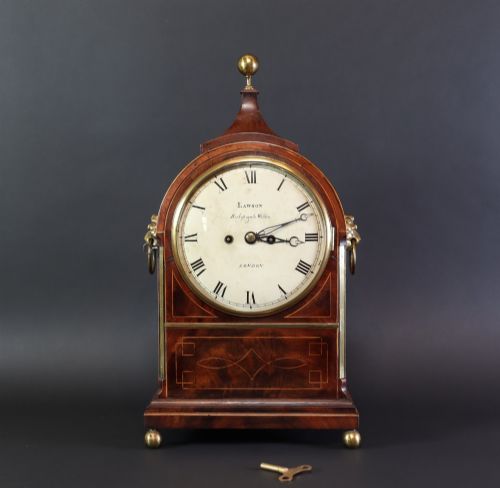
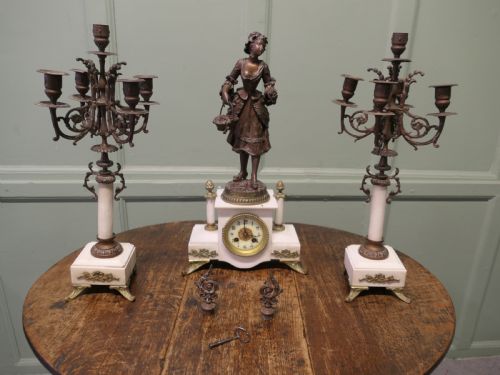
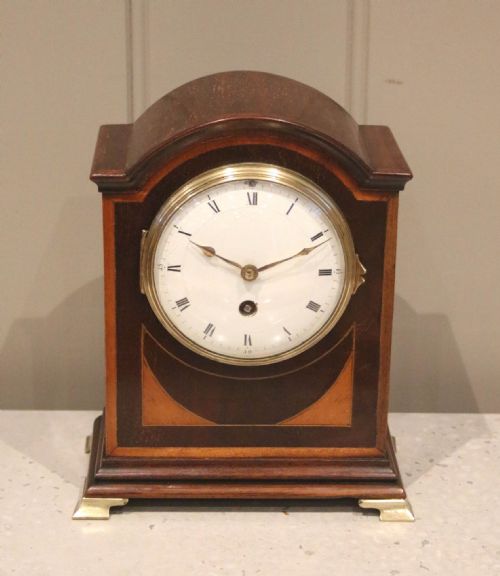
When you search for an antique mantle piece clock, you encounter a variety of domestic timepieces designed to sit on a fireplace ledge or shelf. The selection on this page includes freestanding mantel clocks, carriage clocks, and matching three-piece clock garniture sets complete with flanking candelabras or urns.
The objects span multiple periods, with Victorian and late nineteenth-century French examples appearing alongside earlier Regency pieces and later Art Deco designs. Materials range from traditional timbers like mahogany and satinwood to heavy decorative media such as marble, brass, bronze, onyx, and alabaster.
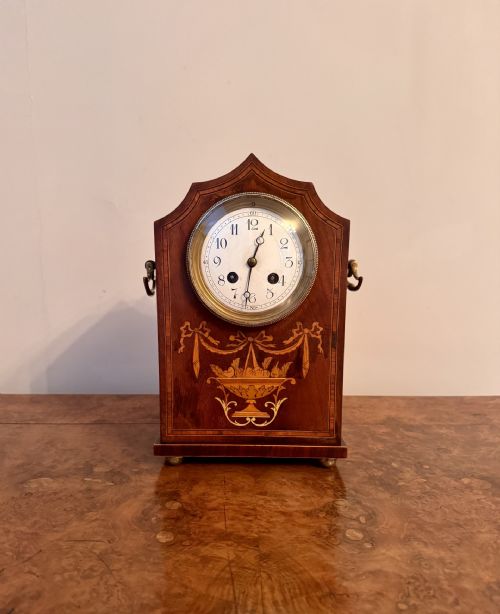
You are most likely to meet French garniture sets and Edwardian inlaid wooden clocks on this page. These items reflect both the precision of period horology and the sculptural tastes of their respective eras, from Louis XVI revival motifs to geometric modernist lines.
What varies in quality
Quality in an antique mantle piece clock rests on the crispness of the case carving, the weight and finish of the metal mounts, and the integration of any matching garniture pieces. Finer examples display hand-chiselled bronze details, perfectly fitted timber veneers, and signed movements.
The presence of supplementary pieces, such as original candelabras or urns made from matching marble or porcelain, elevates the scope of the set. Simpler wooden lancet clocks rely on the subtlety of their wood grain and inlay work rather than sculptural ornamentation.
Antique Mantle Piece Clock Retail Price Guide 2026
Typical asking prices for mantle piece clock among the pieces listed under this phrase on Sellingantiques today, from the lower quarter to the upper quarter. They describe what is for sale here now, not the wider market.
Finnigan Manchester·Garrards
The Antique Mantle Piece Clock Glossary
- Garniture set
- A central clock accompanied by matching decorative side pieces, such as candelabras or urns, designed to sit together on a mantelpiece.
- Ormolu
- Gilded bronze or brass applied as decorative mounts to furniture, porcelain, and clock cases during the eighteenth and nineteenth centuries.
- Carriage clock
- A small, portable spring-driven clock with a carrying handle, originally designed for travel during the nineteenth century.
- Lancet clock
- A mantel clock housed in a case shaped like a Gothic lancet window, tapering to a pointed arch at the top.
- Cloisonne
- An ancient technique for decorating metalwork objects with enamel compartments separated by strips of metal wire.
Antique Mantle Piece Clock: Frequently Asked Questions
How do I wind an antique mantel clock?
Most mechanical clocks require a specialised key inserted into winding arbors on the dial face. Turn the key gently until you feel resistance, taking care not to overwind the mainspring.
Different movements require different intervals between windings, ranging from daily to eight-day cycles. Consult the specific movement type before attempting to adjust the hands or tension.
What is a clock garniture set?
A clock garniture is a matching ensemble consisting of a central mantel clock flanked by two matching decorative objects. These side pieces are frequently candelabras, vases, or urns.
Such sets were designed as balanced decorative centrepieces for large mantelpieces in nineteenth-century drawing rooms. The materials of the side pieces typically mirror the base and mounts of the clock.
How do I identify a French nineteenth-century clock?
French clocks from this era often feature cast bronze, marble, or painted porcelain cases associated with decorative revival styles. Many incorporate detailed figural sculptures, classical motifs, or elaborate ormolu mounts.
Examining the backplate of the internal movement frequently reveals maker stamps, serial numbers, or medals won at exhibitions. Dial signatures can also indicate the retailer or horologist responsible for the piece.
Where should I place a heavy marble clock?
Heavy marble and bronze clocks require a sturdy, level surface capable of supporting considerable weight without sagging. A stable mantelpiece or heavy console table prevents the clock from tilting, which can stop the pendulum.
Keep these timepieces away from direct heat sources such as active fireplaces and out of areas subject to excessive vibrations. Proper placement ensures the mechanical movement keeps accurate time.