
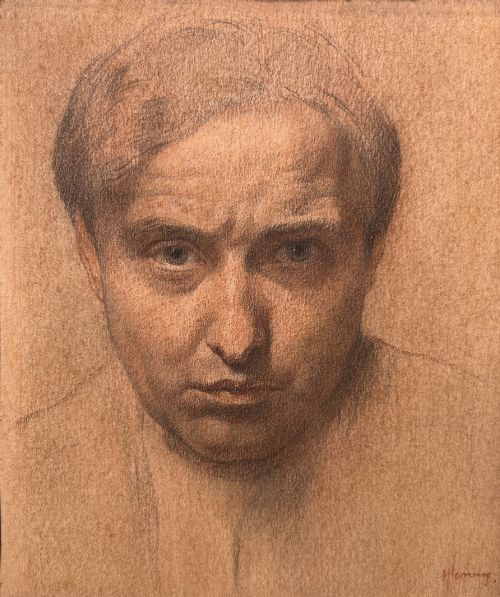
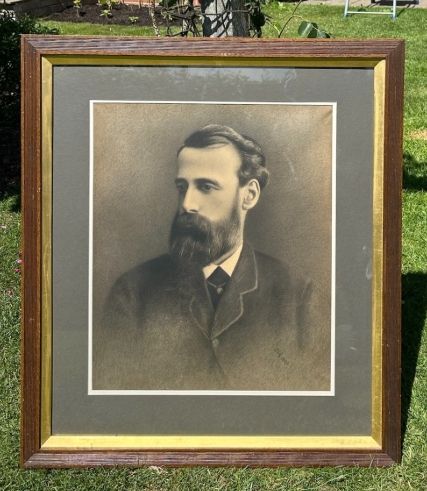
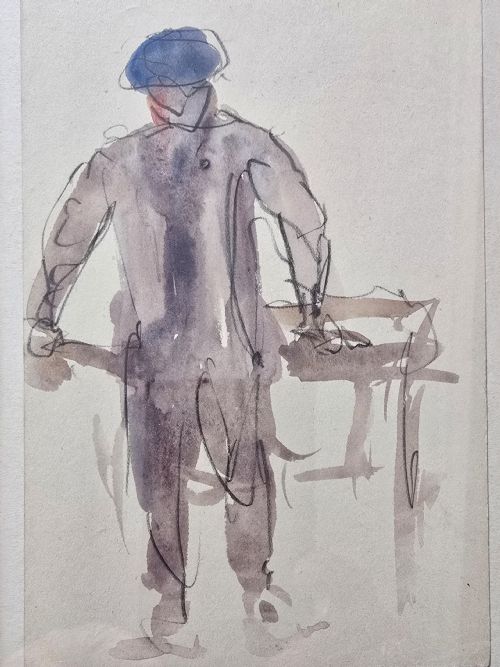
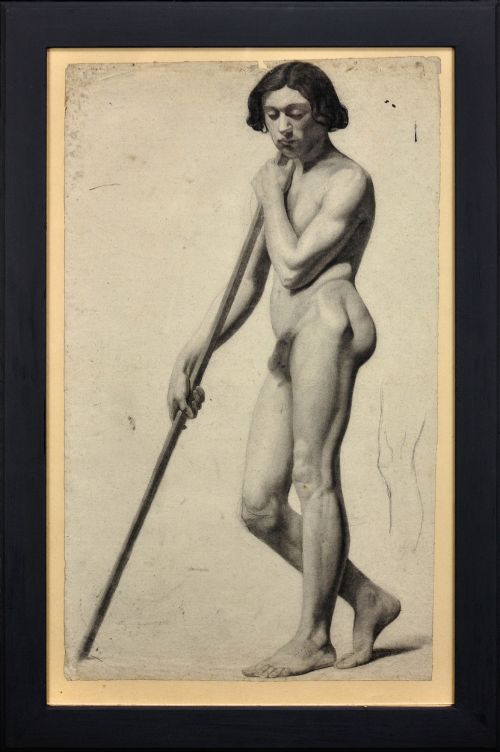


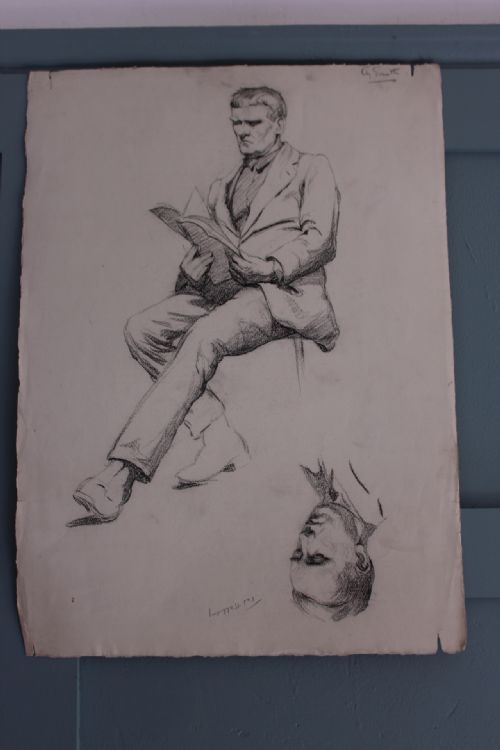

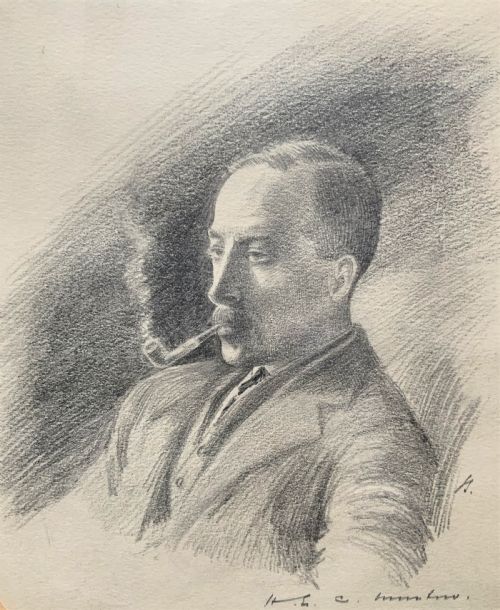
Antique Male Portrait Sketch
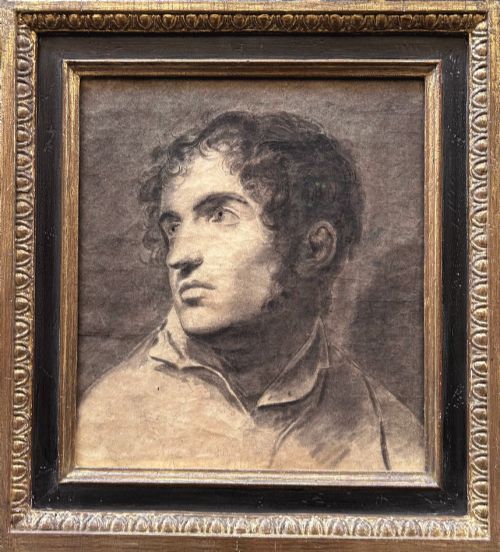
An antique male portrait sketch captures character through hand-drawn lines on paper, offering an intimate glimpse into past lives.
Antique Male Portrait Sketch
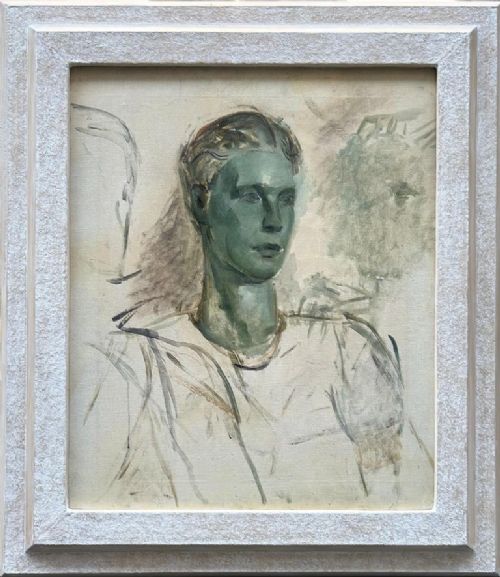
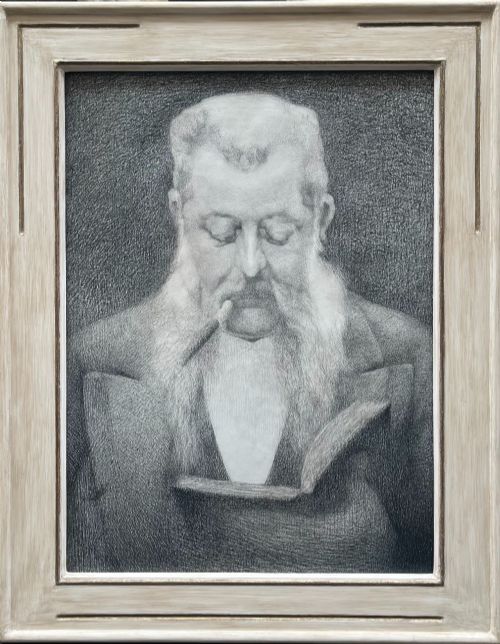
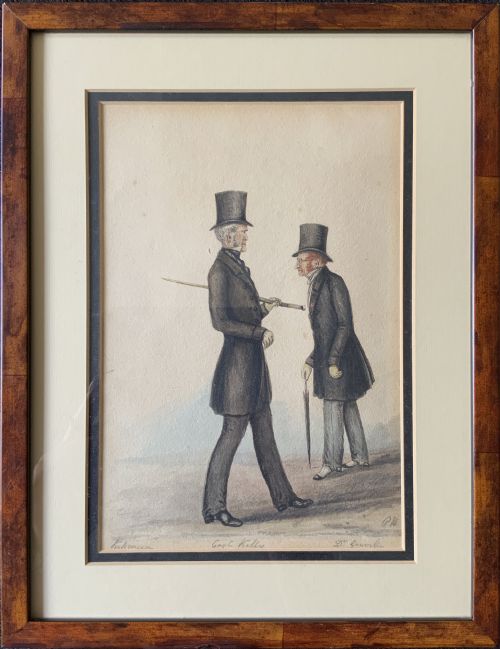
Every antique male portrait sketch presents a likeness of a man captured through direct draughtsmanship, originating from periods spanning the nineteenth and early twentieth centuries. These works take the form of original drawings, framed studies, and watercolors produced across various academic and regional schools. Buyers encounter academic life studies, caricature, and finished portraiture depicting figures ranging from unknown gentlemen to named historical subjects.
The material surface is predominantly paper, framed under glass with wooden mouldings, preserving the immediacy of the original hand. Common formats include charcoal, graphite, chalk, and ink works, alongside occasional watercolours and oil paintings on paper. These pieces function primarily as wall art, preserved in frames that range from period mouldings to later mountings.
Materials and technique
Artists built these images using dry and fluid drawing media upon paper surfaces, employing charcoal, graphite, chalk, and ink to render tone and form. Charcoal and chalk allow for broad tonal masses and expressive shading, while graphite and ink provide precise linear definition. Watercolour additions introduce colour washes to monochrome foundations.
The technique relies on direct observation, moving from initial preparatory lines to finished studies of the human face and figure. Academic draughtsmanship prioritises anatomical accuracy and light fall, evident in life studies and studio drawings from the nineteenth and early twentieth centuries.
Current listings feature works executed in charcoal, graphite, chalk, ink, and watercolour across the nineteenth and early twentieth centuries.
Judgments of quality
Quality rests upon the draughtsman's command of line, proportion, and psychological insight within the facial study. Stronger works display confident handling of shadow and contour that brings presence to the sitter, whereas weaker examples rely on stiff repetition or hesitant hatching.
Condition and preservation of the paper support also define the standing of a piece. Tonal stability, minimal foxing, and the survival of the original medium without excessive fading distinguish superior examples from compromised sheets.
Herbert Johnson Harvey·John Seymour Lucas·Ernest Borough Johnson·Francis Dodd·George Richmond
The Antique Male Portrait Sketch Glossary
- Academic Realism
- A style of painting and drawing produced under the influence of European academies of art, emphasising rigorous anatomical study and polished execution.
- Charcoal
- A dry drawing medium made from finely ground organic matter or burnt wood, prized for deep blacks and soft smudging capabilities.
- Graphite
- A form of crystalline carbon used in pencils, creating fine grey lines that allow for precise detail and subtle tonal gradation.
- Life Study
- An artwork created from direct observation of a live model, functioning as an exercise in capturing accurate human form and expression.
- Symbolist School
- An artistic movement of the late nineteenth century that favoured spiritual and psychological depth over literal representation.
Antique Male Portrait Sketch: Frequently Asked Questions
What is an antique male portrait sketch?
An antique male portrait sketch is an original drawing on paper depicting a man, produced during the nineteenth or early twentieth centuries using media such as charcoal, graphite, or chalk.
These works range from rapid studio life studies to finished portraiture created by academic and regional artists.
How should I frame an old drawing?
Old drawings require framing with acid-free mount board and conservation-grade backing to prevent chemical degradation of the paper over time.
Glazing with UV-filtering glass protects the delicate charcoal, chalk, or watercolour pigments from fading under ambient light.
How do I date a portrait sketch?
Dating relies on stylistic markers such as the artist's working period, clothing styles, hair fashion, and framing materials associated with the nineteenth or early twentieth centuries.
Inscriptional evidence, signatures, and exhibition labels on the reverse of the frame or paper further clarify the timeline.
Where were these portrait sketches made?
These works originated across various European and British art schools, academic studios, and private drawing rooms during the 1800s and early 1900s.
Artists produced them either as preparatory studies for larger paintings or as independent works of art intended for display.