




Graphite Paper Portrait Drawing
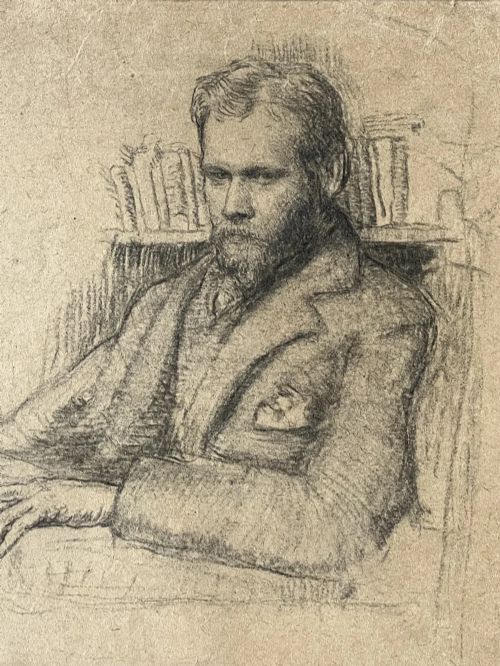
These graphite paper portrait drawing pieces capture personal likenesses through direct line work, offering an intimate window into past lives.
Graphite Paper Portrait Drawing
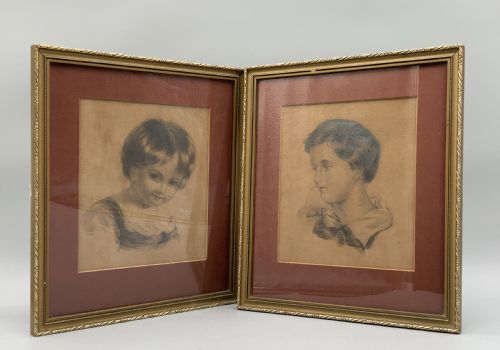
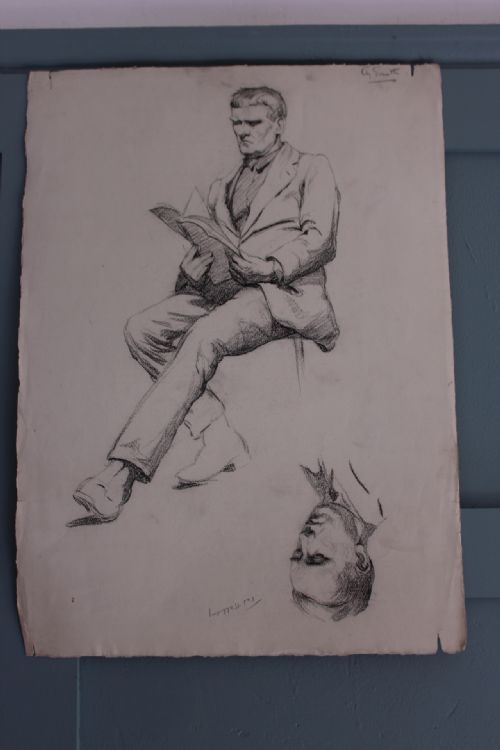
The selections on this page range from Regency-era sketches of children to Edwardian studies and mid-century illustrations. Artists utilise toned paper, chalk, and ink alongside graphite to build depth and shadow in these unique portrayals.
Many works capture specific historical figures, nobility, or artists' acquaintances, while others preserve anonymous sitters from the Victorian era and the Bourbon Restoration period. Each drawing functions as an immediate record of the artist's hand during a sitting.
Materials and Technique
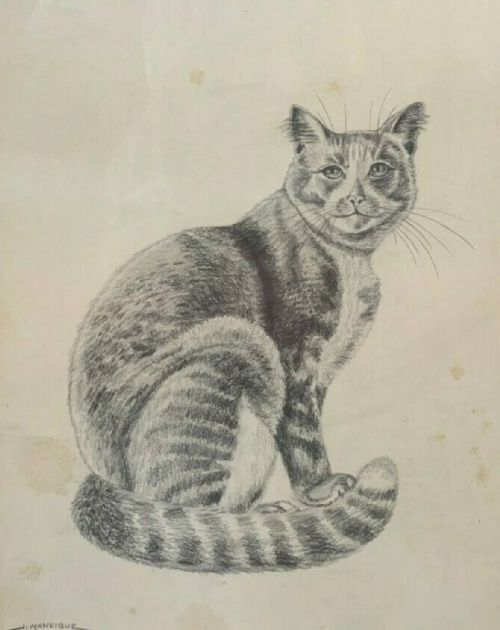
Makers rely primarily on graphite, pencil, and charcoal applied directly to various paper supports, frequently augmented with white chalk for highlights. Some nineteenth-century examples incorporate tinted or toned paper to increase tonal contrast and spatial depth.
Framed behind glass within wooden surrounds, these original works depend on precise line work and shading rather than heavy pigments. Artists build form through careful hatching and smudging, creating lifelike textures in hair and fabric.
Listings feature works spanning the eighteenth, nineteenth, and twentieth centuries, utilising graphite, chalk, and charcoal on paper.
Assessing Quality and Execution
The standard of a graphite paper portrait drawing rests upon the sureness of the draftsmanship and the psychological depth captured in the sitter's expression. Superior examples demonstrate anatomical confidence and subtle tonal gradation without relying on heavy overworking.
Condition of the paper support and the clarity of the underlying graphite lines also separate exceptional works from more hurried sketches. Provenance and attribution to documented artists further elevate the standing of an individual piece.
Augustus John·Sir Thomas Lawrence·Hans Holbein·Mariette Lydis·Henri Josephe Hesse·Sir Nathaniel Dance-Holland·Juliet Pannett
The Graphite Paper Portrait Drawing Glossary
- Graphite
- A form of crystalline carbon used as a drawing medium in pencils. It produces grey to black marks that can be smudged or layered for shadow.
- Toned paper
- Paper manufactured with a pre-existing colour, often grey or tan, which allows artists to work up highlights with white chalk.
- Hatching
- A technique of creating tonal shading through closely spaced parallel lines. Cross-hatching crosses these lines at angles to deepen shadows.
- Attribution
- The assignment of a work of art to a particular artist based on style, provenance, or documentary evidence.
- Provenance
- The chronological record of ownership of a work of art, helping to establish its authenticity and history.
Graphite Paper Portrait Drawing: Frequently Asked Questions
How should I frame a graphite drawing?
Protect works on paper behind glass with acid-free mounts to prevent direct contact with the surface. Keep them away from direct sunlight to avoid fading the graphite and paper.
Ensure framing is sealed properly to deter humidity and dust accumulation over time.
How do I identify the date of a portrait?
Look to the clothing, hairstyle, and framing style of the sitter for initial clues. Signatures, inscriptions on the reverse, and paper watermarks often provide more precise dating.
Compare the draftsmanship against known periods like the Regency or Victorian eras represented here.
Are these drawings original works?
Every piece listed is an original hand-drawn artwork rather than a later print or reproduction. You see the actual pencil, charcoal, and chalk marks left by the artist.
Close inspection reveals the texture of the paper and the pressure variations of the hand.
How do I care for antique paper art?
Maintain stable indoor humidity and temperature levels to prevent paper warping and foxing spots. Minimal handling preserves the delicate graphite surface.
Consult a professional paper conservator if cleaning or restretching becomes necessary.