
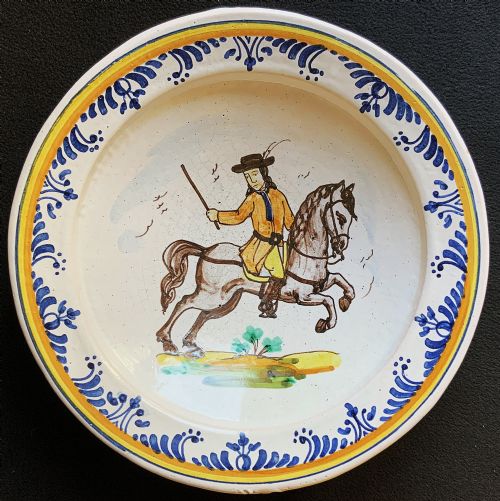


Antique Majolica Bowl
An antique majolica bowl brings vibrant colour and modelled relief to a table, combining tin-glazed earthenware with rich lead glazes.
Antique Majolica Bowl
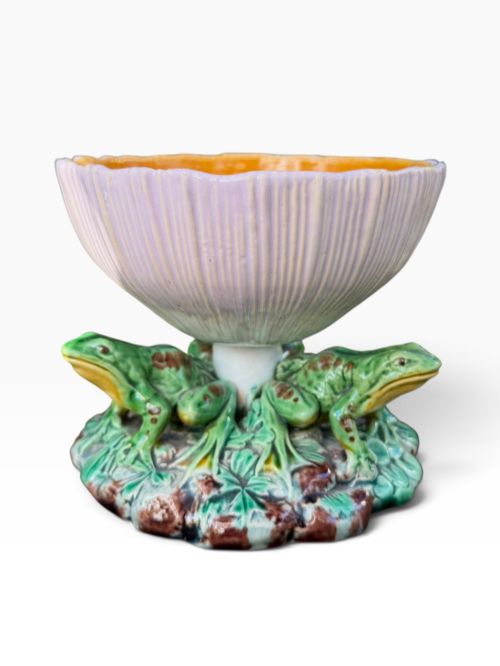
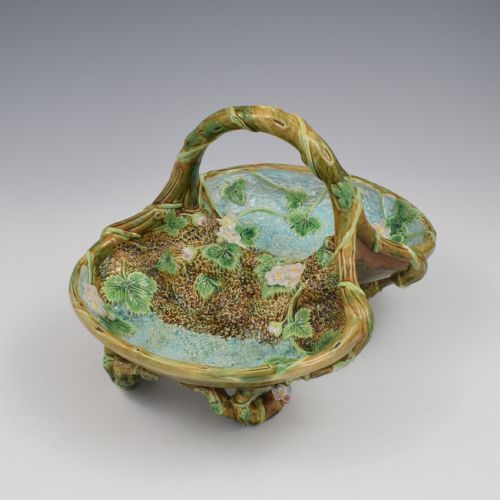
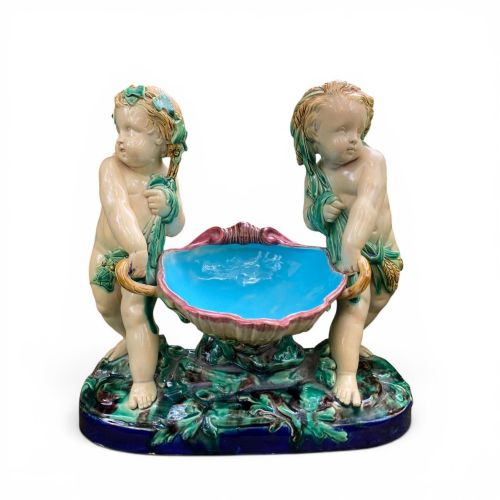
When you search for an antique majolica bowl, you encounter a varied selection of centrepieces, comports, baskets, and salad bowls spanning the eighteenth, nineteenth, and early twentieth centuries. These vessels display distinct influences, ranging from Victorian naturalism and Italian Renaissance Revival to French provincial and Art Nouveau styles.
The pieces you are most likely to meet on this page date from the Victorian era and the nineteenth century, often taking the form of leaf-moulded comports or figurative baskets. Makers from England, Italy, France, and Spain produced these earthenware pieces, frequently incorporating sculpted cherubs, animal heads, and botanical motifs.
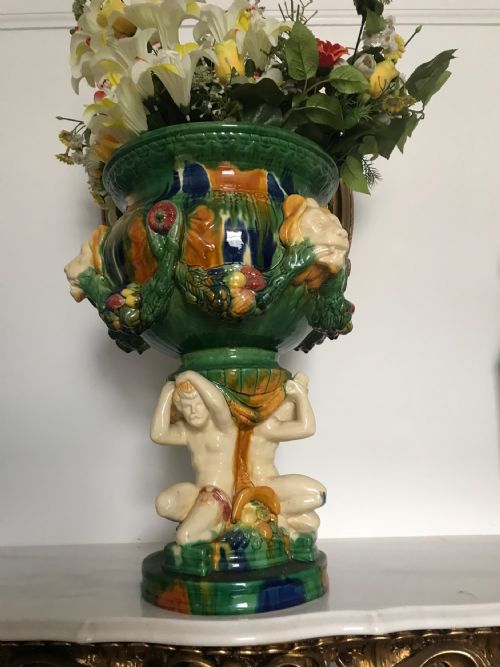
Beyond standard serving bowls, the category encompasses large planters, jardinieres, and deep chargers that share the characteristic tin-glaze or lead-glaze finish. Such items functioned as ornamental display pieces in period interiors as much as functional tableware.
Assessing quality and execution
Quality in these glazed earthenware vessels rests upon the crispness of the modelled relief and the precision of the hand-painting. Superior examples exhibit sharply defined details in figures and foliage, where the coloured glazes pool naturally in the recesses without obscuring the underlying form.
The ambition of the design also distinguishes finer pieces, such as those featuring elaborate figural stands, matched servers, or complex architectural styling. Simpler vessels rely solely on surface glaze effects, whereas the top tier combines sculptural modelling with sophisticated polychrome decoration.
Listings feature earthenware vessels from the eighteenth century to the 1930s, encompassing both British potteries and continental European workshops.
George Jones·Minton·Ulisse Cantagalli·Gien·Eichwald
The Antique Majolica Bowl Glossary
- Majolica
- A type of pottery decorated with opaque tin glazes and colourful metal oxide pigments, known for its bright palette and glossy finish. Victorian makers revived this technique to produce naturalistic and sculptural tableware.
- Comport
- A raised dish or bowl used for serving fruit or sweets at the table. These pedestal vessels often feature elaborate decorative rims and figural supports.
- Tazza
- A shallow bowl or cup mounted on a stem and foot, frequently utilised as a centrepiece. The form derives from Renaissance metalwork and was widely adopted by nineteenth-century ceramic factories.
- Faience
- European tin-glazed earthenware, particularly associated with French and Spanish traditions. It shares technical similarities with majolica through the application of an opaque white glaze painted with metallic colours.
- Jardiniere
- An ornamental pot or stand designed to hold growing plants or flowers. Large majolica examples often incorporate figural bases or animal head decorations.
Antique Majolica Bowl: Frequently Asked Questions
What is an antique majolica bowl?
An antique majolica bowl is a ceramic vessel finished with colourful lead or tin glazes, typically featuring moulded botanical or figural designs.
These pieces were produced extensively during the nineteenth century by major European potteries for decorative and dining use.
How were these bowls used historically?
Owners displayed these vessels as centrepieces on dining tables or sideboards, often using them to serve fruit, salad, or sweetmeats.
Larger versions functioned as decorative planters and jardinieres within Victorian and Edwardian interiors.
How do I identify a Victorian piece?
Victorian examples frequently display naturalistic themes, such as begonia leaves, strawberries, or cherubs, executed in brilliant coloured glazes.
Many of these British and continental works date from the mid to late nineteenth century and carry factory stamps or registry marks.
What is the difference between majolica and faience?
Both terms describe tin-glazed earthenware, but majolica often denotes the colourful, highly modelled Victorian and Renaissance Revival wares.
Faience more commonly refers to French and Spanish traditions with painted tin-glaze surfaces on smoother vessel forms.