
Antique Mahogany Table Leaves
These antique mahogany table leaves expand dining tables to seat large numbers for banquets.
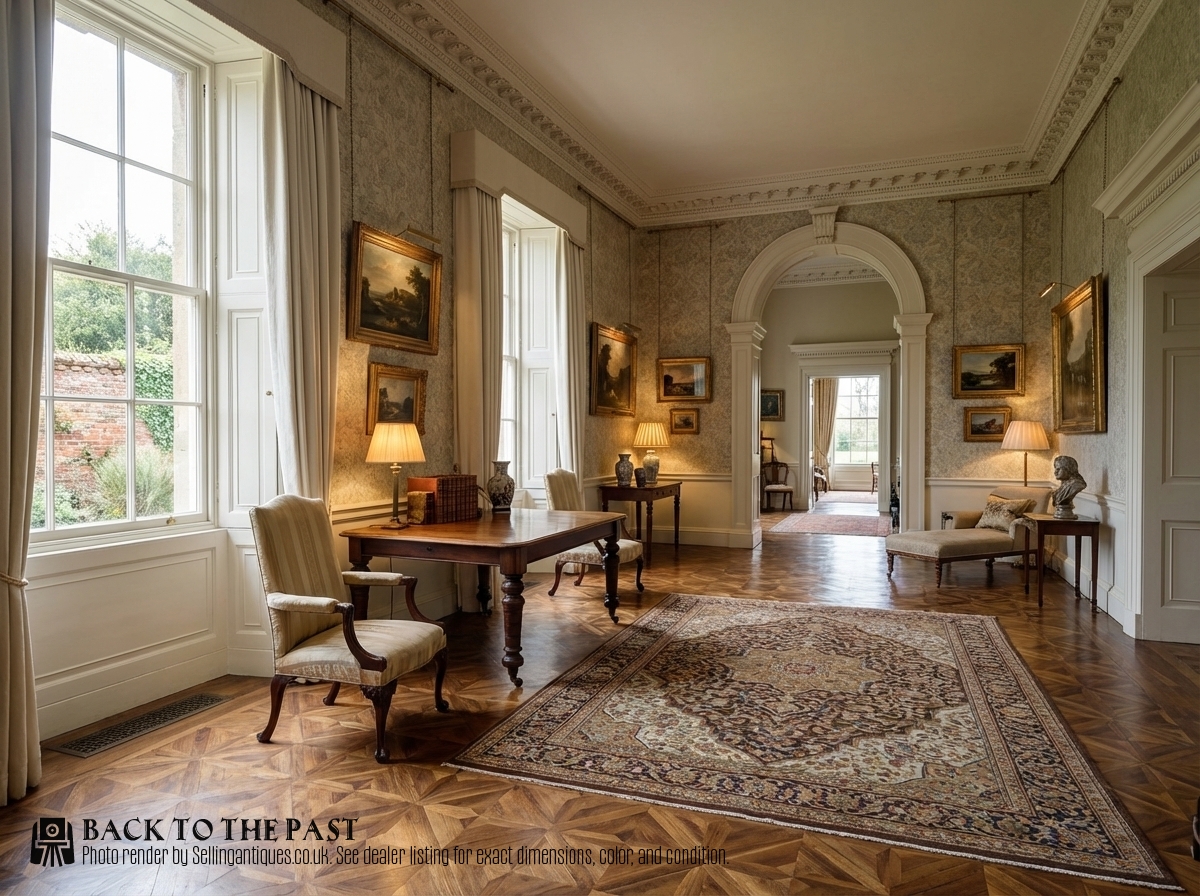
Antique Mahogany Table Leaves
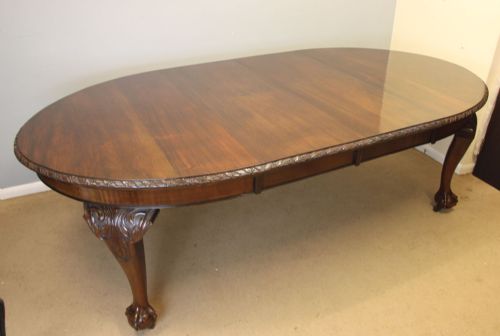
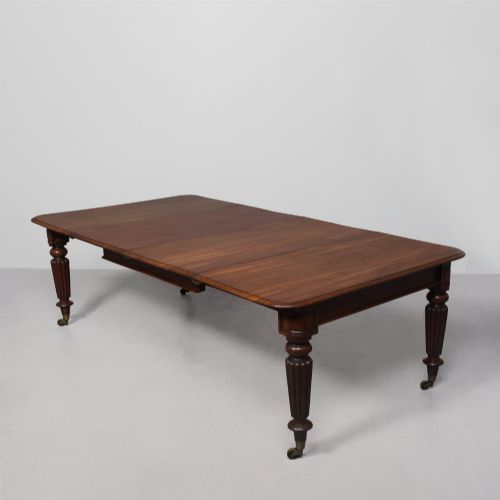
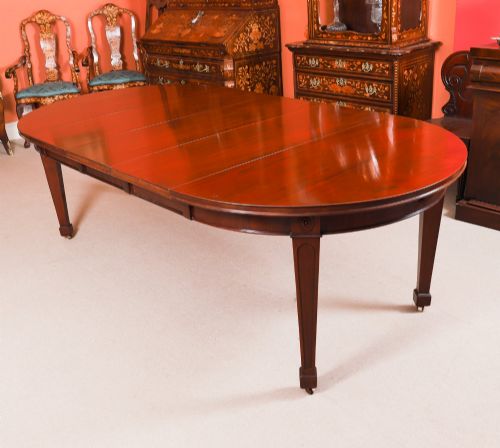
Antique mahogany table leaves are spare boards stored separately and added into extending dining tables to increase surface area. When you search for antique mahogany table leaves, you encounter components salvaged from large Victorian, Georgian, and Regency banquet tables. These panels match the timber and grain of the main table frame to provide seamless expansion.
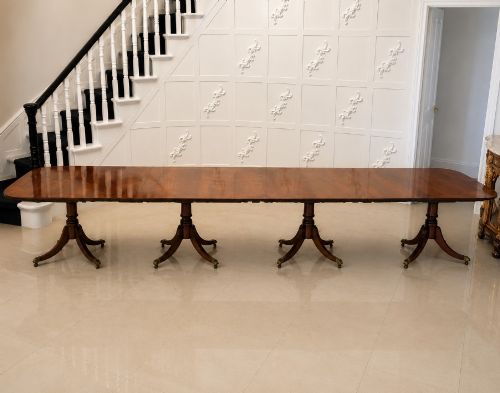
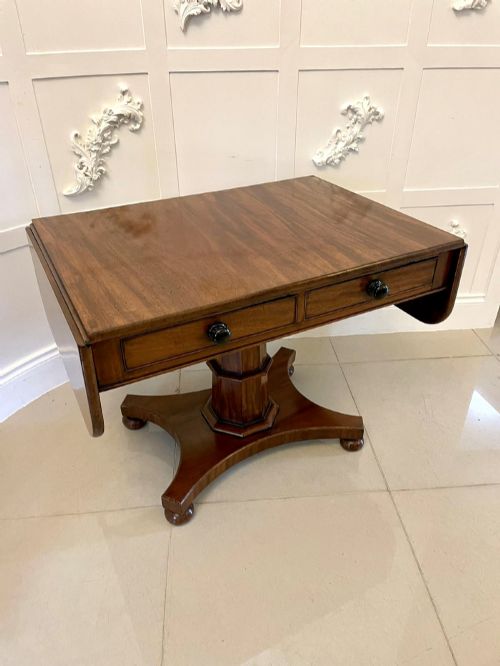
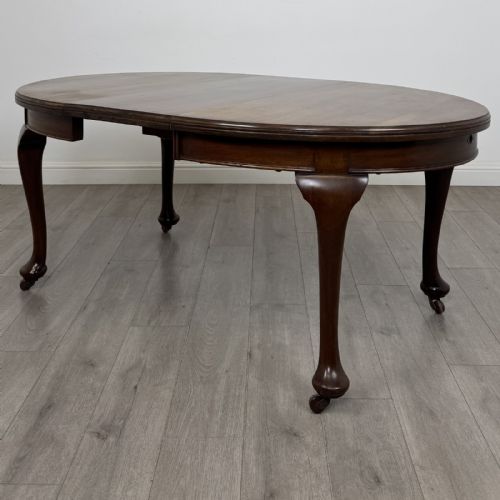
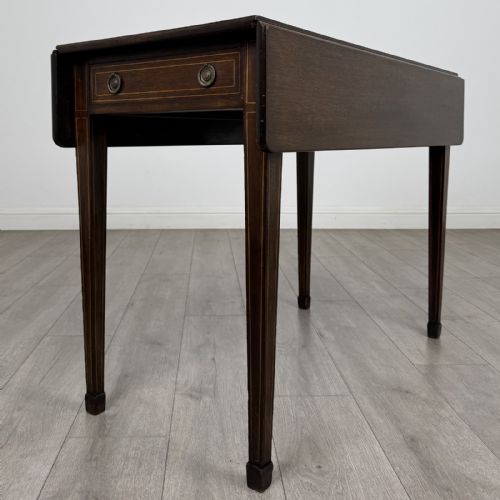
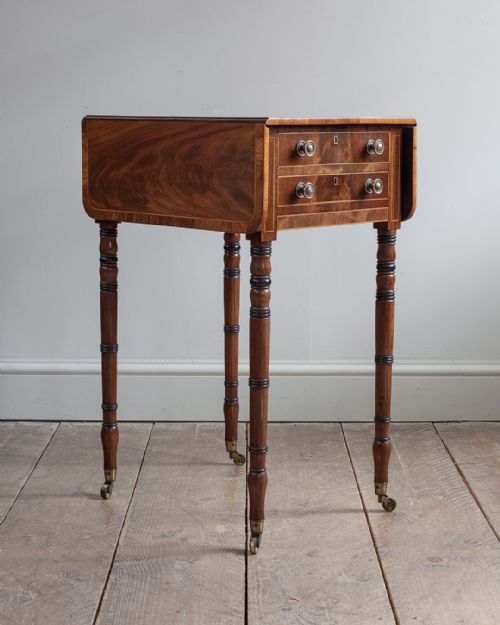
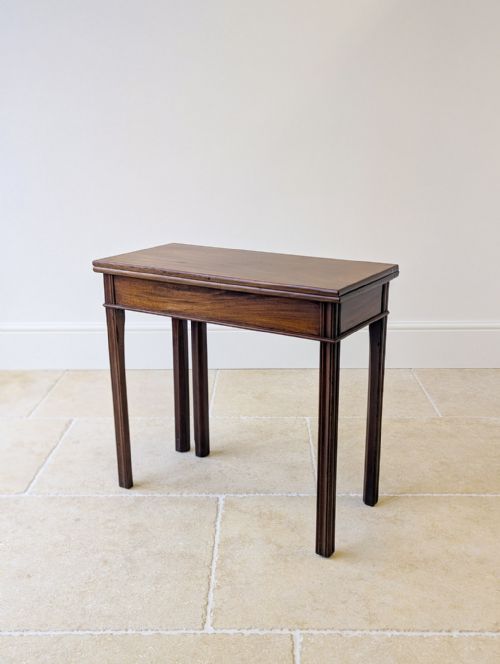
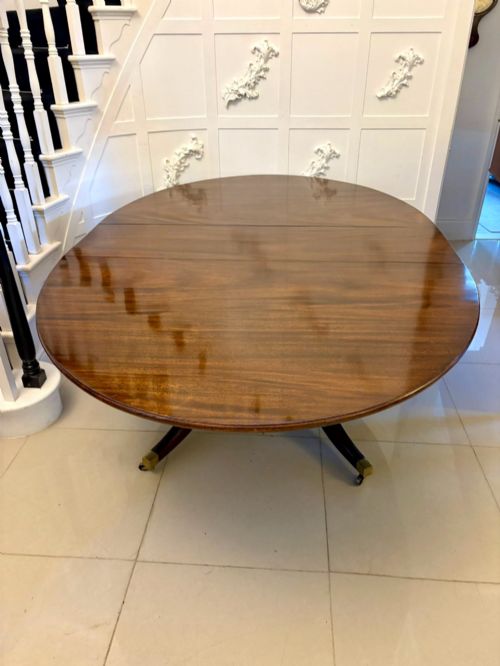
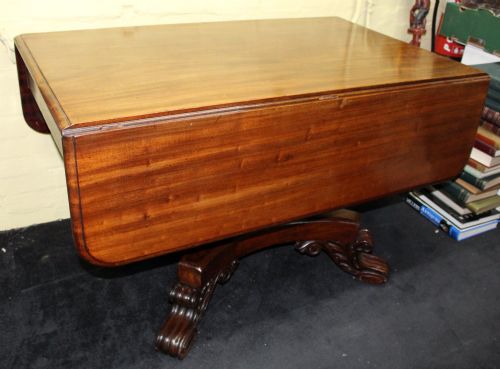
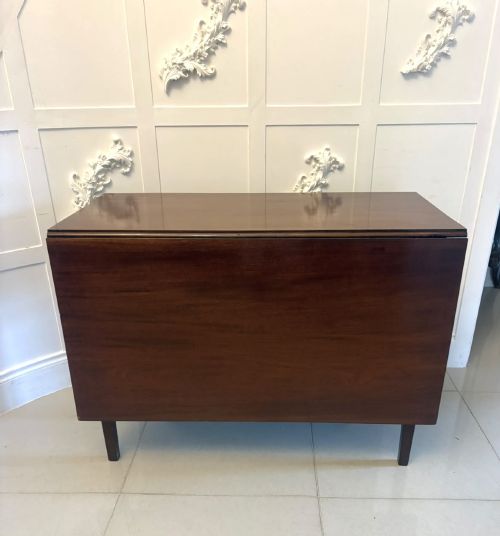
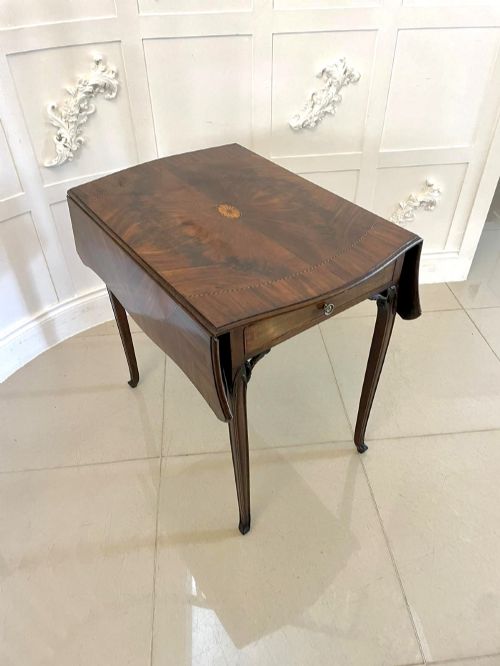
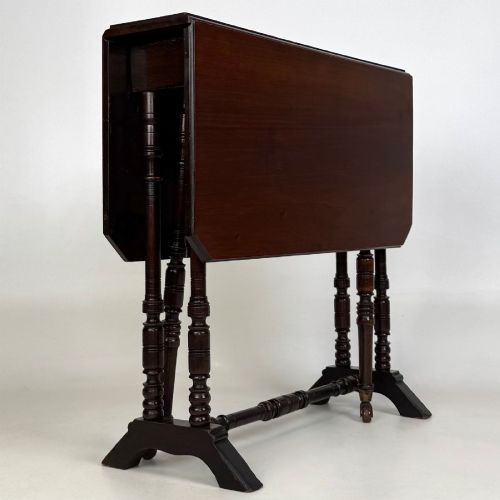
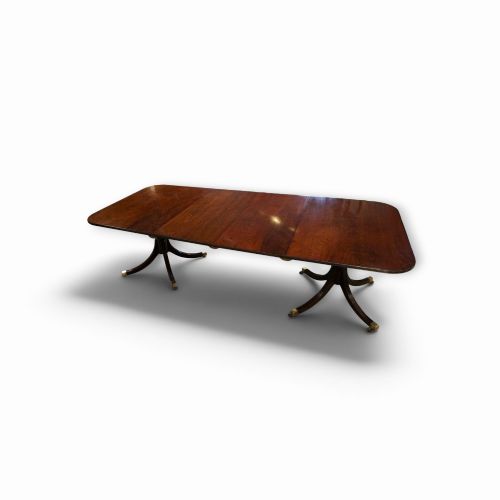
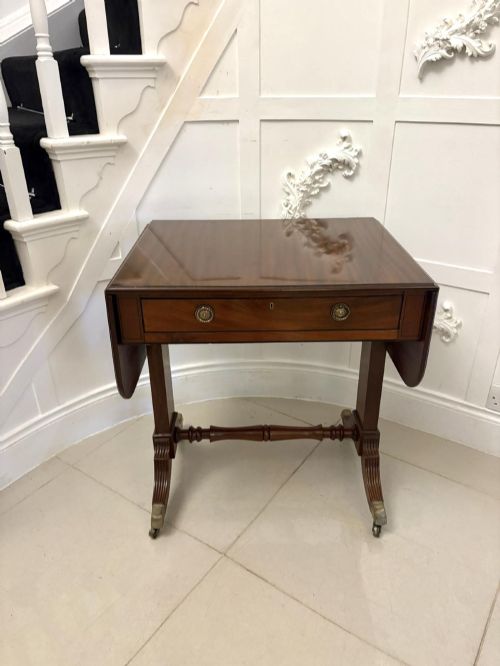
The inventory on this page shows leaves originating from multi-pedestal dining tables, Pembroke tables, and drop-leaf forms dating across the eighteenth, nineteenth, and early twentieth centuries. Most examples incorporate figured mahogany, flame mahogany, or solid timbers shaped to fit specific mechanisms. Buyers acquire these matching sections to restore incomplete dining tables to their original capacity.
How they were made
Cabinet makers selected dense mahogany planks, frequently utilising flame or figured variations for visual depth on the upper surface. Timber preparation involved seasoning the wood to prevent warping across wide board spans before edge-joining narrower sections. Workshops integrated brass alignment pins and slotted plates underneath to secure each leaf firmly into the extending frame.
Inlaid examples feature contrasting stringing in boxwood or satinwood set into recessed channels along the margins. Finishing techniques relied on shellac polishes built up in successive layers to accentuate the grain pattern and rich colour of the mahogany. Carpenters ensured the underside grain ran parallel to the table's main leaves for structural stability during expansion.
Listings feature mahogany, brass, boxwood, leather, satinwood, flame mahogany, wood inlay, and metal materials.
What varies in quality
The standard of a leaf depends on the choice of timber figure, with book-matched flame mahogany commanding superior regard over straight-grained boards. Craftsmanship appears in the precision of the edge joints and the retention of original brass clips or alignment mechanisms that join the sections together. Subtleties in polish depth and the crispness of inlaid boxwood stringing separate workshop tiers.
Proportion and thickness dictate structural integrity, as thinner boards tend to cup or bow over extended spans without adequate subframe support. Leaves retaining their original surface finish demonstrate superior preservation compared to boards stripped and refinished in modern workshops. Matching colour tone and grain direction to an existing table remains the primary test of suitability.
James Garvie and Sons Aberdeen·William and Gibton Dublin
The Antique Mahogany Table Leaves Glossary
- Flame mahogany
- A veneer cut from the fork of the mahogany tree where branches meet the trunk, producing a distinctive rippled flame pattern. This decorative cut was favoured for high-status dining furniture.
- Drop leaf
- A table or flap hinged to drop down when not supported by a swinging leg or bracket. These movable flaps operate similarly to insertable leaves on larger dining tables.
- Boxwood
- A dense, pale yellow wood utilised for fine stringing and inlay work on Georgian and Regency furniture. It provides sharp visual contrast against dark mahogany surfaces.
- Satinwood
- A luminous timber from tropical trees displaying a golden, chatoyant sheen. Makers employed this material for contrasting borders and marquetry details.
- D-end
- A table end shaped in the semi-circular profile of the letter D, common in modular dining furniture. Sets with D-end sections accept central leaves to form extended banquet tables.
Antique Mahogany Table Leaves: Frequently Asked Questions
How do I match leaves to my table?
Measure the width, thickness, and skirt profile of your existing table very carefully. Compare the grain direction and mahogany tone under natural light to confirm visual continuity.
Verify the spacing and size of the brass alignment pins beneath the leaf. Small discrepancies in width require professional adjustment by a cabinet maker to fit older winding mechanisms.
How should spare leaves be stored?
Store spare leaves flat in a dry room with stable temperature and humidity levels to prevent warping. Standing boards upright against a wall places uneven stress on the timber grain and joints.
Utilise dedicated leaf holders or padded felt bags to protect the polished surfaces from scratches and knocks. Keep them away from direct sunlight and radiators to avoid shrinking.
What causes mahogany to change colour?
Mahogany naturally darkens and deepens in tone toward a rich amber-brown when exposed to ambient light over decades. Original polish absorbs atmospheric oils and ultraviolet rays, creating a warm patina unique to antique furniture.
Sunlight exposure can bleach unprotected areas if leaves are stored separately from the main table for long periods. Regular polishing and even light exposure help maintain a consistent surface hue.