






Antique Mahogany Servery
An antique mahogany servery brings solid timber and classic proportions to a dining room, offering both practical surface area and timeless storage.
Antique Mahogany Servery
An antique mahogany servery encompasses substantial dining furniture including sideboards, chiffoniers, buffets and serving tables. These pieces serve as the focal point for food presentation and tableware storage in formal dining spaces.
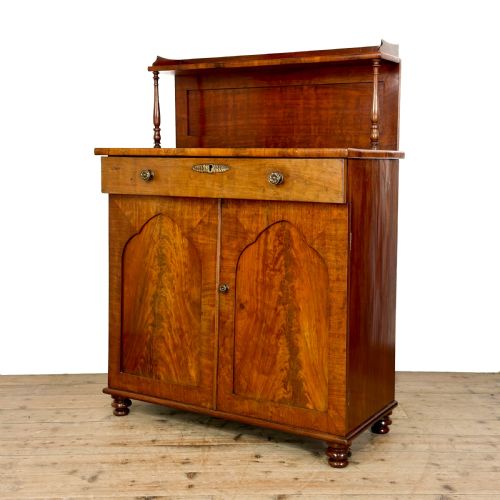
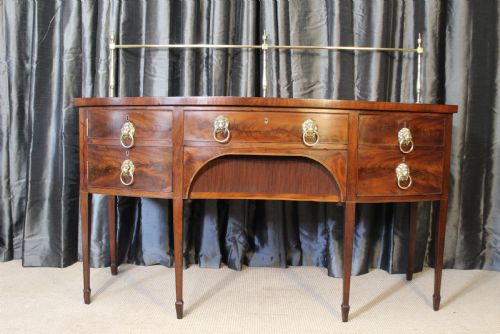
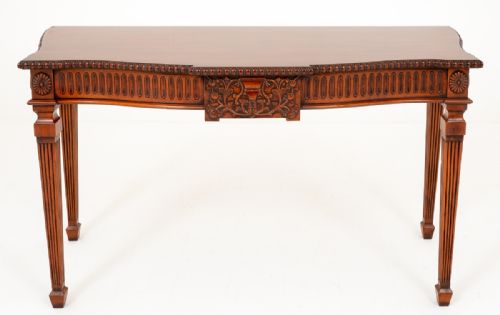
The selections span distinct historical eras, featuring Georgian bowfront designs alongside Victorian mirror-back cupboards and Regency console tables. Buyers encounter forms ranging from compact side tables to large four-door cabinets.
Originating predominantly from the eighteenth and nineteenth centuries, these items demonstrate traditional British cabinet-making traditions. The surviving examples reflect changing domestic habits across the Victorian and Edwardian periods.
How they were made
Cabinet-makers relied on solid mahogany timbers paired with decorative veneers to build these serving pieces. Workshops often incorporated secondary woods for internal drawer linings and carcass backs.
Craftsmen applied contrasting stringing and banding using boxwood and satinwood inlay to accentuate the drawer fronts and borders. Brass details, including gallery rails and lion-mask handles, provided functional and decorative hardware.
Construction involved traditional joinery techniques such as dovetailed drawers and tenoned framing to ensure structural longevity. Glass doors and mirrored backs appeared in later Victorian and Edwardian iterations to lighten the visual weight.
Antique Mahogany Servery Retail Price Guide 2026
Typical asking prices for mahogany servery among the pieces listed under this phrase on Sellingantiques today, from the lower quarter to the upper quarter. They describe what is for sale here now, not the wider market.
Victorian dining hosts relied on these towering mirror-back sideboards to reflect candlelight and secretly monitor guests reaching for the port.
What varies in quality
The quality of a piece rests heavily on the selection of the timber grain and the precision of the cabinet-making. Richly figured curl mahogany and balanced wood inlay distinguish finer workshop output from plain utility items.
Proportion and architectural harmony dictate the standing of a servery within its period. Pieces possessing restrained carving, original brass hardware and well-balanced leg arrangements command greater consideration.
Structural integrity, particularly the smooth operation of large doors and deep drawers, reflects the original standard of manufacture. The preservation of original surface finishes and backboards preserves the historical integrity of the furniture.
James Shoolbred Co·H Mower Stephenson
The Antique Mahogany Servery Glossary
- Bowfront
- A curved convex front design popular on Georgian and Regency sideboards. This shape softens the corners of the furniture and maximises internal storage capacity.
- Chiffonier
- A compact sideboard or low cabinet typically fitted with shelves and doors below. Victorian examples frequently incorporate mirror backs and raised upper tiers.
- Inlay
- A decorative technique where contrasting woods such as boxwood and satinwood are inserted into recesses in the mahogany surface. This method creates geometric borders and floral motifs.
- Gallery
- A raised brass or timber rail mounted along the rear edge of a serving table. Its purpose was to prevent dishes and glassware from sliding off during service.
- Curl mahogany
- Timber cut from the fork of the mahogany tree where the branches meet the trunk. This grain produces a dramatic feather-like flame pattern prized for drawer fronts.
Antique Mahogany Servery: Frequently Asked Questions
Where should I place a servery?
These pieces suit dining rooms, large hallways and living spaces where surface space and storage are required. Their depth means they sit comfortably against a main wall.
Ensure you measure the floor space and clearance for opening doors and drawers before positioning the furniture. Keep them away from direct heat sources to protect the polished mahogany timber.
How do I clean mahogany furniture?
Dust the surface regularly with a soft, dry cloth to prevent grit accumulation. Avoid modern silicone sprays that can damage the traditional wax finish.
Apply a quality beeswax periodically to nourish the wood and maintain its deep lustre. Buff gently with a clean cloth after application for the best result.
What is the difference between a sideboard and a buffet?
Sideboards traditionally feature cupboards and drawers designed specifically for storing cutlery, linen and dining accessories. They often include serving surfaces on top.
Buffets lean towards food presentation and storage, sometimes appearing with tiers or mirror backs in Victorian iterations. Both terms overlap considerably across different historical periods.