
Antique Mahogany Pediment
An antique mahogany pediment tops large case pieces and mirrors, bringing architectural presence and rich timber grain to a room.
Antique Mahogany Pediment
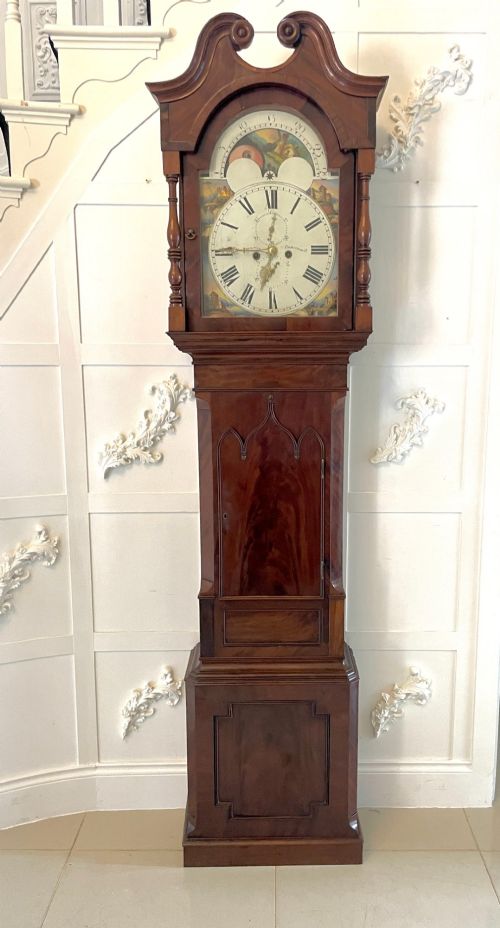
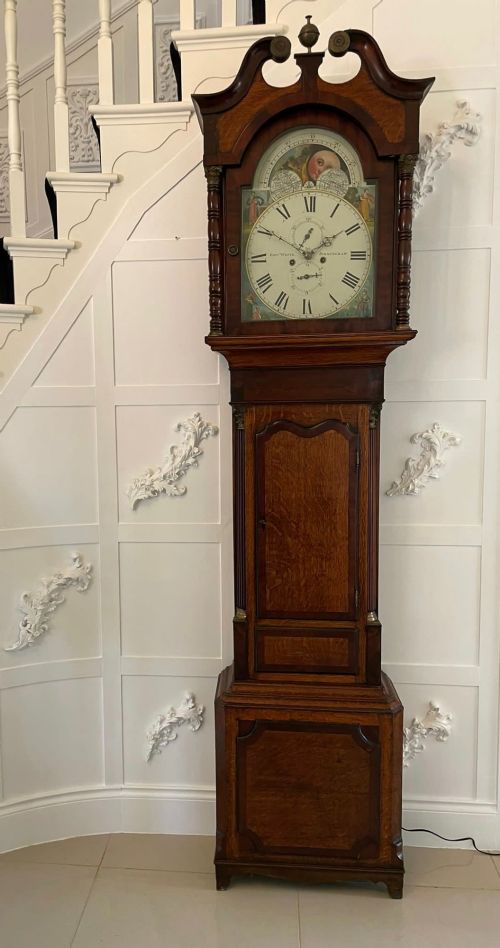
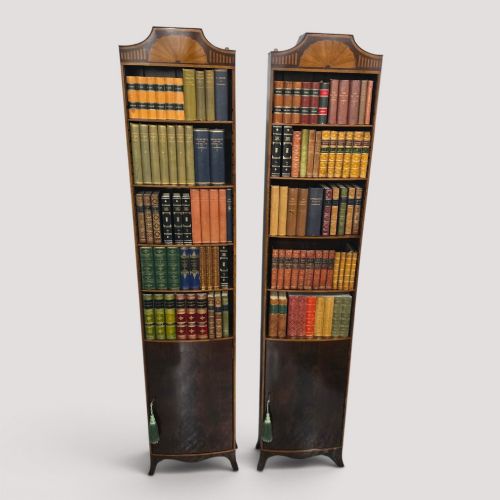
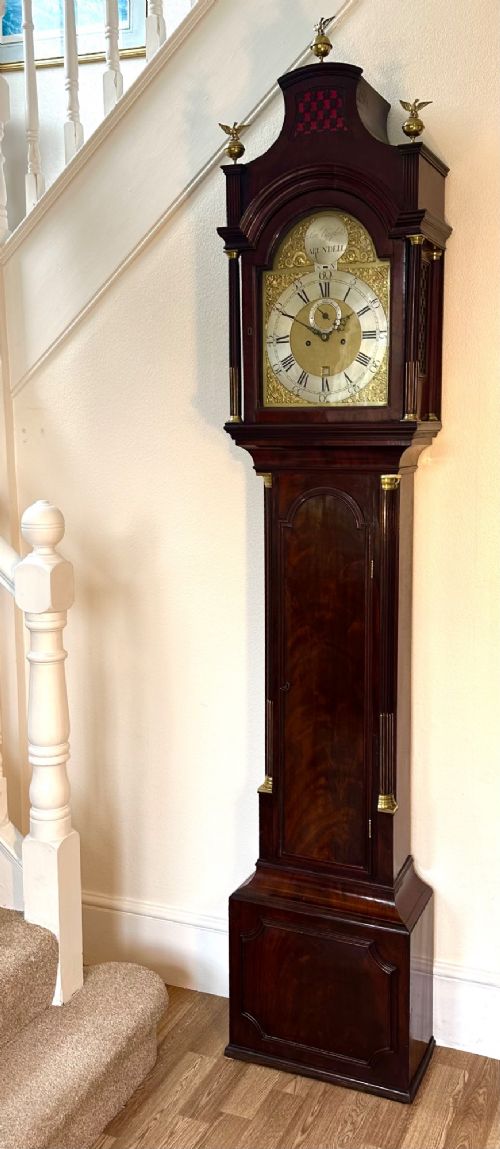
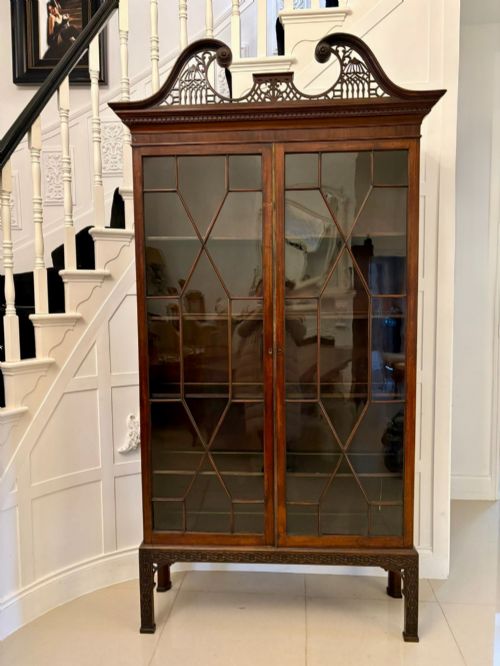
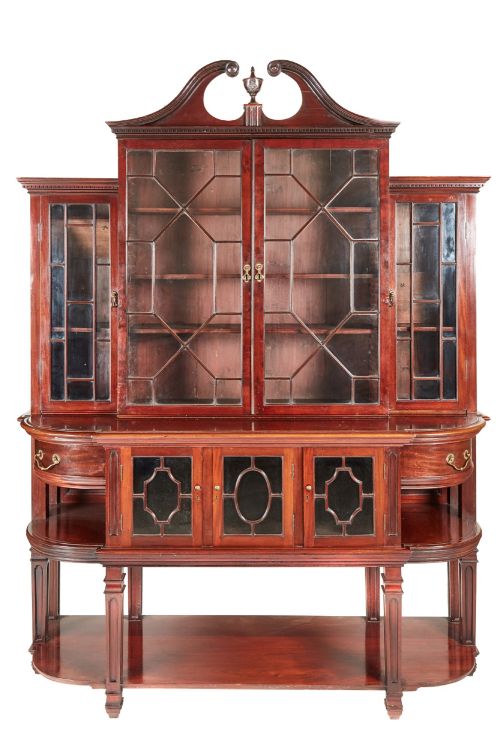
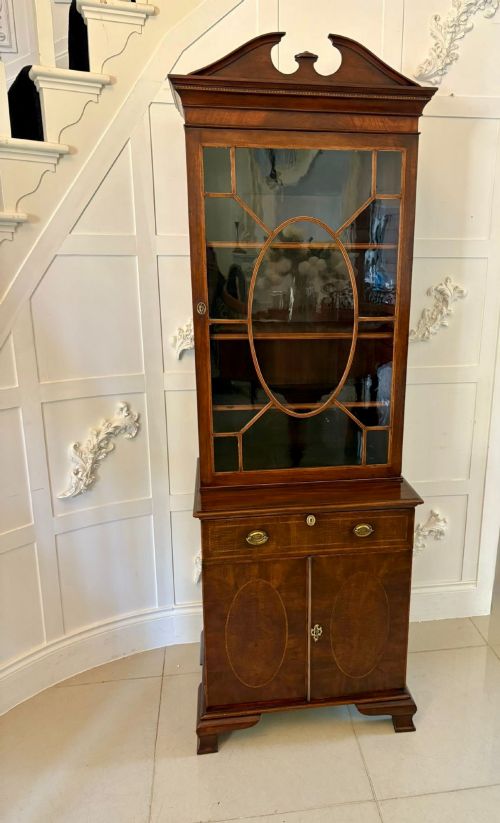
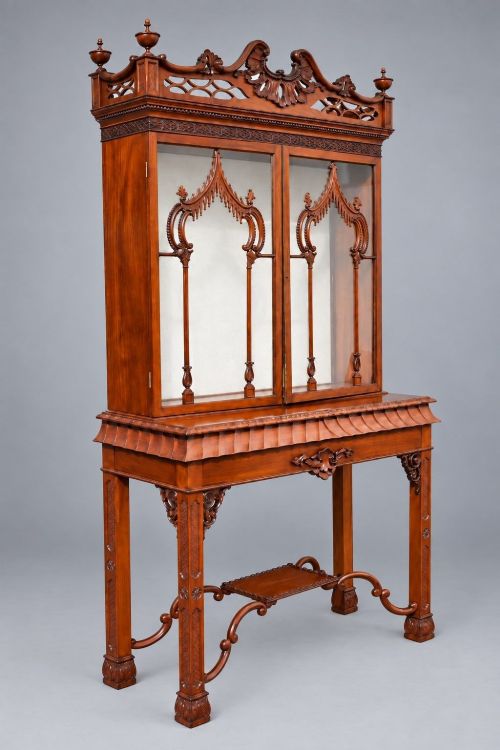
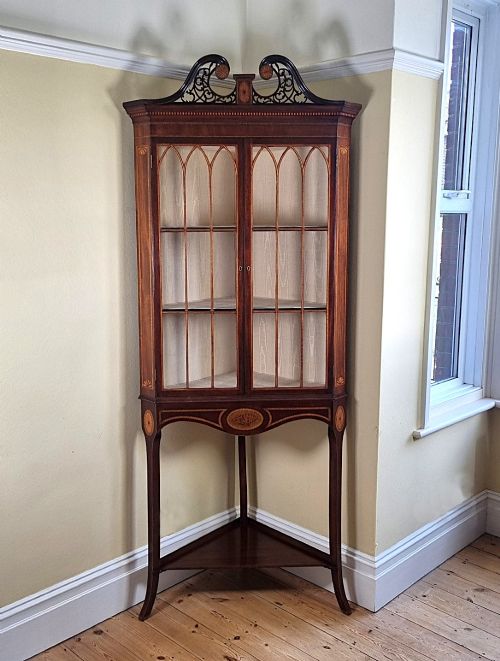
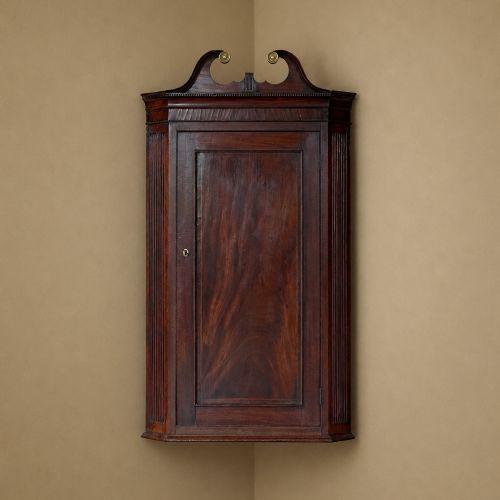
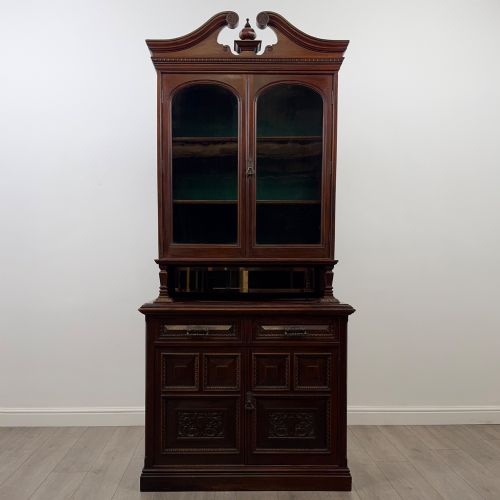
When you search for an antique mahogany pediment, you find the crowning architectural crests of tall case furniture, bookcases, and mirrors. These wooden crowns sit atop tall pieces, lending height and formal balance to the design.
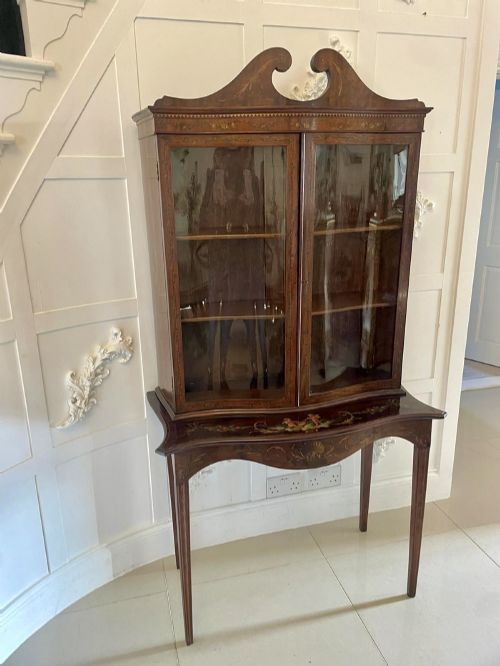
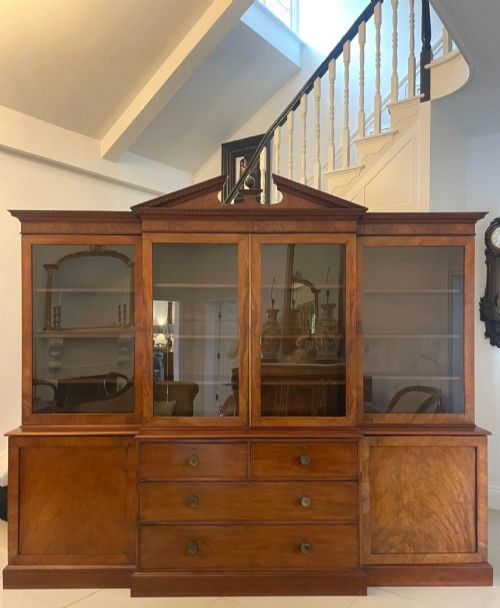
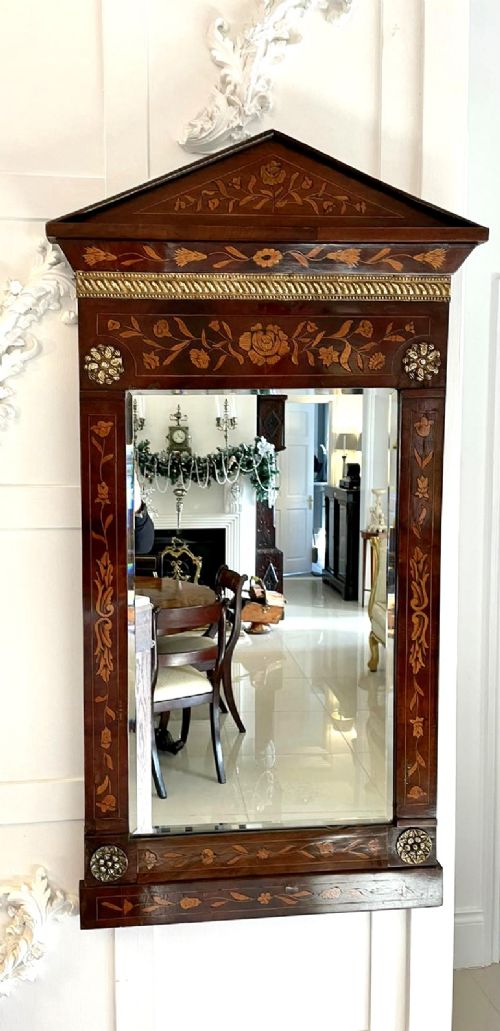
The selections here span the Georgian and Victorian periods, including George III and Edwardian examples. You encounter them integrated into large breakfront bookcases, display cabinets, and tall wall mirrors.
Makers shaped these timber cornices to finish vertical furniture schemes. They appear most frequently on substantial library pieces and tall display cabinets rather than as standalone elements.
How they were made
Cabinet makers constructed these architectural crests from dense mahogany timber, frequently incorporating oak, satinwood, and giltwood accents. They built the core framework using sturdy timber before applying fine veneers.
Craftsmen shaped the wood into architectural profiles such as broken pediments, swan necks, and straight cornices. They utilised hand tools to carve mouldings, dental work, and intricate details directly into the solid mahogany or applied carved embellishments.
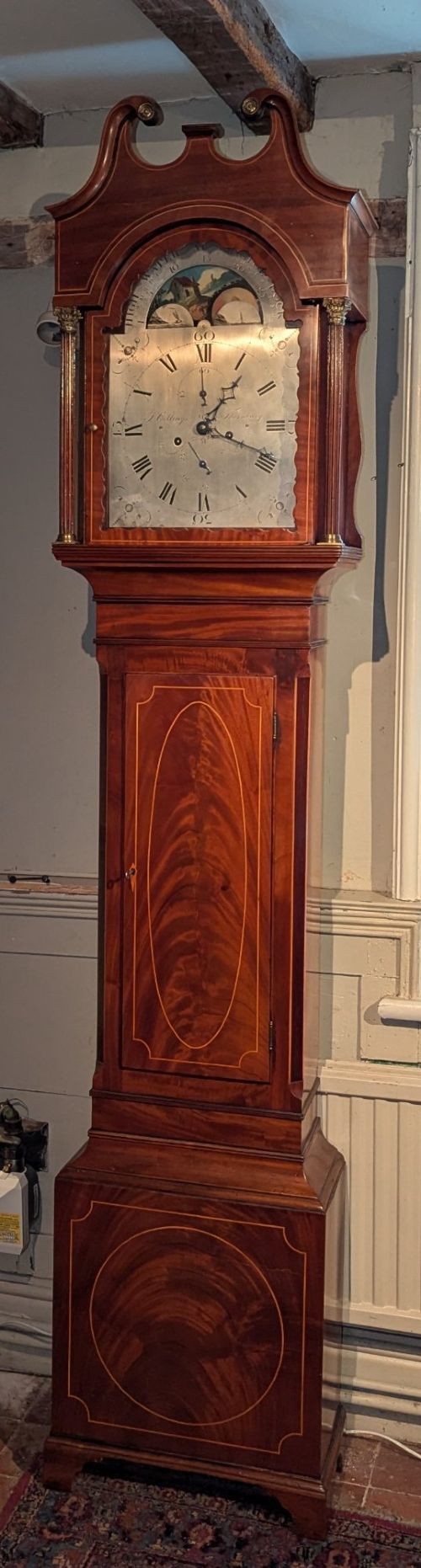
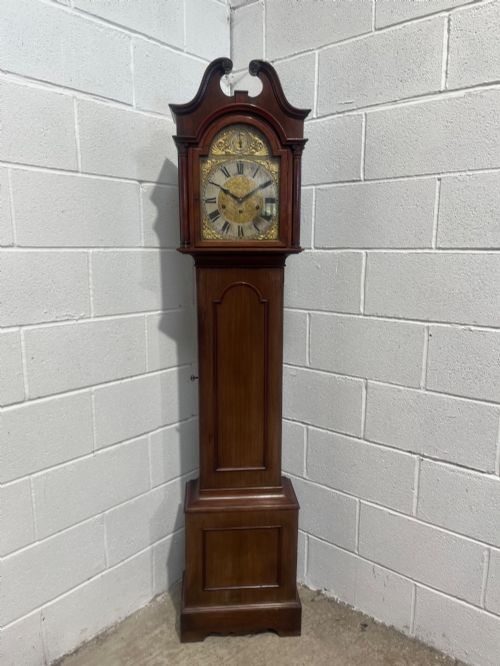
The furniture pieces carrying these pediments include longcase clocks, breakfront bookcases, and display cabinets.
What varies in quality
The depth and crispness of the carved details separate the finest examples from standard production pieces. Sharp mouldings and well-proportioned architectural lines indicate superior workshop execution.
The choice and figure of the mahogany timber dictate the visual richness of the crest. Rich grain patterns and careful book-matching elevate the architectural presence above plain timber constructions.
Edwards and Roberts·Thomas Chippendale·William McEwan·George Adams·Edward Shepley
The Antique Mahogany Pediment Glossary
- Pediment
- An architectural crowning element placed above doors, windows, or furniture pieces. It originates from classical building design and translates into cabinetwork.
- Breakfront
- A piece of furniture where the central section projects forward from the flanking wings. This layout creates dynamic shadow lines beneath the upper pediment.
- Astragal
- A small moulding profile used to divide glass panes in cabinet doors. It adds delicate vertical and horizontal lines below the upper cornice.
- Marquetry
- Decorative veneer work created by fitting together small pieces of different coloured woods. Craftsmen applied these patterns to enhance the surface of the timber.
Antique Mahogany Pediment: Frequently Asked Questions
What is an antique mahogany pediment?
An antique mahogany pediment is the decorative architectural crown surmounting tall case furniture, tall bookcases, and large wall mirrors. These timber crests provide a finished vertical accent to the furniture.
They reflect the architectural tastes of the Georgian and Victorian periods, echoing classical building designs in miniature form.
How do I identify a Georgian pediment?
Georgian pediments typically display hand-carved classical details, dense figured mahogany, and restrained architectural proportions. They often take the form of swan neck or broken pediment designs.
Craftsmen of this era focused on harmonious geometric balance and utilised solid timber alongside precise joinery techniques.
Where are pediments found on furniture?
Pediments sit directly on the topmost horizontal surface of tall furniture pieces. They crown breakfront bookcases, display cabinets, and tall case clocks.
Their primary function is to draw the eye upward and complete the architectural composition of the cabinet below.
How do Victorian pediments differ from Georgian?
Victorian pediments often incorporate revival styles, heavier mouldings, and machine-assisted carving techniques alongside traditional hand methods. They frequently appear on larger display cabinets and bookcases from the nineteenth century.
These later examples lean into bolder decorative statements, sometimes integrating marquetry or giltwood details.