

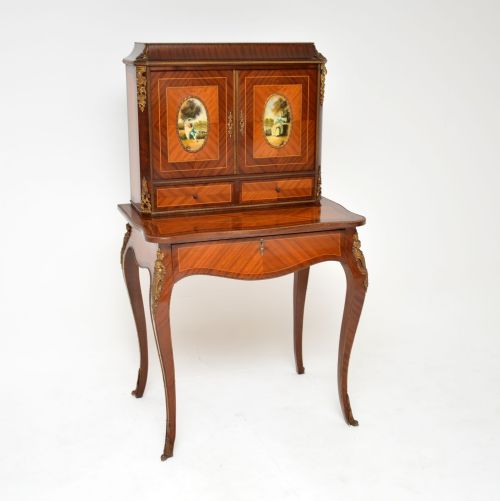
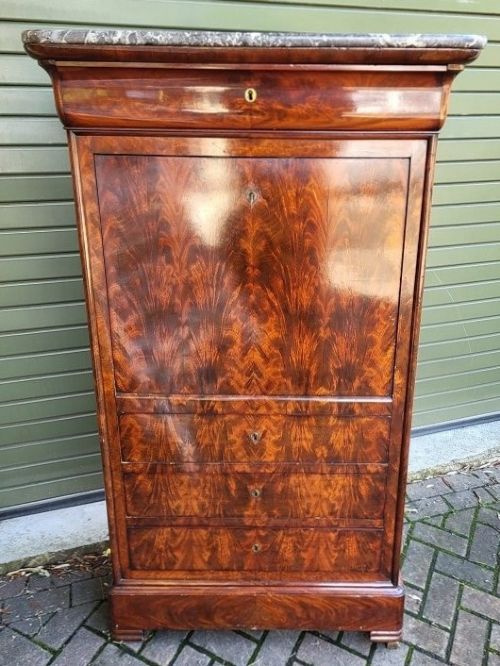
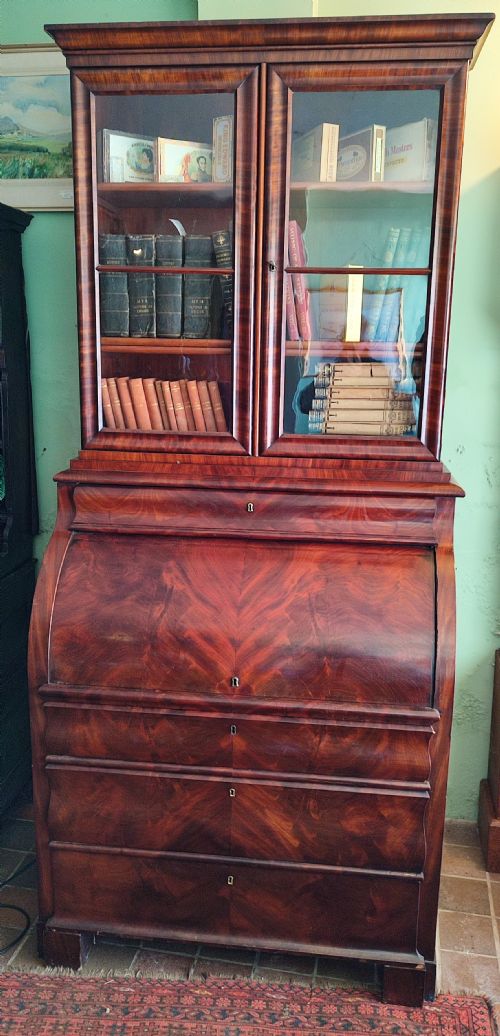


Antique Mahogany Escritoire
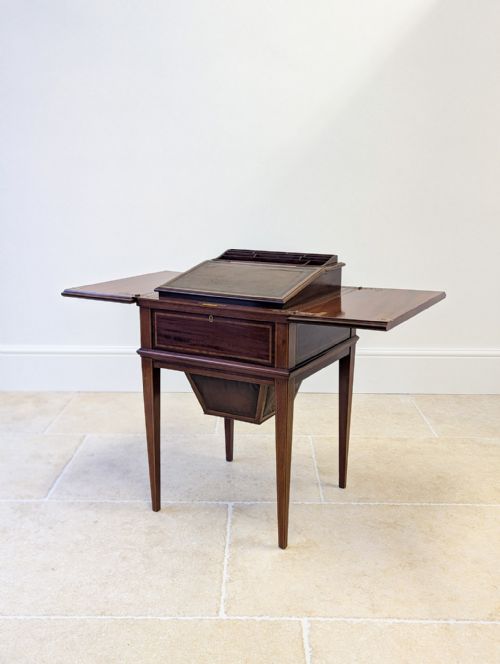
An antique mahogany escritoire provides a private writing space, combining timber and fitted drawers behind a drop-down or cylinder front.
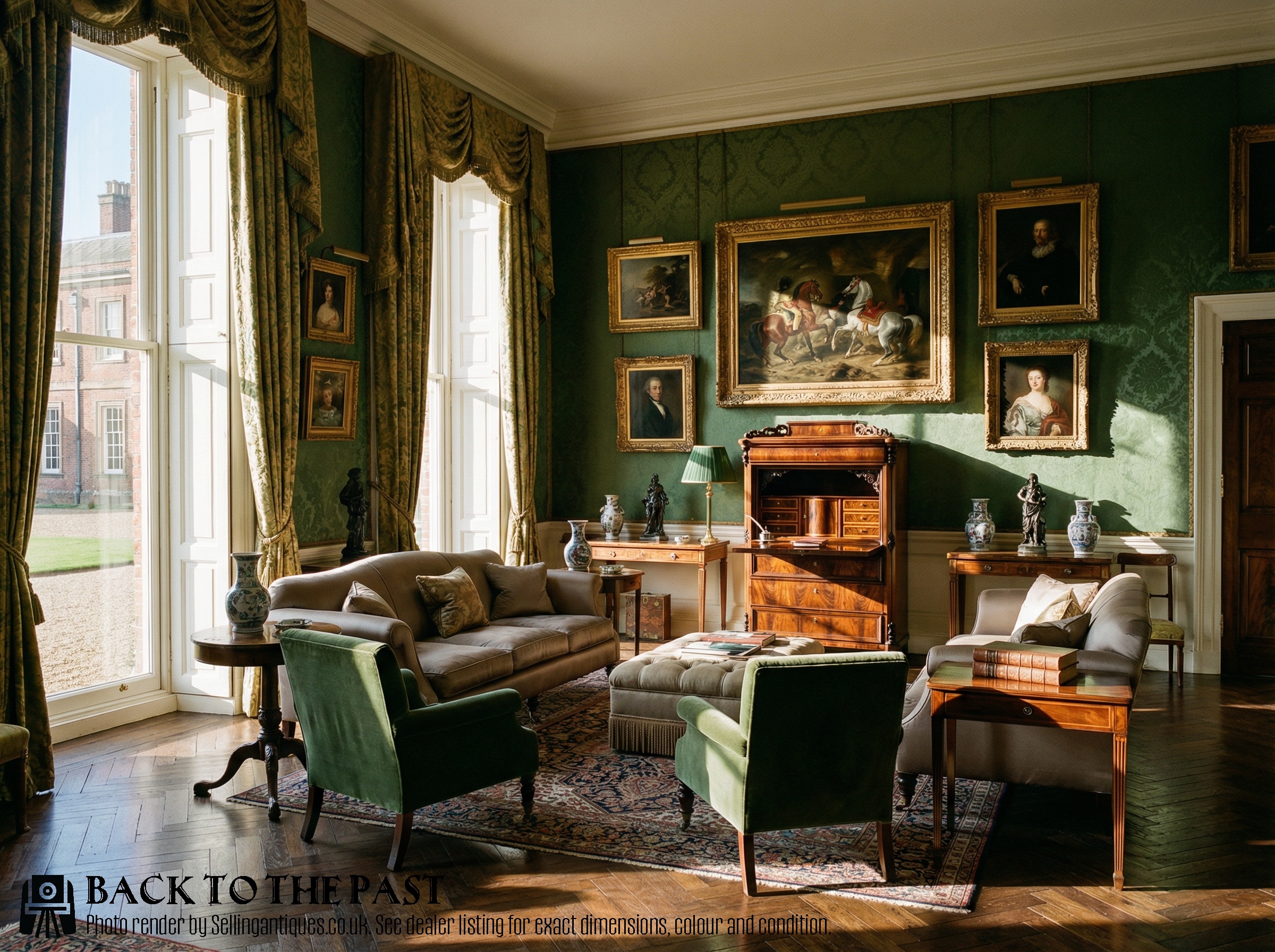
Antique Mahogany Escritoire
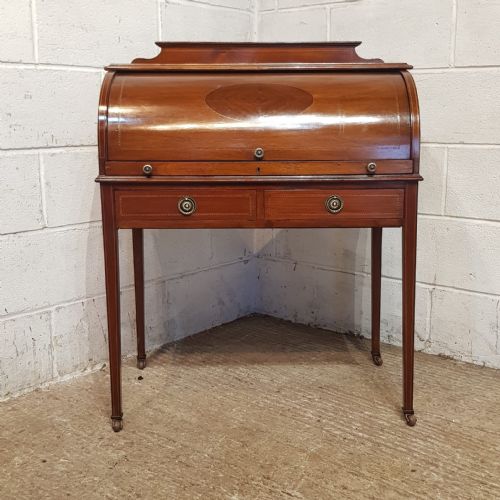
An antique mahogany escritoire encompasses fall-front writing desks, cylinder bureaux, and secretaire cabinets originating from Georgian, Victorian, and Edwardian eras. These pieces bridge the gap between heavy storage furniture and personal writing tables.
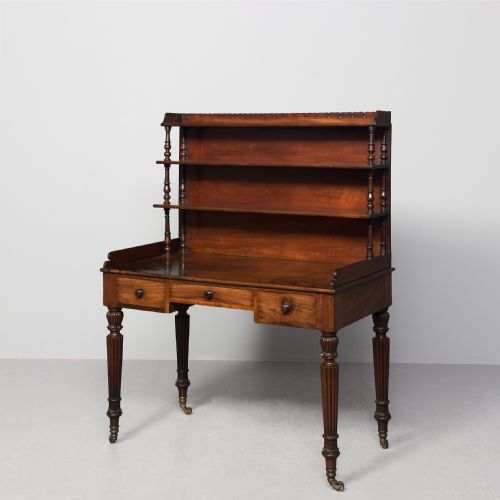
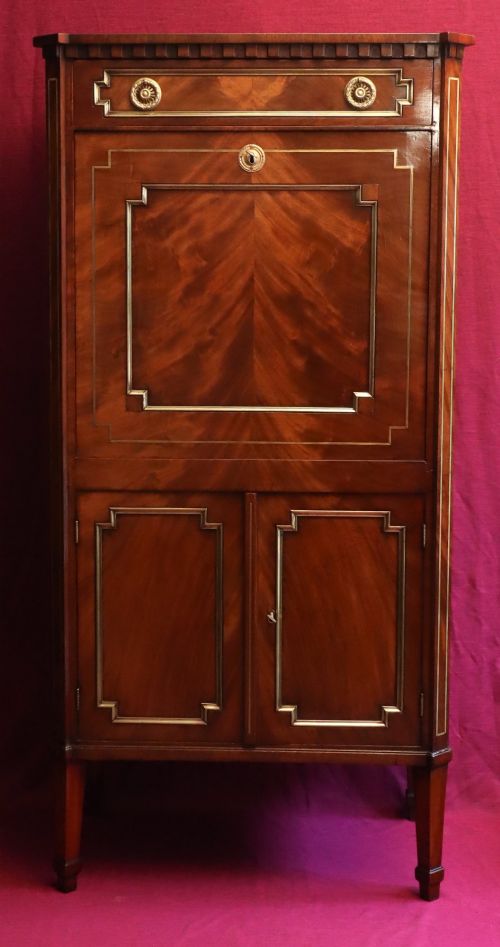
The version most frequently met on this page is the nineteenth-century upright fall-front cabinet, often French in origin or sharing stylistic traits with English Georgian and Regency examples. Bureau bookcases and compact writing cabinets also appear across the selection.
Makers and designers from London to Scotland, alongside continental workshops, shaped these items using dense timbers and refined interior compartments for correspondence and ledgers.
Materials and construction
Cabinet makers relied primarily on solid mahogany and flame mahogany veneers, applying them over secondary woods to build the main carcase and writing surfaces. Boxwood and satinwood stringing frequently provide contrast on inlaid surfaces.
Internal fittings often incorporate leather writing inserts alongside pigeonholes and small drawers. Brass handles, ormolu mounts, and bronze inlays secure the decorative scheme on French and English models alike.
Structural integrity depends on the precision of the fall-front hinge mechanism or cylinder track, ensuring smooth movement when accessing the internal desk compartment.
Barristers needed a secure place for legal briefs, giving rise to specialised bureau forms that locked away contentious arguments overnight.
Craftsmanship and distinction
Selection of the timber grain dictates visual appeal, particularly where symmetrical flame mahogany veneers adorn the drop front. Superior pieces display continuous grain matching across drawer fronts and outer panels.
The intricacy and internal layout of small drawers, secret compartments, and pigeonholes separate standard utility desks from exhibition pieces. Secondary woods and dovetail joints reveal the standard of workshop execution.
James Mein of Kelso·John MaClean·George Faulkner Armitage·Gregory & Co. of London
The Antique Mahogany Escritoire Glossary
- Escritoire
- A writing cabinet featuring a fall-front or cylinder desk flap concealing internal compartments. It evolved during the seventeenth century into a staple form for private correspondence.
- Secretaire à abattant
- A tall vertical cabinet with a hinged writing flap that drops forward to create a desk surface. French examples frequently pair this form with a marble top.
- Biedermeier
- A Central European style spanning the nineteenth century characterised by clean lines, restrained ornamentation, and figured mahogany veneers. This design prioritised domestic comfort and utilitarian grace.
- Bonheur du jour
- A small, light ladies writing desk originating in France, usually fitted with a small cabinet or tiered shelf on top. These tables stand on slender legs.
- Ormolu
- Gilded bronze mounts applied to furniture, common on French Empire and Rococo Revival pieces. This decorative element accents the corners and drawers of the cabinet carcase.
Antique Mahogany Escritoire: Frequently Asked Questions
What is an antique escritoire?
An escritoire is a dedicated writing cabinet featuring a hinged front that lowers to form a writing surface. It typically encloses a series of small drawers and pigeonholes for stationery.
These pieces combine the storage capacity of a small chest with the practical workspace of a desk. They range from compact English bureau tables to tall French cabinets.
How do I use an escritoire today?
An escritoire serves well as a compact laptop workstation or a traditional spot for letter writing and paperwork. The drop-front closes to conceal modern clutter when not in use.
Placing the desk against a stable wall protects the drop-front hinges from strain. Regular application of suitable wax maintains the polish on mahogany surfaces.
How do I tell Georgian from Victorian pieces?
Georgian pieces often display restrained classical proportions, bracket feet, and simpler internal layouts. Their construction emphasises solid timber and understated brasses.
Victorian and later pieces frequently incorporate cylinder fronts, more elaborate veneers like flame mahogany, or continental styling such as marble tops and ormolu mounts.
Are these desks English or continental?
The selection includes both British examples and continental pieces, particularly from France and regions influenced by Biedermeier design. English pieces often favour straightforward mahogany or satinwood inlay.
Continental escritoires, such as those styled after French Empire or Louis XV models, frequently feature bronze mounts, marquetry, or marble tops paired with flame mahogany.