



Antique Mahogany Closet
An antique mahogany closet brings rich timber grain and classic proportions to a room, offering substantial storage or display space built to endure.
Antique Mahogany Closet
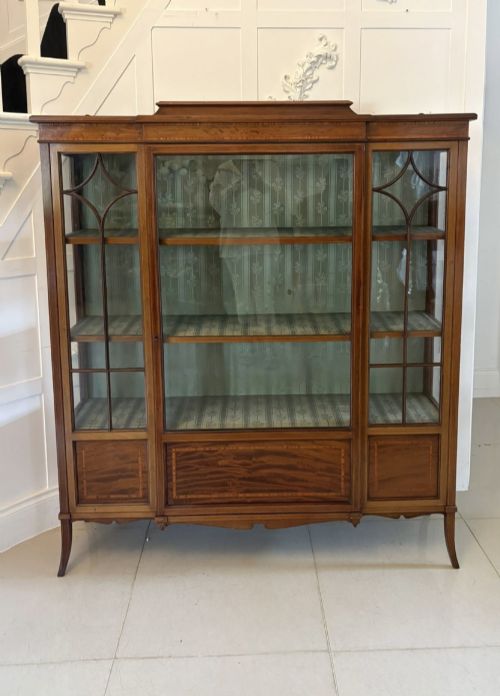
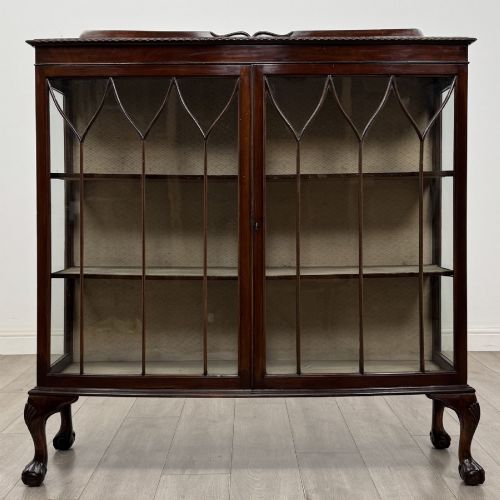
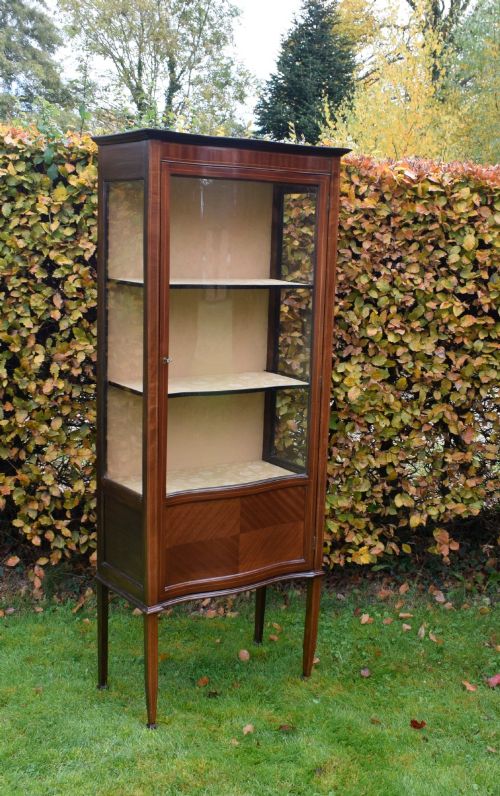
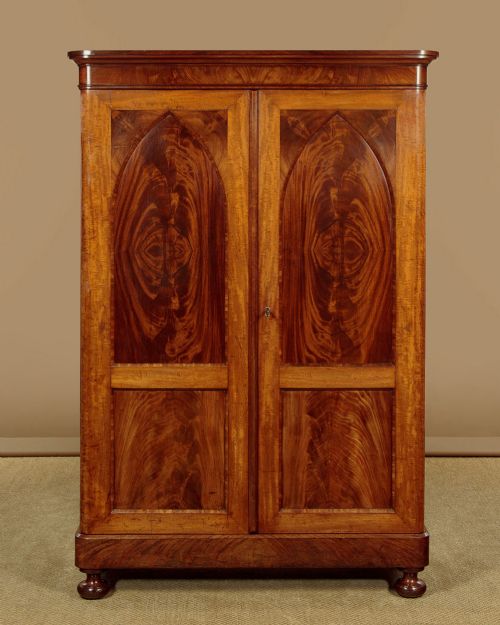
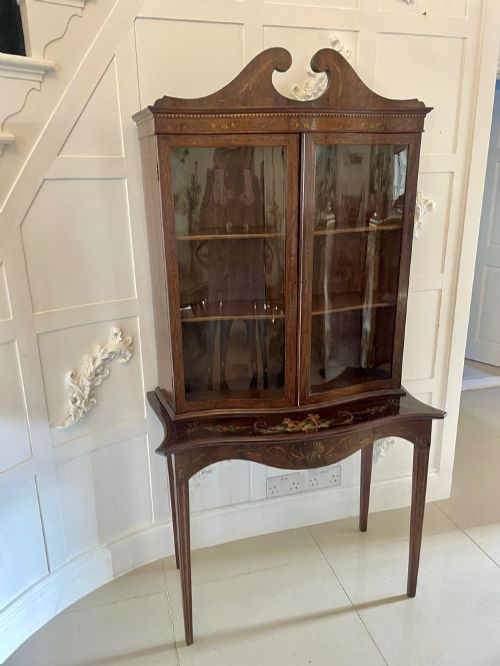
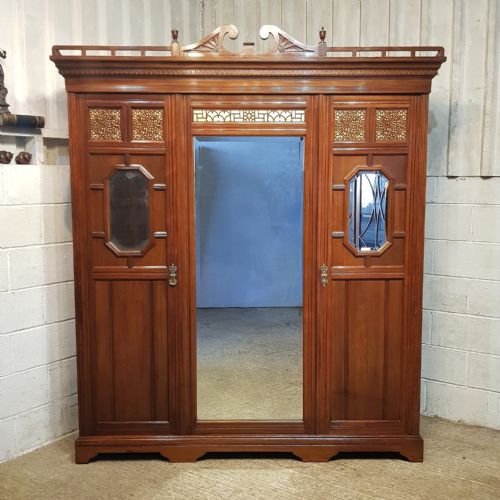
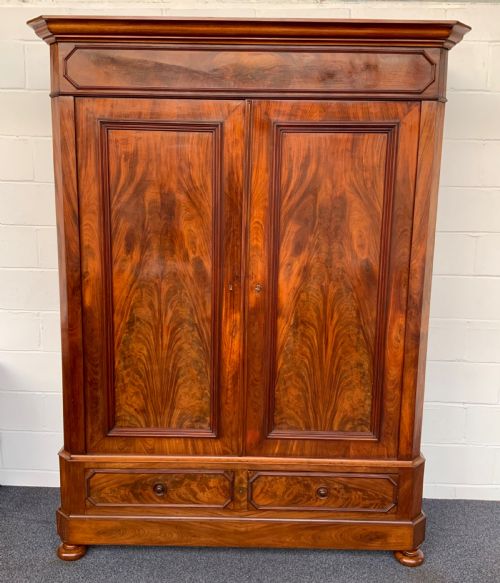
The version most commonly met on this page is the wardrobe or armoire, often featuring rich flame veneers or classic Georgian and Victorian proportions. Buyers also encounter specialised display pieces and vitrines designed to showcase prized possessions behind glass.
Origins span British workshops of the eighteenth and nineteenth centuries alongside continental European centres such as France and the Netherlands. Each piece reflects the prevailing aesthetic of its era, moving from strict Georgian symmetry to ornate Victorian and Edwardian revivals.
Materials and construction methods
Makers relied heavily on solid mahogany and figured flame mahogany veneers applied over robust secondary timbers to achieve striking visual depth on large panel surfaces. Glass is integrated into doors for display cabinets and vitrines, while brass hardware secures doors and drawers.
Construction techniques involve traditional joinery designed to support the immense weight of large timber wardrobes and armoires over centuries of daily use. Surface decoration sometimes incorporates intricate marquetry or original painted detailing, as seen in specific Dutch and Victorian pieces.
Antique Mahogany Closet Retail Price Guide 2026
Typical asking prices for mahogany closet among the pieces listed under this phrase on Sellingantiques today, from the lower quarter to the upper quarter. They describe what is for sale here now, not the wider market.
Listings here span the Georgian, Victorian, and Edwardian eras, utilising solid mahogany, flame mahogany veneer, glass, and brass.
Assessing quality and craftsmanship
The distinction between ordinary utility pieces and finer examples rests primarily in the selection of timber figures, particularly the use of highly figured flame mahogany veneers. Superior items display careful book-matching of grain patterns across large doors and drawer fronts, creating a balanced visual harmony.
Refinement of detail separates standard workshop production from exceptional cabinet work, seen in subtle mouldings, well-executed marquetry, and integrated brass fittings. The structural integrity of heavy timber frames and the original condition of glass panels also mark the upper tier of quality.
The Antique Mahogany Closet Glossary
- Flame mahogany veneer
- A thin slice of timber cut from where a branch joins the main trunk, producing a distinctive flickering flame pattern. This decorative surface is carefully laid over a stable secondary wood.
- Vitrine
- A glass-fronted cabinet or display case designed specifically for showing porcelain, books, or curiosities. These pieces often feature delicate glazing bars and mirrored backs.
- Marquetry
- The art of applying small pieces of varied veneers to a structure to form decorative patterns or pictorial scenes. Dutch makers utilised this technique extensively on large robes.
- Armoire
- A large wardrobe or cupboard, traditionally of continental European origin, used for hanging garments or storing linens. French iterations often showcase carved details and grand proportions.
- Georgian
- Pertaining to the period covering the reigns of the first four British monarchs named George, known for restrained classical proportions and fine timber selection.
Antique Mahogany Closet: Frequently Asked Questions
What is an antique mahogany closet used for today?
These versatile pieces serve admirably as bedroom wardrobes, linen presses, or living room display cabinets for collections.
Their generous internal capacity and strong visual presence make them practical solutions for modern storage needs while adding traditional character to an interior.
How do I care for mahogany furniture?
Maintain the timber by keeping pieces away from direct heat sources and strong sunlight, which can dry out the wood and fade rich finishes.
Dust regularly with a soft, dry cloth and apply natural wax polish sparingly only when the timber appears dry to preserve the natural lustre.
How do I distinguish Victorian from Georgian pieces?
Georgian furniture generally exhibits strict classical symmetry, clean architectural lines, and understated elegance derived from eighteenth-century design principles.
Victorian pieces often display heavier proportions, more exuberant carved ornamentation, and darker finishes reflecting industrial-era manufacturing capabilities.
Are French armoires different from English wardrobes?
French armoires frequently incorporate softer curves, ornate pediments, and lighter surface treatments including painted decoration or rich fruitwood and mahogany veneers.
English wardrobes tend to emphasise architectural timber grain, rectilinear massing, and functional interior layouts tailored for hanging garments.