


Antique Mahogany Banquet
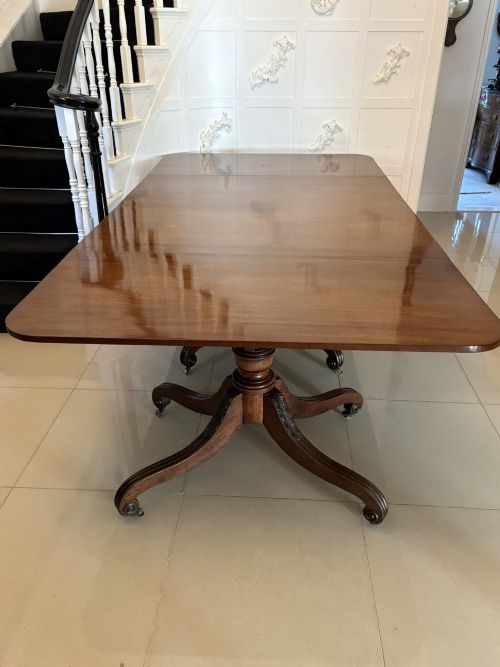
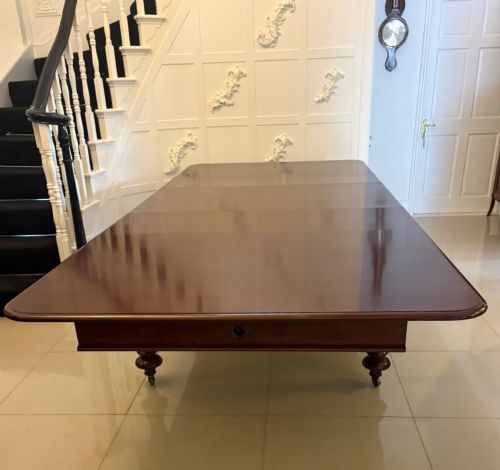
An antique mahogany banquet dining table is built for large gatherings, offering robust timber and extended seating designed to anchor a formal dining room.
Antique Mahogany Banquet
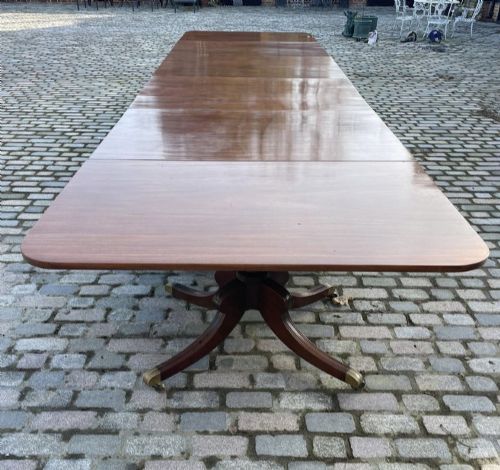
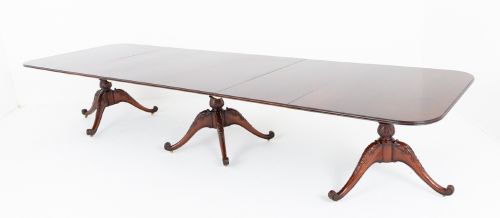
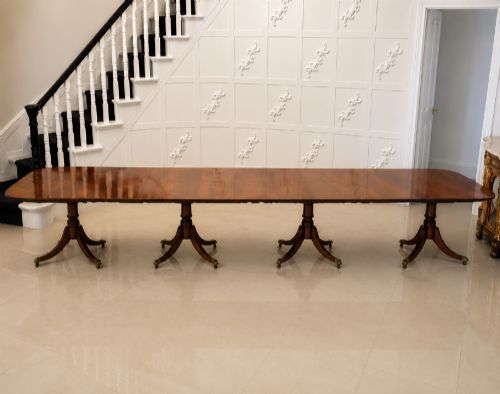
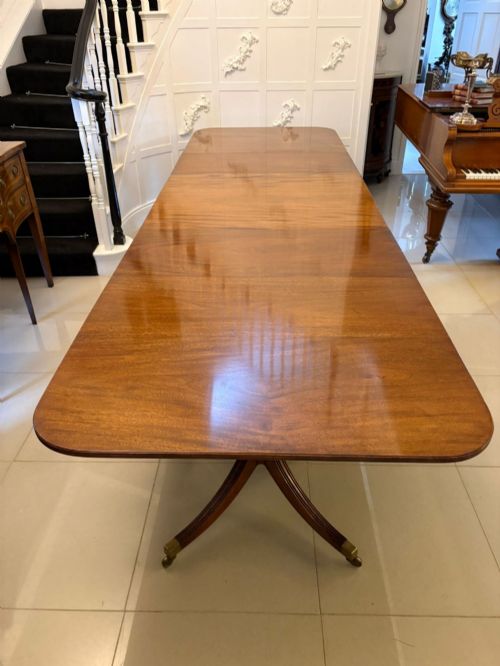
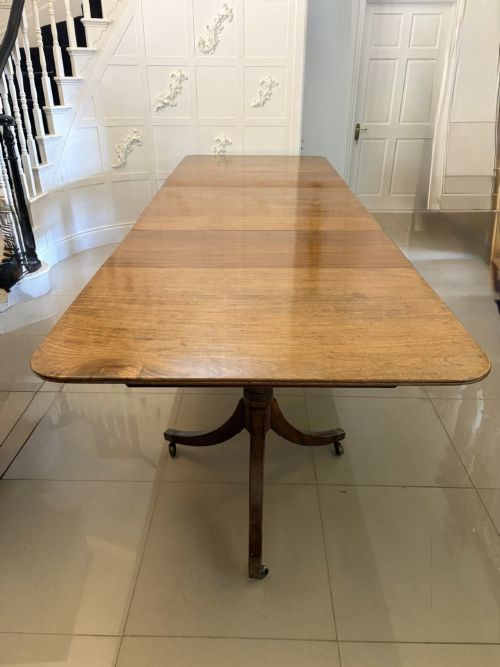
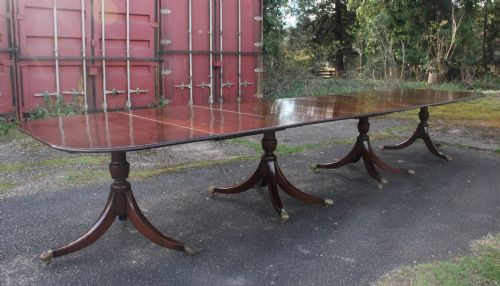
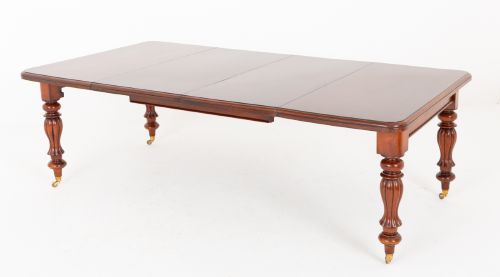
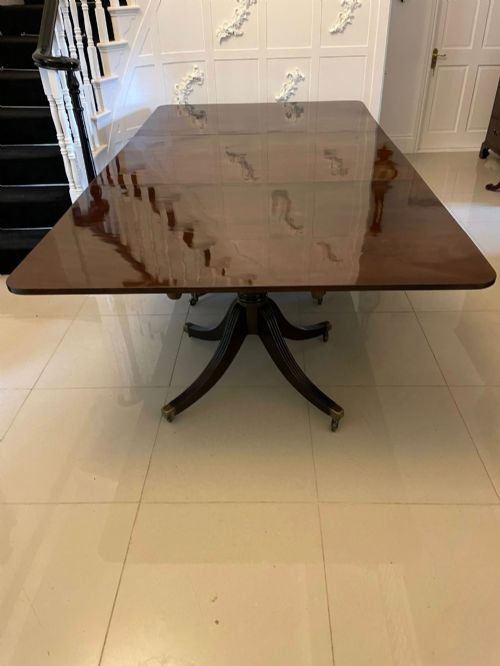
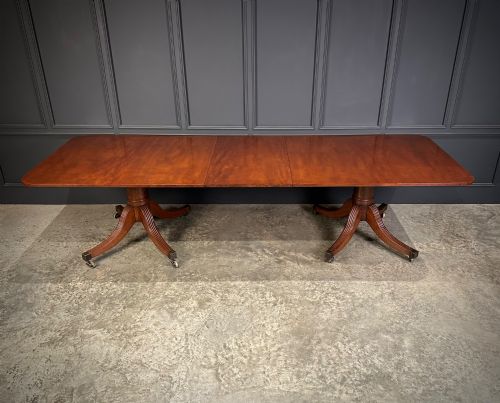
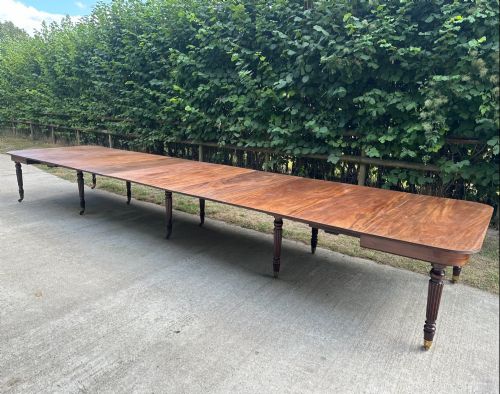
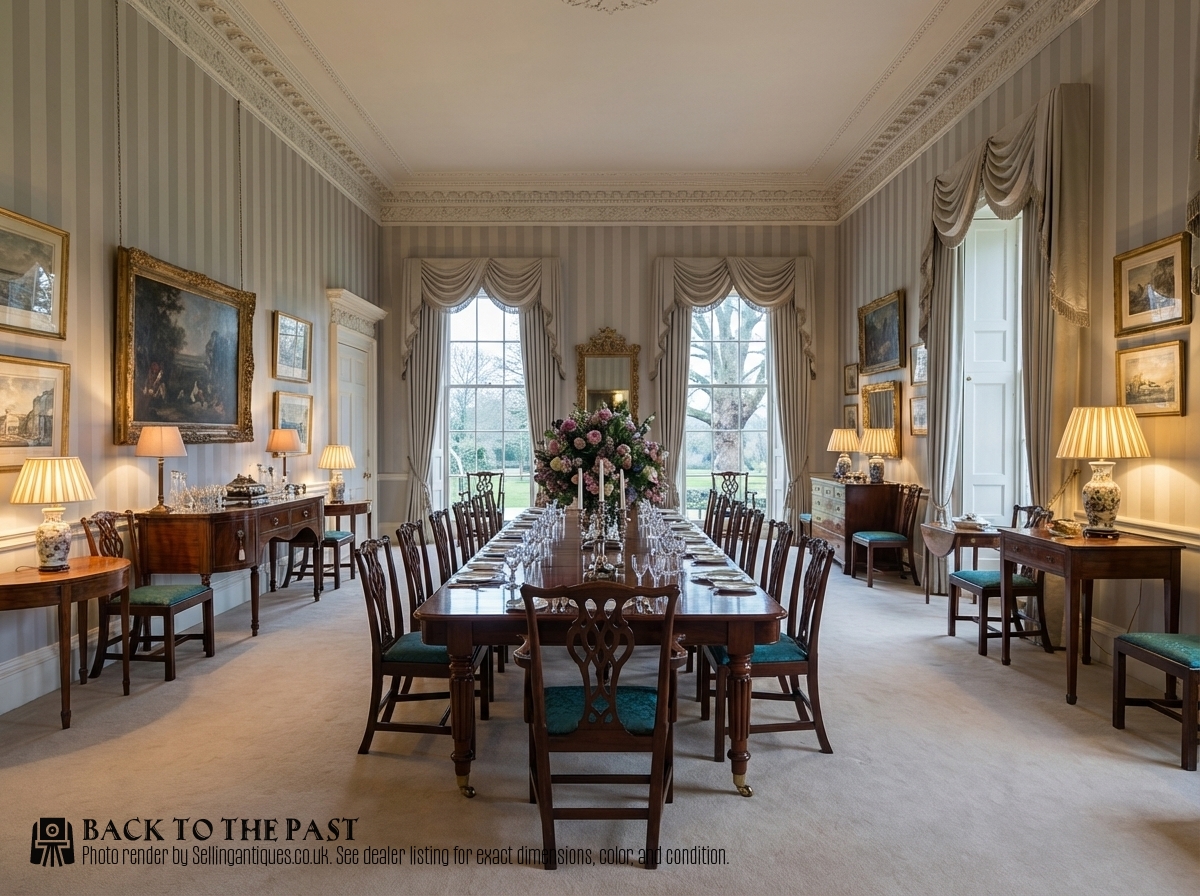
When searching for an antique mahogany banquet table, you will encounter substantial extending dining tables designed to accommodate large groups from ten up to twenty-eight guests. These tables typically employ multiple pedestals and removable leaves, allowing the surface length to expand or contract according to the requirements of the household.
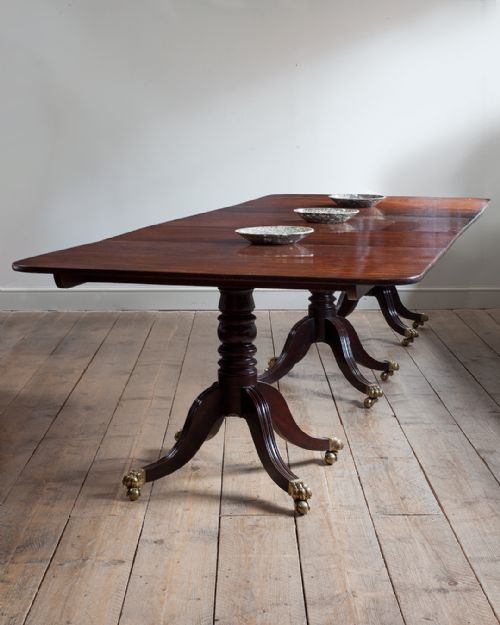
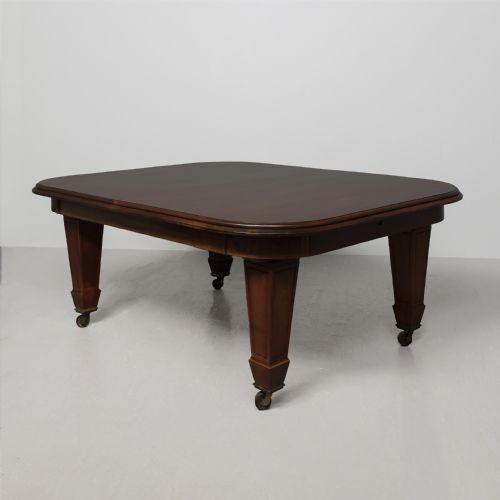
The pieces appearing on this page span the Georgian, Regency, William IV, and Victorian periods, alongside later revival pieces from the early twentieth century. Most examples utilise robust timber frames with D-ends or rectangular tops, supported by pillars with brass castors and reeded legs.
How They Were Made
Cabinet makers constructed these tables primarily from solid mahogany and figured mahogany veneers, selecting timber for its rich grain patterns and deep colour. Brass mechanisms, such as wind-out screws and castors, were integrated to facilitate the movement of heavy extending leaves.
Secondary materials like gold leaf and ceramic elements appear occasionally on specific decorative details, while steel hardware supports the internal extension mechanisms. Carpenters joined the pedestals and top sections using traditional timber joinery designed to withstand the stress of regular expansion.
Among the towering timber structures and heavy brass castors, one rogue banquette sofa occasionally sneaks into the banquet lineup.
What Varies in Quality
The distinction between standard tables and exceptional pieces lies in the choice of figured mahogany and the precision of the timber matching across the extra leaves. Tables featuring multiple original leaves that maintain consistent grain continuity and colour require superior stock selection by the maker.
Structural refinement also separates the ranges, seen in the proportion of the pillars, the carving on the reeded legs, and the smooth operation of the internal extension mechanisms. Higher quality examples retain balanced proportions even when fully extended to seat twenty or more people.
Gillows·William and Gibton·Wylie and Lochead·Whytock and Reid·Robert Adam
The Antique Mahogany Banquet Glossary
- Pedestal
- A central support column, usually single or multiple, that holds up the main dining surface. These pillars often branch into tripod or quadruped legs fitted with castors.
- D-End
- A table end shaped in the semi-circular form of the letter D. These sections can be detached or separated from the central leaves in certain configurations.
- Extending Leaves
- Additional timber panels inserted into the middle of the table to increase its overall length. They allow the furniture to adapt for smaller or larger dining capacities.
- Figured Mahogany
- Mahogany timber exhibiting attractive, natural grain patterns such as flame or fiddleback. Cabinet makers prized this wood for its decorative visual depth on table tops.
- Wind-Out Mechanism
- A mechanical screw system operated by a crank handle that separates the table sections to insert extra leaves. This innovation simplified the extension process in the nineteenth century.
Antique Mahogany Banquet: Frequently Asked Questions
How many people can these tables seat?
Seating capacity ranges from ten diners up to twenty-eight guests, depending on the number of pedestals and extra leaves. Tables with four pillars typically accommodate the longest banquet settings.
When calculating your seating requirements, remember to account for the width of the pedestal bases underneath. This ensures chairs fit comfortably along the entire length of the extended timber surface.
How do I care for mahogany banquet tables?
Protect the polished surface by using heat-resistant mats and coasters during meals. Clean the timber regularly with a soft, dry cloth to remove dust without disturbing the wax finish.
Avoid placing the table in direct sunlight or near direct heat sources to prevent the mahogany from drying out or splitting. Periodic waxing helps maintain the rich lustre of the wood over time.
How do I identify a Regency table?
Regency tables often feature heavy central pillars with reeded legs terminating in brass lion paw castors. The timber typically shows deep red-brown tones with restrained, elegant proportions.
Look for classic D-ends and solid mahogany construction that prioritises clean architectural lines. Maker signatures or stamps near the extension runners can also confirm the period origin.