



Antique Luggage Table
An antique luggage table is a functional piece of travel equipment repurposed for daily interiors, bringing utility and historical character to a room.
Antique Luggage Table
When you search for an antique luggage table, you encounter folding luggage stands, coaching tables, and sturdy trunks adapted for surface use. These pieces originate from the nineteenth century, the Edwardian era, and the nineteen-twenties, reflecting a period of active travel and domestic adaptation.
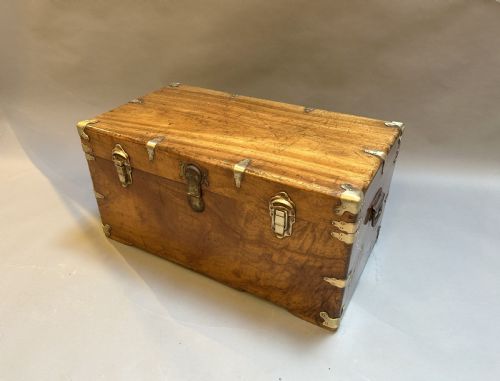
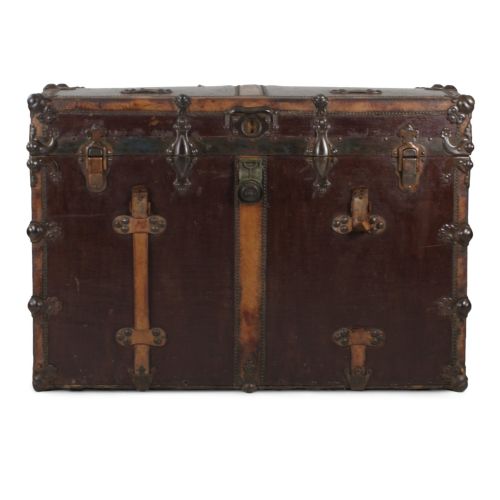
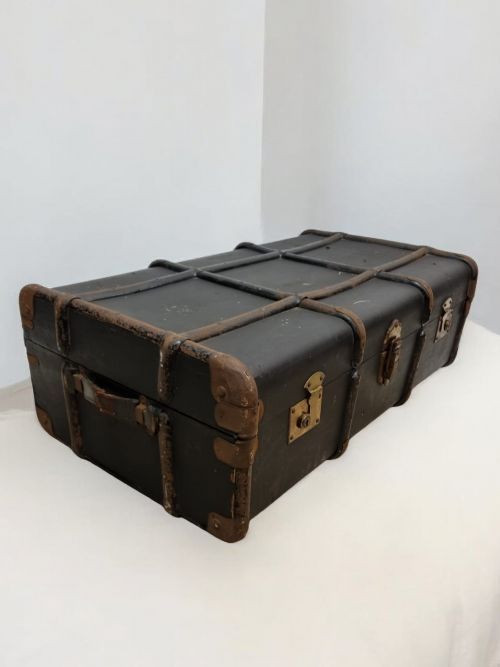
The most common forms on this page include mahogany and oak luggage stands alongside robust steamer trunks and leather-bound travel chests. These items transition easily from historical transit gear to practical bedside or coffee table surfaces in modern spaces.
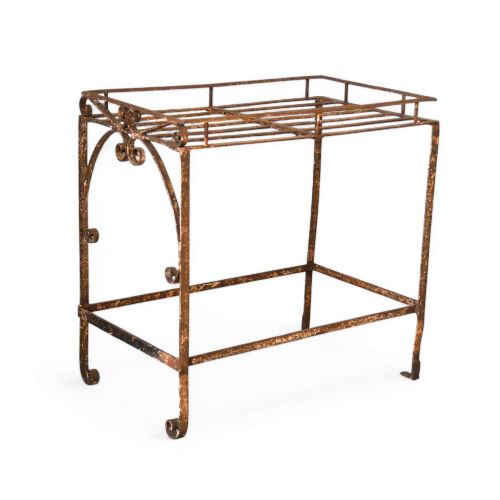
Originating from British, French, and continental workshops, these items range from campaign military chests to estate-made wrought iron racks. Each object carries the marks of its transit origins, whether through brass hardware or leather bindings.
How they were made
Craftsmen utilised durable timbers such as mahogany, oak, yew, and camphor wood to build frameworks capable of enduring arduous journeys. Metal reinforcement through brass corners, iron bands, and zinc linings provided structural strength to trunks and chests.
Surface treatments included black lacquering, canvas coverings, and leather bindings secured with heavy-duty tacks. Folding luggage stands relied on clever hinged mechanisms to allow easy collapse and transport.
Antique Luggage Table Retail Price Guide 2026
Typical asking prices for luggage table among the pieces listed under this phrase on Sellingantiques today, from the lower quarter to the upper quarter. They describe what is for sale here now, not the wider market.
Listings feature pieces spanning the Victorian and Edwardian eras alongside 1920s steamer trunks, utilising materials from brass and iron to mahogany and canvas.
What varies in quality
Quality rests in the integrity of the original hardware and the selection of timber. Pieces featuring intact brass locks, original leather straps, and solid framing stand apart from heavily altered examples.
The distinction between standard travel gear and high-end maker pieces appears in the finesse of the joinery and the retention of fitted interior compartments. Estate-made or workshop pieces display individual character in their forged iron and select wood grains.
Louis Vuitton·Aux Etats Unis
The Antique Luggage Table Glossary
- Steamer trunk
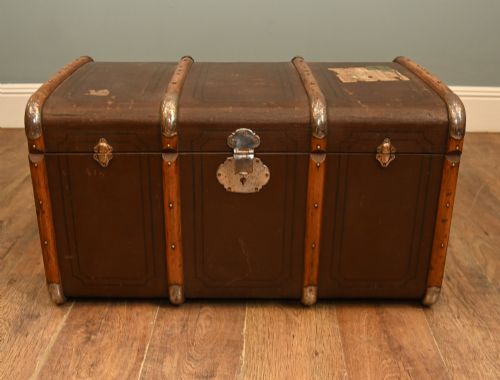
- A lower-profile trunk designed to fit beneath a cabin berth on a steamship. These pieces often feature flat or slightly curved tops covered in canvas or leather.
- Coaching table
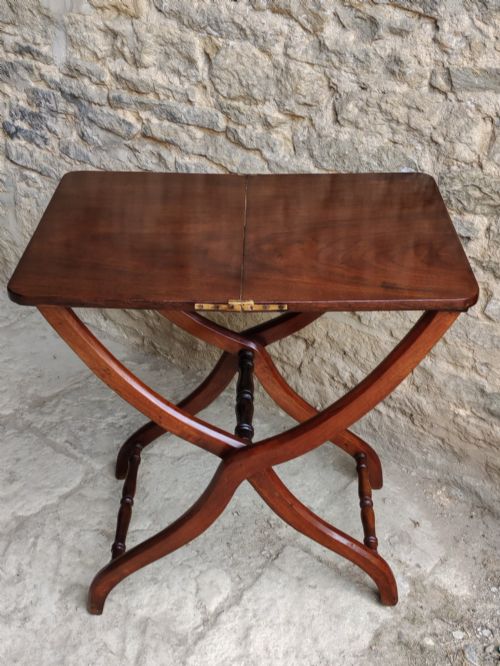
- A portable folding table used during travel and coaching journeys. They typically employ an X-frame base that collapses flat.
- Campaign military chest
- Modular storage designed for officers on military campaigns. These pieces are built in sections with recessed brass pull handles for ease of transport.
- Luggage stand
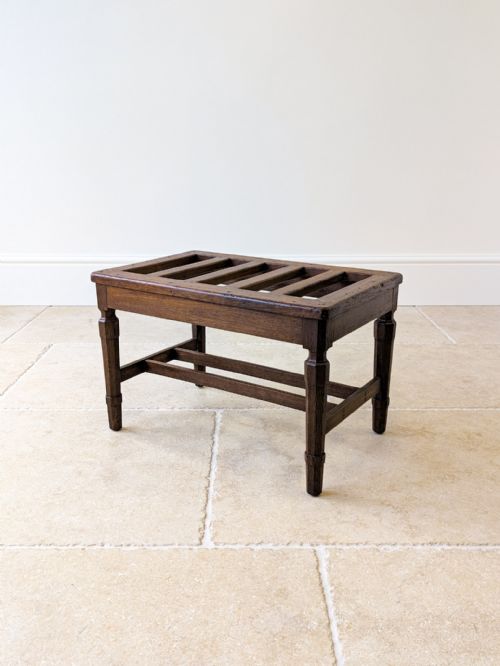
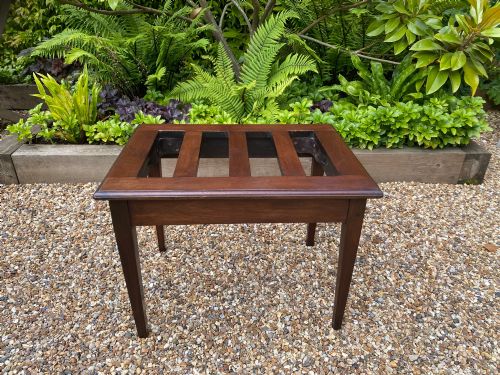
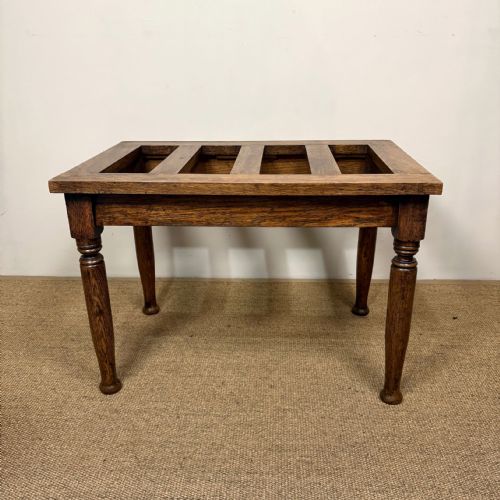
- A low wooden or metal stand designed to hold a suitcase at a convenient height for packing. In modern interiors, they function well as small display tables.
- Camphor wood
- An aromatic timber valued for its insect-repellent properties. It is frequently found in chests and trunks originating from trade routes.
Antique Luggage Table: Frequently Asked Questions
How were luggage tables used originally?
Luggage stands and coaching tables provided portable surfaces for holding travel chests and assisting with dressing while away from home. They were built to fold or pack down easily for transport on coaches and trains.
In contemporary spaces, these stands find new life as bedside tables, plant stands, or occasional coffee tables that hold books and decorative items.
What materials are common in these pieces?
The construction relies heavily on traditional timbers such as mahogany, oak, yew, and camphor wood. Trunks and chests incorporate protective elements including brass corners, iron bands, leather bindings, and canvas coverings.
Interior fittings often feature zinc linings, fabric linings, and fitted wooden compartments designed to organise garments and grooming equipment.
How do I date an antique trunk?
Dating relies on examining the construction methods, materials, and hardware styles. Pieces from the nineteenth century often feature hand-cut dovetailing and heavy wrought iron or brass details, while early twentieth-century examples introduce aluminium, canvas, and specific maker labels.
Changes in travel habits over the decades influenced the scale and internal fittings of trunks, shifting from heavy wooden shipping chests to lighter steamer trunks.
Can I use a trunk as a coffee table?
Sturdy steamer trunks and low storage chests work well as coffee tables, offering both a flat surface and internal storage space. Flat-topped models from the early twentieth century are particularly suited for this purpose.
Ensure the lid is stable and capable of supporting daily items like trays and books without tipping or bowing.