



Antique Low Side Stool
An antique low side stool offers compact utility, spanning vernacular country forms and revivalist designs created in solid timber.
Antique Low Side Stool
When you search for an antique low side stool, you encounter a varied collection of small seating and occasional supports designed for low-level tasks or fireside use. The pieces span centuries of domestic craft, ranging from vernacular country milking stools to formal jointed designs.
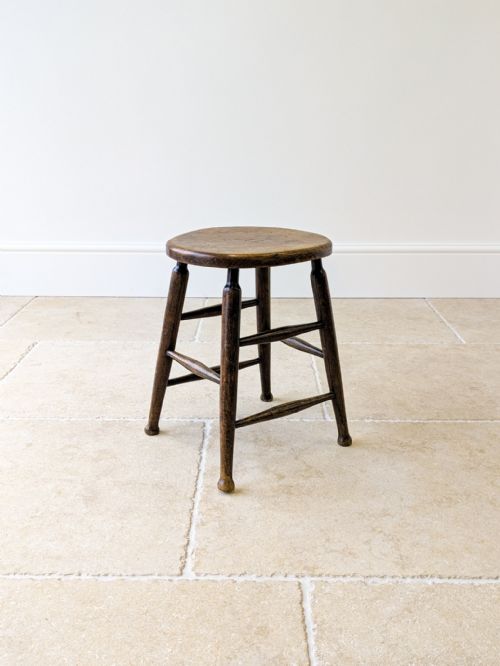
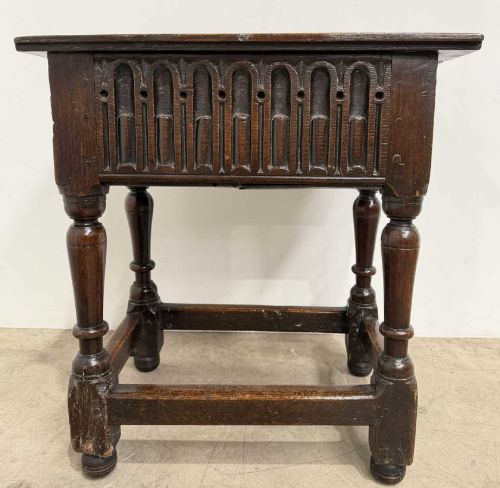
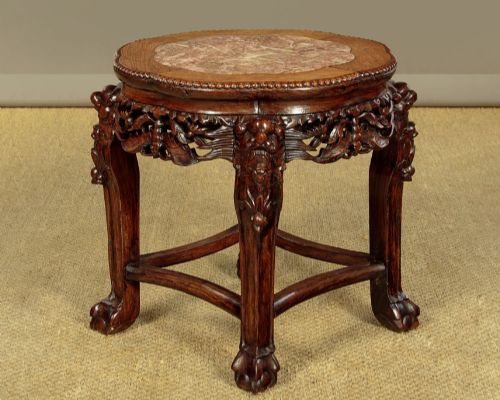
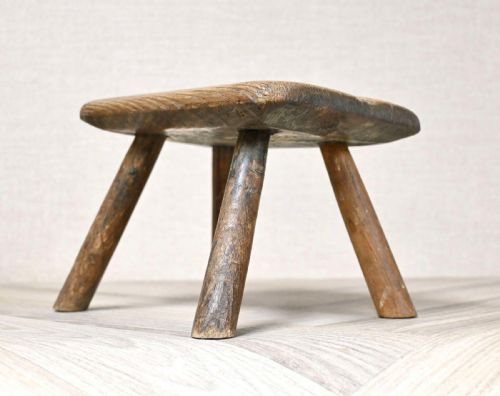
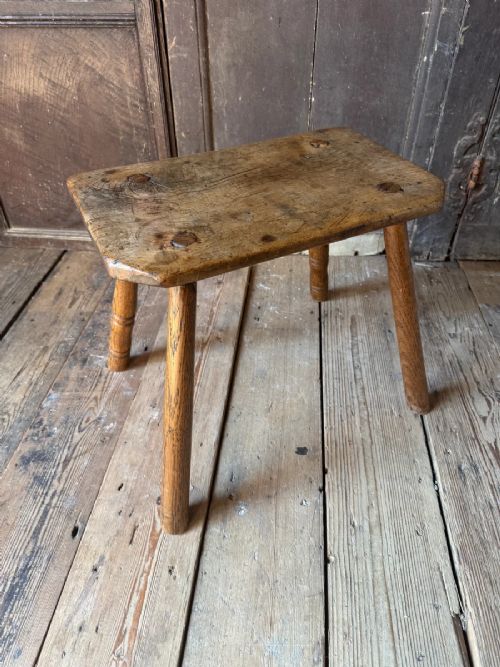
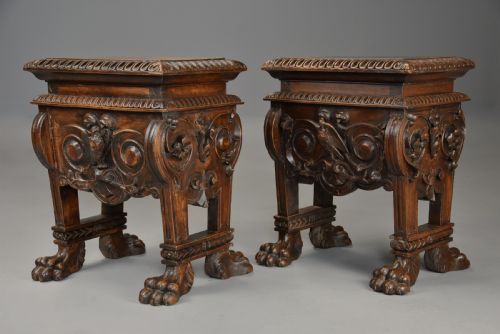
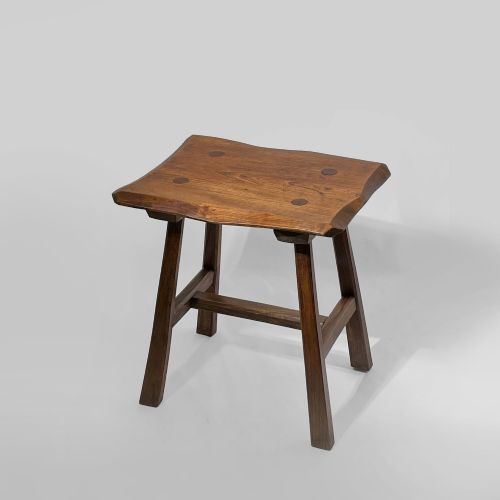
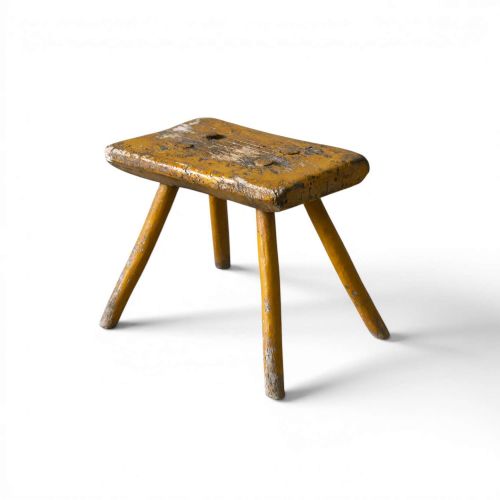
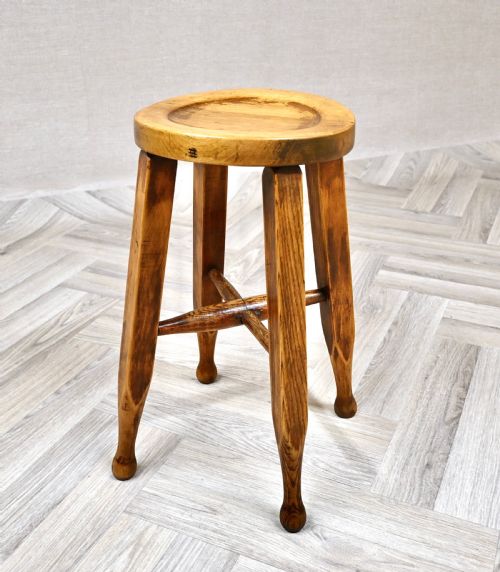
The most common examples you meet on this page are constructed from native hardwoods such as oak, ash, elm and sycamore. These range from rustic three-legged country examples to carved Gothic revival forms and primitive circular tables.
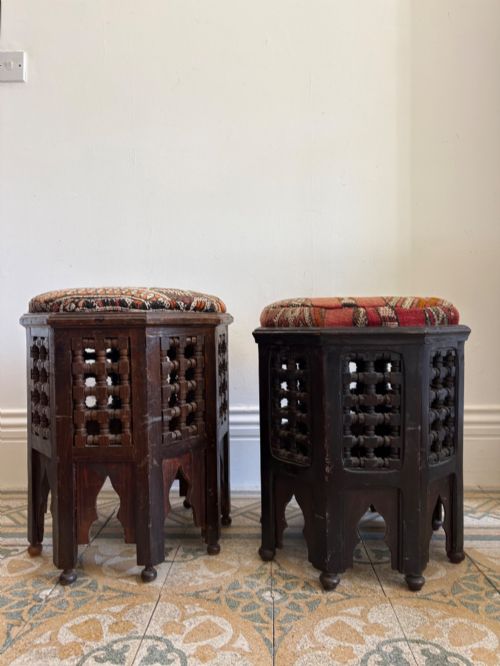
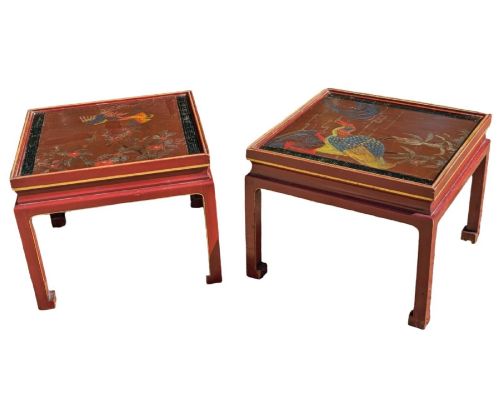
Origins stretch across English country workshops, European makers, and international traditions including African tribal objects and Chinese occasional stands. Forms frequently overlap with small side tables, plant stands and footrests.
Materials and construction methods
Makers utilised solid timbers including oak, walnut, rosewood, ash, elm and sycamore, often selecting native hardwoods for their durability and grain pattern. Construction relied on traditional joinery techniques such as pegged joints, turned legs and pegged trestle framing.
Surface treatments vary from polished finishes and fine carved details to original paintwork and rustic surfaces showing tool marks. Individual pieces incorporate specialised elements like inset porcelain panels, zebra hide upholstery or woven elements.
Antique Low Side Stool Retail Price Guide 2026
Typical asking prices for low side stool among the pieces listed under this phrase on Sellingantiques today, from the lower quarter to the upper quarter. They describe what is for sale here now, not the wider market.
The selection includes regional European milking stools, Chinese occasional stands and African tribal furniture.
Distinctions in quality
Quality rests upon the integrity of the timber selection and the precision of the underlying joinery, separating utilitarian workshop items from finely carved cabinetwork. The depth and execution of decorative carving, whether Gothic tracery or classical moulding, indicates the skill of the maker.
Original surface condition and the retention of early paint or patination dictate the desirability of a piece. Structural originality, including untouched legs and period fixings, distinguishes well-preserved examples from later reconstructions.
Liberty and Co
The Antique Low Side Stool Glossary
- Joint stool
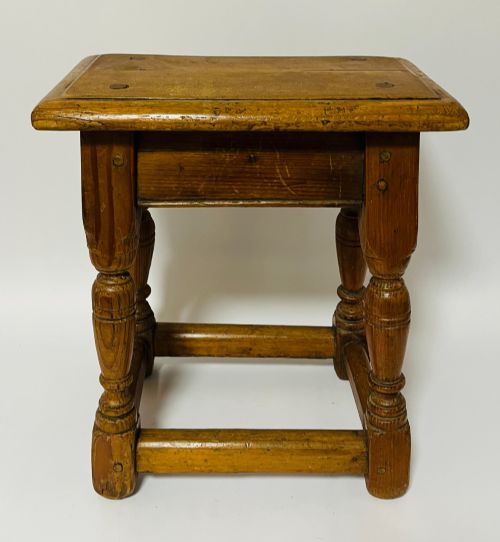
- A low wooden stool constructed with mortise and tenon joints, traditionally assembled with wooden pegs rather than metal fasteners.
- Vernacular
- Objects made by regional craftsmen following local traditions and utility rather than high-style metropolitan fashions.
- Tristle form
- A structural arrangement where the top is supported by trestle feet connected by a central stretcher bar.
- Patination
- The surface sheen and colour acquired by timber through age, handling and exposure to light over decades.
- Occasional table
- A small, movable table designed for specific, intermittent domestic tasks rather than permanent placement.
Antique Low Side Stool: Frequently Asked Questions
What is an antique low side stool used for?
These low pieces served diverse domestic functions, acting as functional seating by the fireside, milking seats in agricultural settings, or low supports for household tasks.
Today, buyers utilise them as compact side tables, plant stands or accent seating in small spaces.
How do I identify a joint stool?
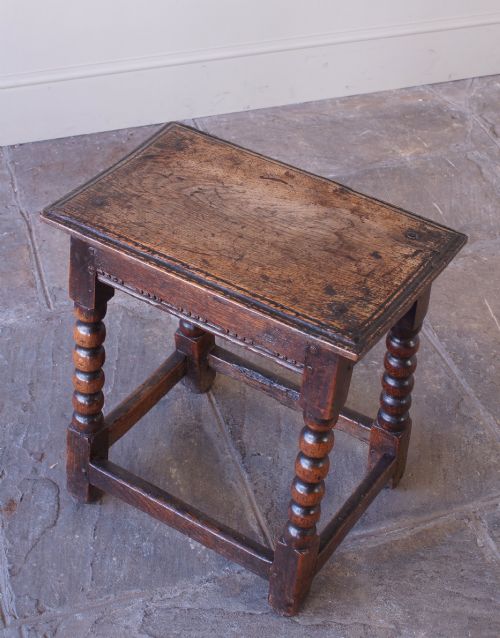
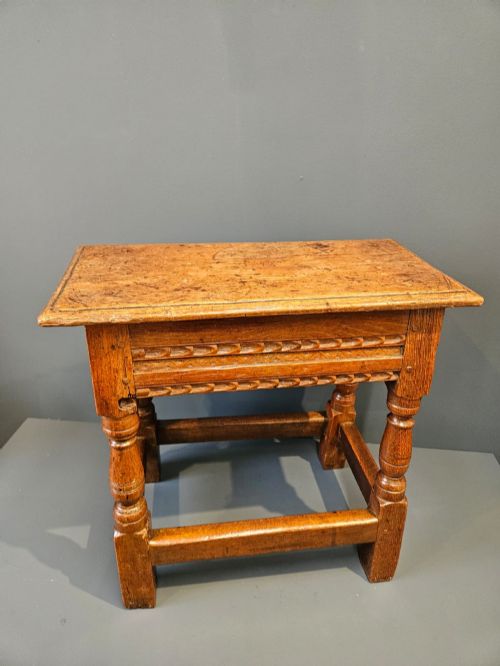
A joint stool is defined by its rigid pegged framing and sturdy upright legs connected by stretchers near the base. This method of joinery provided exceptional strength for domestic seating.
They typically feature a flat rectangular top with moulded edges and exposed wooden joinery.
Are these stools made of solid wood?
The pieces listed are constructed from solid hardwoods such as oak, elm, ash, walnut and sycamore. Craftsmen selected these dense timbers to withstand heavy daily use in domestic and agricultural environments.
Secondary veneers appear less frequently, with structural elements relying entirely on natural timber.
How do I date an antique wooden stool?
Dating relies on examining tool marks, timber shrinkage, joint construction methods and the style of any carved ornamentation. 17th and 18th-century examples often display hand-riven timber and pegged joinery.
Later 19th and early 20th-century pieces incorporate revival styles like Gothic, Jacobean or Arts and Crafts motifs.
Can I use an antique stool as a table?
Many low stools and primitive forms function effectively as small side tables, plant stands or display surfaces for lamps and objects. Their compact footprints make them versatile for modern interiors.
Flat-topped joint stools and small occasional tables require no modification to serve in this capacity.