
Antique Low Shelving
Antique low shelving offers sturdy timber framework and accessible tiers for everyday collections, bringing practical book storage into domestic rooms.
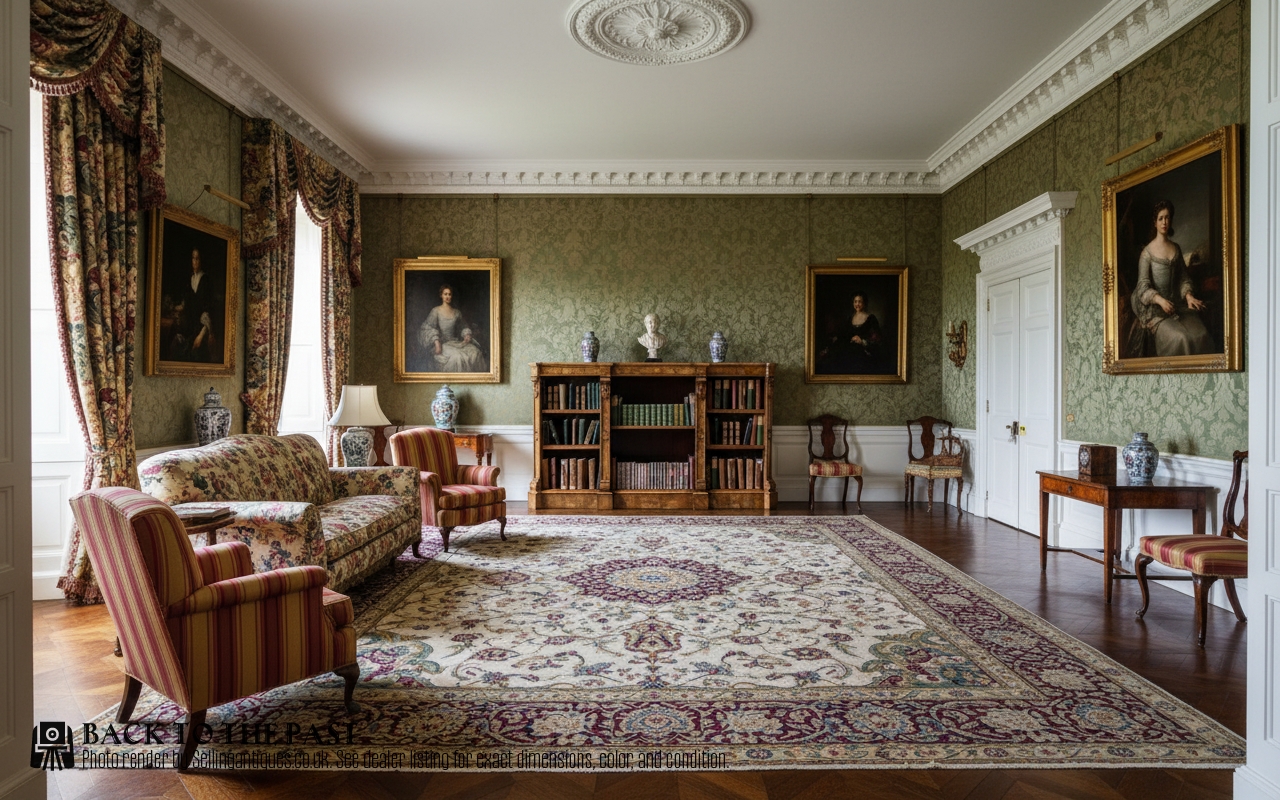
Antique Low Shelving
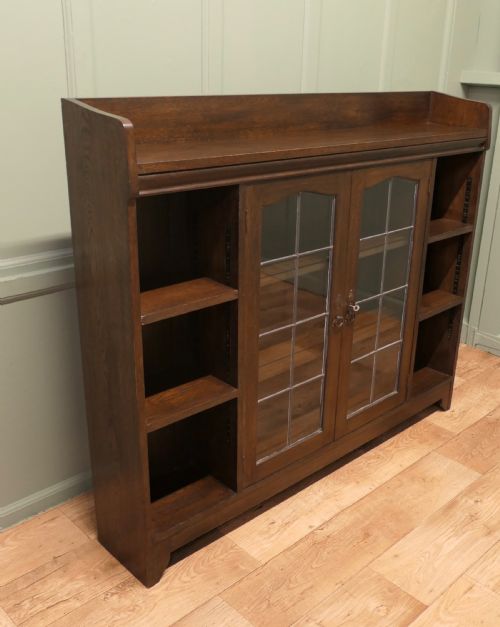
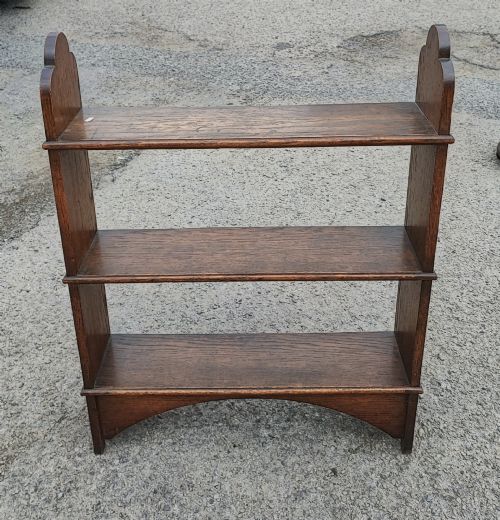
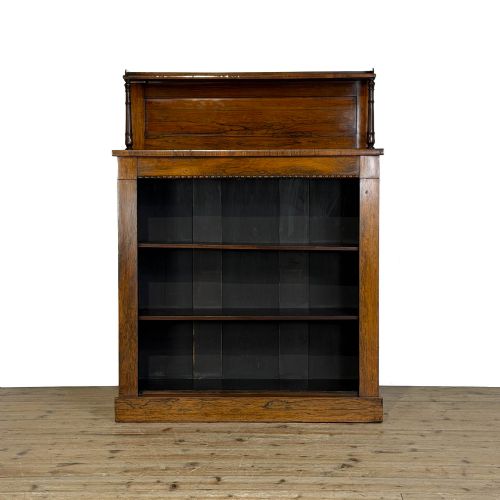
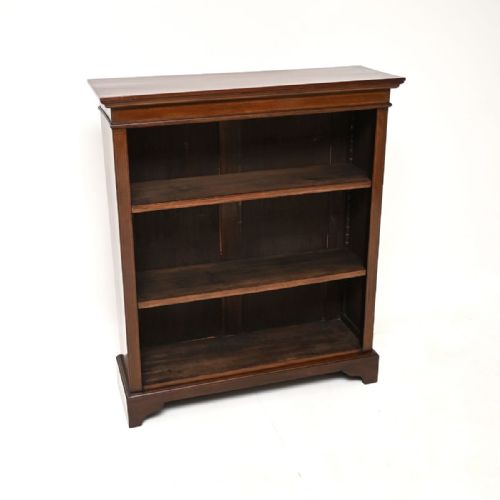
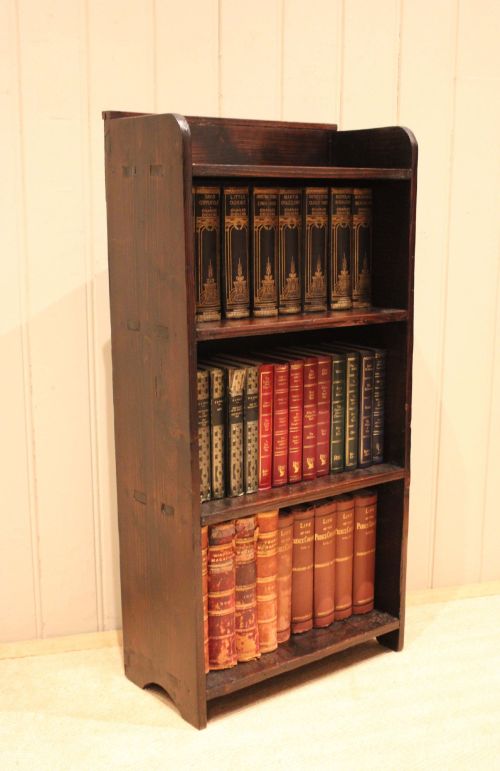
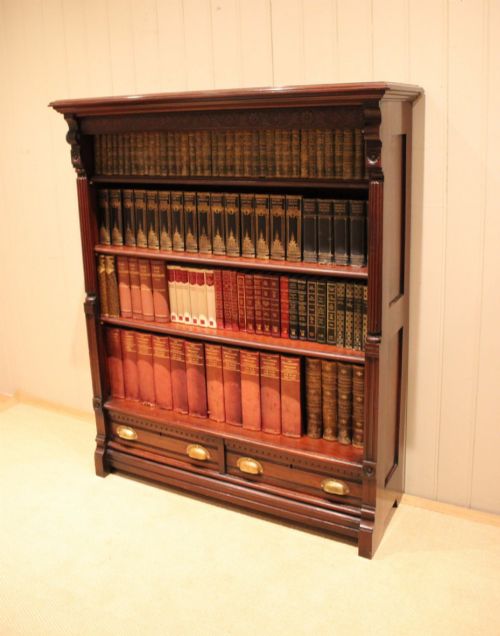
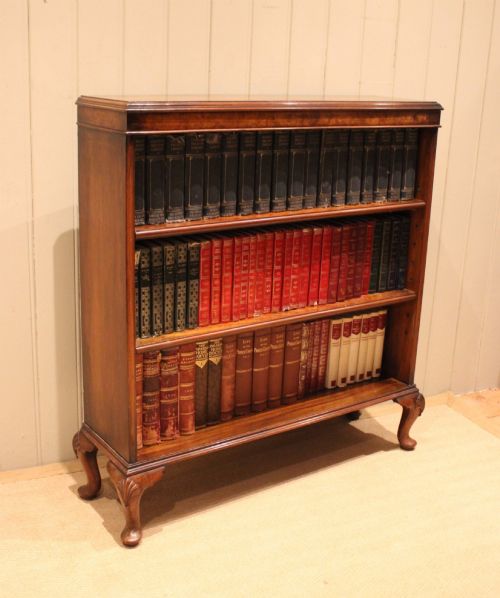
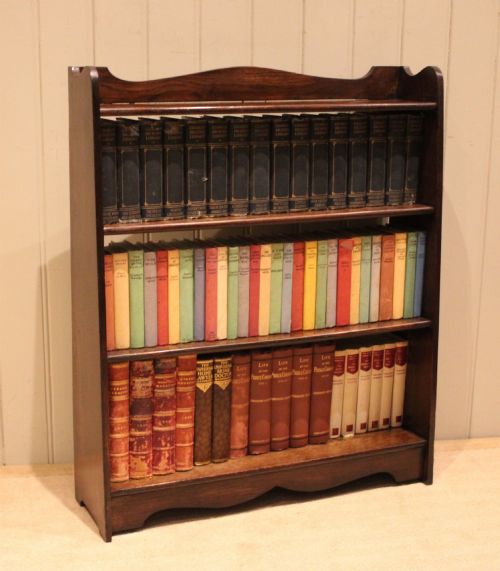
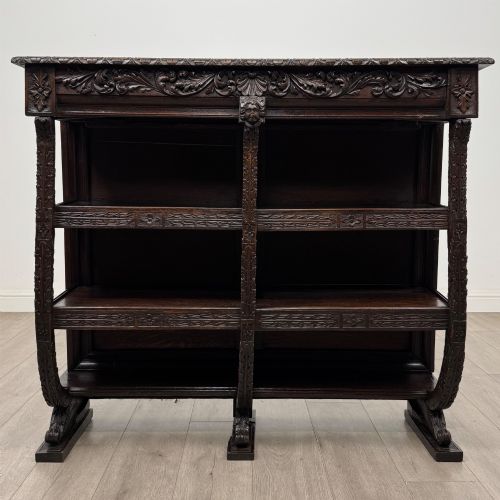
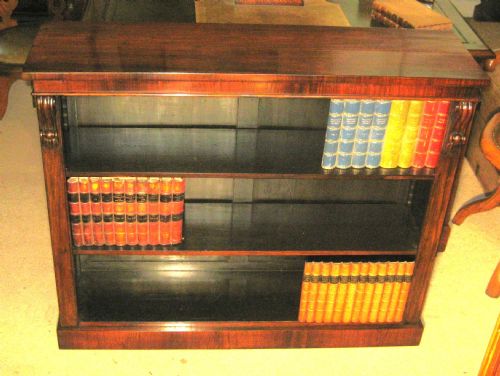
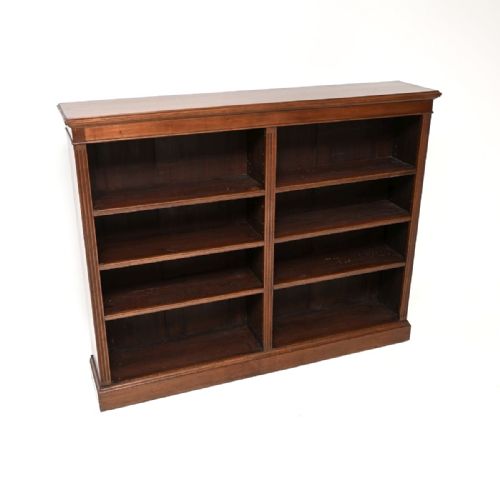
Antique low shelving appears primarily as open bookcases and low display cabinetry designed to fit beneath standard window heights or along cottage walls. These pieces serve domestic spaces by keeping volumes within arm's reach while maintaining an open sightline across the room.
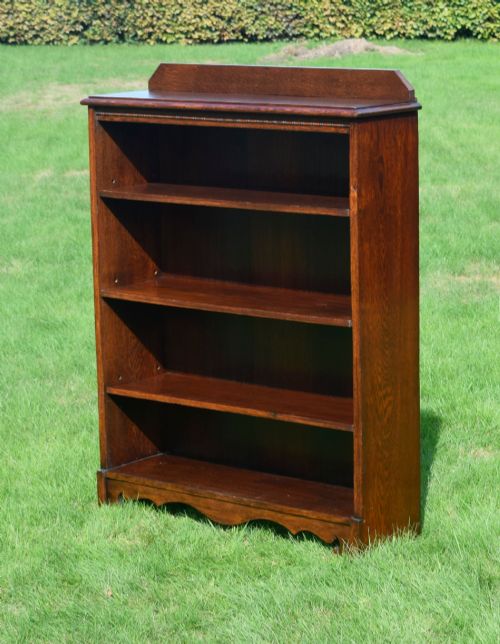
The selections span the nineteenth and early twentieth centuries, drawing on Victorian, Edwardian, and Arts and Crafts traditions. Oak, mahogany, and pine dominate the forms, ranging from modest rustic country pieces to grand library bookcases with adjustable shelves.
Materials and Construction
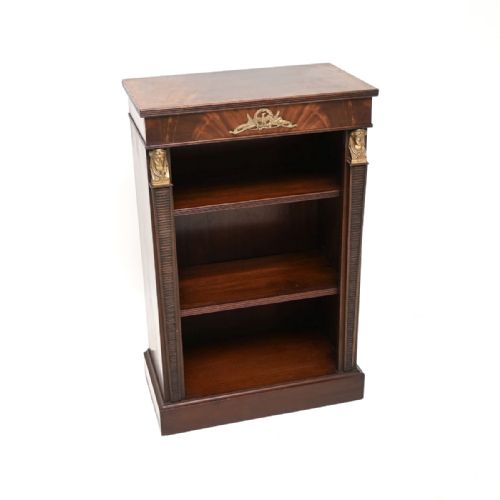
Cabinet makers built these bookcases using solid timbers like oak, mahogany, rosewood, and walnut, often applying satinwood inlay or brass fittings for subtle contrast. Joinery methods prioritized stability, utilising adjustable shelf mechanisms and robust panel construction to bear the weight of heavy volumes.
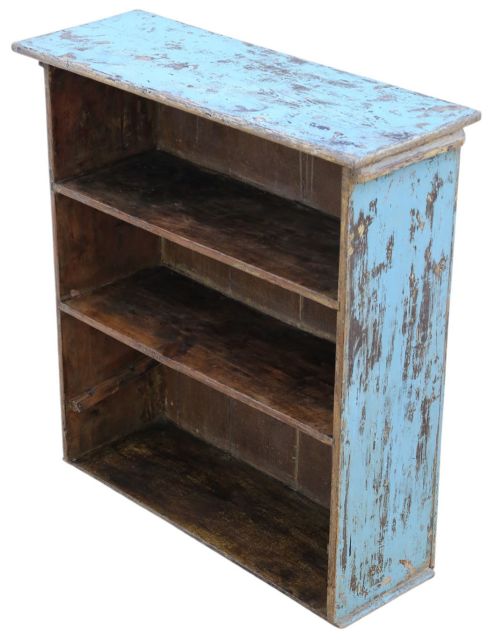
Surface finishes include polished mahogany, waxed golden oak, distressed blue paint, and ebonised treatments paired with carved details. Workshops shaped walnut and pine to create both simple domestic shelving and formal display pieces.
Listings feature oak, mahogany, pine, walnut, and rosewood across Victorian, Edwardian, Regency, and Arts and Crafts periods.
Craftsmanship and Proportion
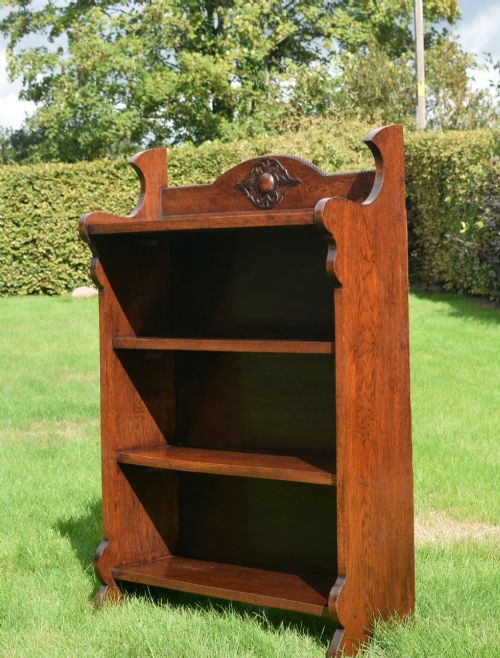
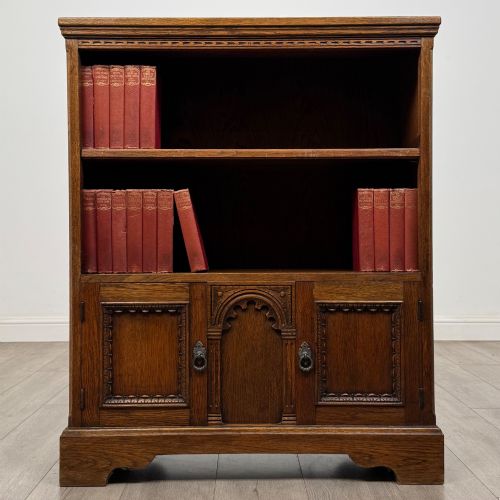
Quality rests in the selection of timber grain, the precision of carved ornamentation such as green man motifs or neoclassical lines, and the integration of functional elements like adjustable wooden shelves. Finer examples display carefully matched veneers and thoughtful proportions that elevate a utilitarian item into a considered furnishing.
Simpler workshop pieces rely on straightforward pine or oak construction without elaborate embellishment, serving functional storage needs rather than decorative display. The presence of specialised maker signatures or distinct stylistic movements shifts a piece toward the upper tier.
JOHNSTONE AND JEANES·Heals
The Antique Low Shelving Glossary
- Open bookcase
- A piece of furniture designed for storing books without glass doors or enclosing panels, allowing direct access to the volumes.
- Adjustable shelves
- Internal boards resting on movable supports that allow the user to alter vertical compartment heights.
- Breakfront
- A cabinet design where the central section projects forward from the flanking wings.
- Ebonised
- Timber treated with a dark stain or finish to imitate the appearance of ebony wood.
- Inlay
- Decorative material set into the surface of a timber ground to form patterns or contrasting borders.
Antique Low Shelving: Frequently Asked Questions
What is antique low shelving?
Antique low shelving consists of compact bookcases and display units manufactured during the nineteenth and early twentieth centuries. These timber items provide accessible storage below eye level.
They appear in various woods including oak, mahogany, and pine, reflecting design periods from Regency to Arts and Crafts.
How do I style low bookcases?
Low shelving allows you to place objects and lamps on top while keeping books easily accessible below. Their height suits placement beneath windows.
Mixing collections with framed items creates a balanced display across the timber surface.
Are shelves usually adjustable?
Many period bookcases feature adjustable shelves supported by wooden pegs or vertical slots. This flexibility accommodates books of varying heights.
Fixed shelving also occurs, particularly in simpler rustic or country pieces.
What woods were used?
Cabinet makers utilised domestic and imported timbers such as oak, mahogany, walnut, rosewood, and pine. Walnut and mahogany often feature in formal Victorian examples.
Oak appears frequently in Arts and Crafts and Edwardian iterations, sometimes combined with brass hardware.