




Antique Low Salon Chair
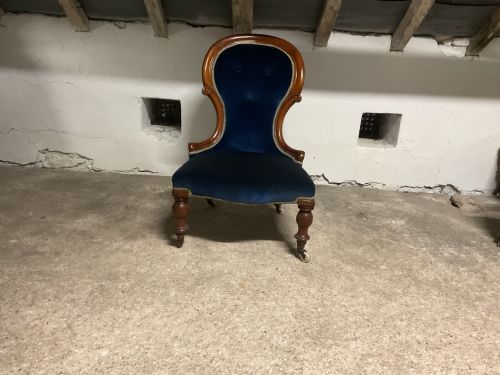
These antique low salon chair examples are low-slung seats designed for Victorian and Edwardian parlours, offering comfortable fireside or music room lounging.
Antique Low Salon Chair
An antique low salon chair provides a compact, low-to-the-ground seat historically utilised in Victorian and Edwardian parlours, bedrooms, and music rooms. Buyers searching this phrase encounter numerous nursing chairs, fireside seats, and balloon back forms originating across the nineteenth and early twentieth centuries.
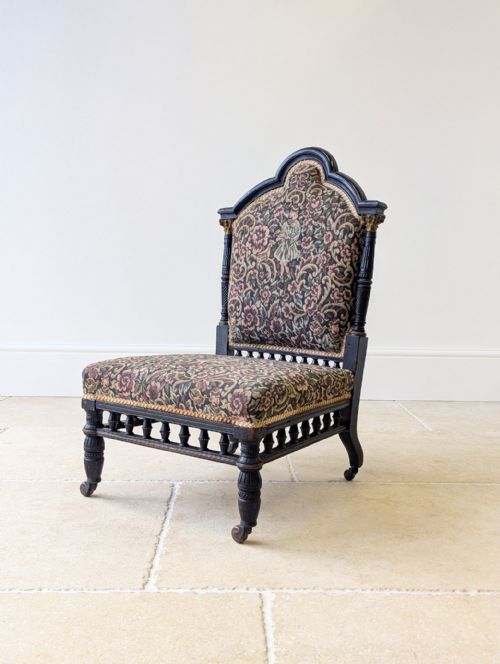
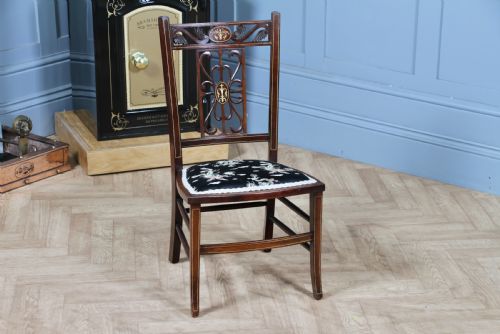
The prevailing styles on this page encompass Victorian, Edwardian, Aesthetic Movement, and French nineteenth-century influences. These seating pieces frequently manifest in walnut, mahogany, and rosewood frames supporting upholstered pads.
Makers utilised diverse nomenclature historically, applying terms such as occasional chairs, music chairs, and armchair variants interchangeably for these low seating options. Most surviving examples retain upholstered elements covered in fabric, silk, or velvet.
How they were made
Cabinetmakers constructed the supportive frames of these low seats predominantly using dense hardwoods including mahogany, walnut, and rosewood. Craftsmen shaped these timbers into curved balloon backs, cabriole legs, and carved frameworks.
Upholstery techniques involved securing fabric, silk, velvet, or button-back padding over internal stuffing. Brass castors and ceramic components frequently appeared on the feet of these chairs to facilitate movement across carpets.
Listings span the nineteenth century through the Edwardian period, featuring mahogany, walnut, rosewood, and brass components.
What varies in quality
The degree of hand-carving on the wooden frames distinguishes standard production from finer workshop output. Crisp detailing in walnut or rosewood mouldings indicates superior craftsmanship.
The integrity of the structural timber and the precision of the joinery determine the longevity of each frame. Original upholstery materials and the retention of maker details elevate the standing of individual pieces.
Howard and Sons
The Antique Low Salon Chair Glossary
- Nursing chair
- A low-seated chair designed in the nineteenth century to allow women to nurse infants comfortably. These low salon chair variants typically feature an upright, padded back and short legs.
- Balloon back
- An oval or rounded wooden chair back resembling a balloon shape. This design gained immense popularity during the Victorian era on mahogany and walnut frames.
- Cabriole leg
- A furniture leg that curves outward in a convex arc and then bends inward in a concave arc, terminating in a pad or scroll foot. This styling appears frequently on mid-nineteenth-century seating.
- Aesthetic Movement
- A late-nineteenth-century design reform emphasising visual beauty over narrative subject matter. Pieces from this movement often utilise ebonised wood finishes.
- Button back
- An upholstery style where buttons are pulled deep into the padding to create a quilted, geometric pattern of tufts. This technique provides firm tension across the backrest.
Antique Low Salon Chair: Frequently Asked Questions
What is an antique low salon chair?
An antique low salon chair is a compact, low-slung seat created during the Victorian and Edwardian eras for domestic parlours and withdrawing rooms.
These pieces encompass nursing chairs, fireside seats, and music chairs built from hardwoods like walnut, mahogany, and rosewood.
Where were these chairs used?
These seating items historically furnished bedrooms, drawing rooms, and fireside settings where low profiles facilitated relaxed posture.
Victorian homes utilised them in feminine spaces for resting or nursing children near hearths.
How do I identify a Victorian example?
Victorian examples frequently display balloon backs, walnut or mahogany frames, and decorative carved woodwork from the mid to late nineteenth century.
Characteristics such as button-back velvet upholstery and cabriole legs point directly to this period.
What woods were commonly used?
Cabinetmakers primarily selected dense tropical hardwoods such as mahogany and rosewood alongside native walnut for structural frames.
Ebonised finishes also appear on pieces influenced by the Aesthetic Movement.
Are these chairs comfortable for daily use?
Their low seats and supportive upholstered backrests offer a distinct seating posture tailored to relaxation.
Many surviving pieces retain sprung or padded upholstery suited for modern living spaces.