



Antique Lounge Suite
An antique lounge suite brings matching seating together, turning a room into a coherent period interior.
Antique Lounge Suite
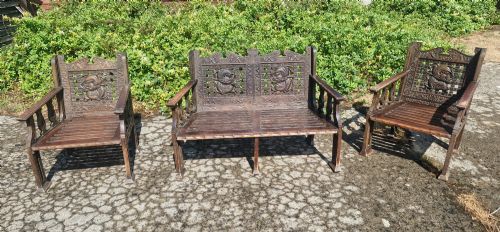
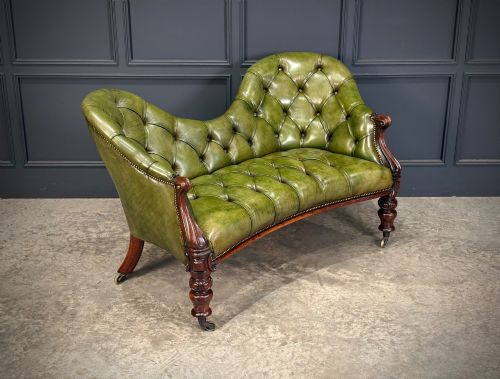
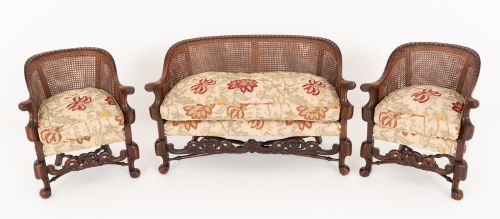
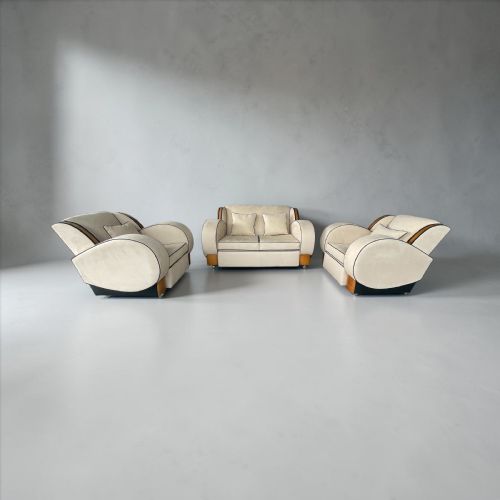
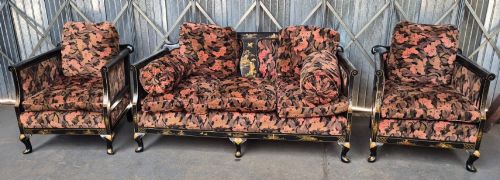
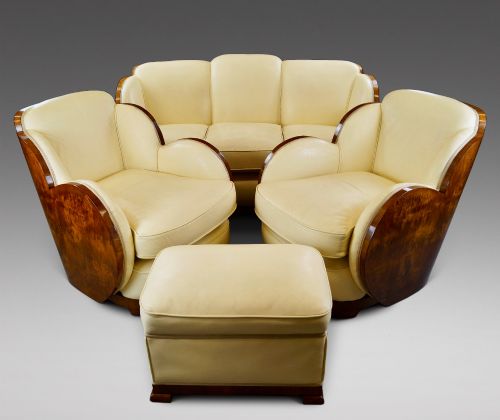
An antique lounge suite comprises matched seating sets, typically uniting a sofa with matching armchairs, designed to furnish a drawing room or sitting room with unified style. When searching for an antique lounge suite, you encounter multi-piece groupings that span from nineteenth-century Victorian carved frames to streamlined Art Deco club designs. The forms on this page range from standard three-piece sofa and armchair combinations to expansive five-piece salon suites and specialised bergere arrangements.
The selection reflects diverse cabinet-making traditions, incorporating British styles alongside French revival pieces, Anglo-Indian craftsmanship, and continental European output. You find suites defined by specific upholstery choices, such as buttoned leather, damask, velvet, and cane work, paired with timber frames built from walnut, mahogany, oak, and satinwood. These seating groups survive either as complete original sets or as curated combinations that preserve historical forms.
How they were made
Makers constructed these frames using solid hardwoods like mahogany, walnut, oak, and satinwood, frequently employing traditional joinery such as mortise and tenon alongside hand-carved ornamentation. Timber elements often feature specialised details like marquetry inlay, gilded surfaces, or intricate hand-carved motifs reflecting specific period tastes from Victorian revival to Edwardian Chinoiserie.
Upholstery techniques relied on deep-sprung foundations, horsehair stuffing, and hand-stitched webbing secured to robust wooden carcases, finished with leather, velvet, damask, or textile coverings. Caning formed an integral technique for light bergere frames, where woven cane panels provided flexible support within exposed wooden structures.
Antique Lounge Suite Retail Price Guide 2026
Typical asking prices for lounge suite among the pieces listed under this phrase on Sellingantiques today, from the lower quarter to the upper quarter. They describe what is for sale here now, not the wider market.
Listings feature periods from the 19th Century and Victorian eras through to Edwardian, Art Deco, and 1930 designs.
What varies in quality
Quality rests in the structural integrity of the timber frame and the precision of the hand-carved or inlaid details. Suites displaying crisp, deep-relief carving and high-grade cabinet woods represent superior craftsmanship compared to simpler production pieces.
The sophistication of the internal upholstery stuffing and the selection of covering materials dictate the standard of execution. Original matching suites that retain their unified finish and cohesive textile grades stand apart from assembled or heavily altered groups.
Howard and Sons·Epstein·J. S. Kinsey
The Antique Lounge Suite Glossary
- Bergere
- An enclosed upholstered armchair with wooden framing and woven cane sides or back panels. This style frequently appears in Edwardian and Georgian revival suites.
- Settee
- A long upholstered wooden bench with a back and arms, designed to seat multiple people. It serves as the central anchor for a multi-piece seating arrangement.
- Duchesse brisee
- A couch or chaise longue split into two or three separate parts, such as an armchair and a footstool. These French pieces form elaborate multi-part salon sets.
- Spoon-back
- A padded chair or sofa back carved into an oval contour resembling the bowl of a spoon. This distinctive Victorian shape provides ergonomic lumbar support.
- Knowle sofa
- A traditional British sofa style featuring adjustable hinged arms tied back with decorative braids. It forms deep, enclosed seating within period rooms.
Antique Lounge Suite: Frequently Asked Questions
What is an antique lounge suite?
An antique lounge suite is a coordinated set of seating furniture, typically consisting of a sofa paired with matching armchairs designed for a main living space.
These groupings ensure uniform design and upholstery throughout a room, reflecting the specific aesthetic preferences of periods ranging from the Victorian era to Art Deco.
How do I identify the period?
You can determine the period by examining the characteristic woodwork styles, carving motifs, and upholstery methods employed in the frame construction.
Victorian pieces often display heavy buttoned leather and dark mahogany, while Art Deco suites favour streamlined walnut and zebrano veneers with cloud-shaped profiles.
How were these suites used?
These matching sets were utilised in formal reception rooms and drawing rooms to provide comfortable, socially cohesive seating for family members and guests.
The coordinated chairs and sofas allowed households to display wealth and refined taste through unified interior decoration.
How do I care for leather upholstery?
Preserving antique leather requires maintaining moderate room humidity and applying specialised conditioning balms to keep the hide supple and prevent cracking.
Avoid placing these delicate pieces near direct heat sources or in strong sunlight that could dry out the historical material.