
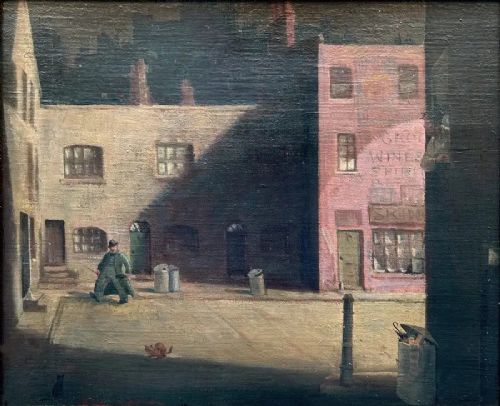
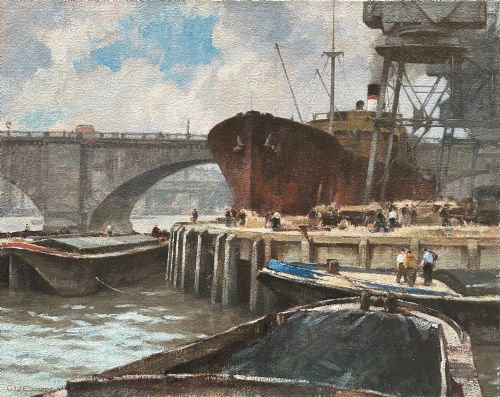
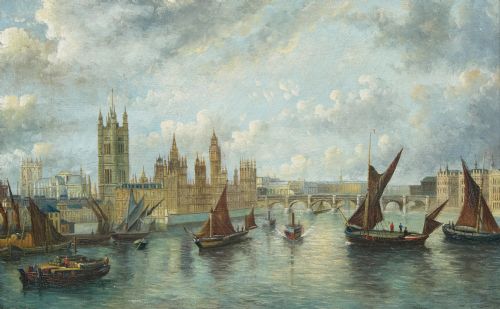
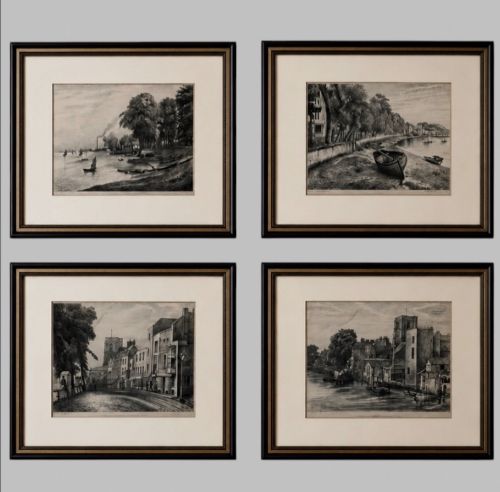


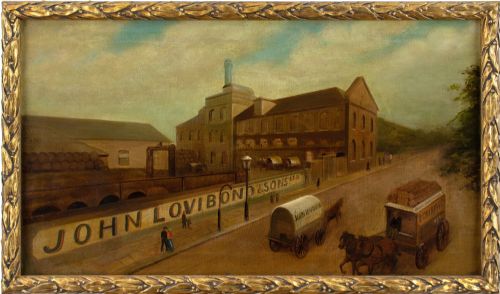
Antique London Landscape Art
These antique london landscape art works capture the historic capital across centuries through watercolours, oils, and prints.
Antique London Landscape Art
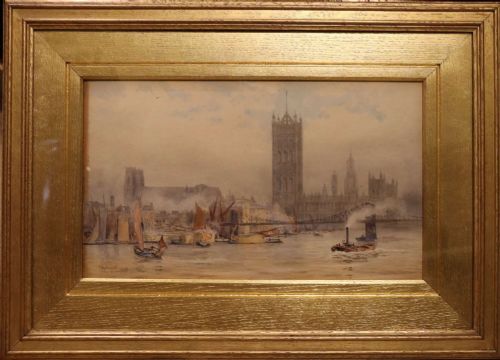
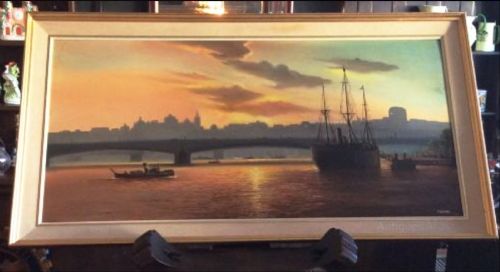
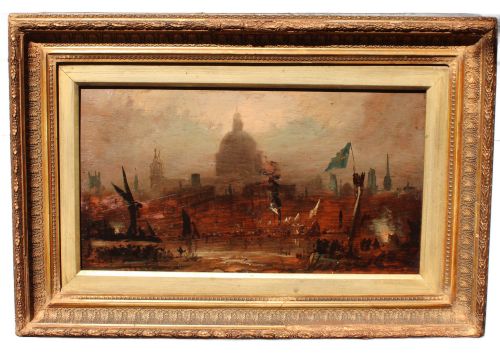
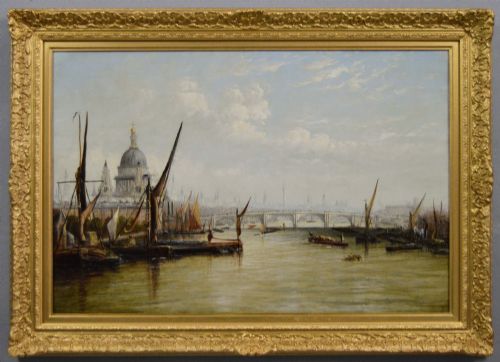
When you search for antique london landscape art, you find works depicting the capital from the early 19th century through the mid 20th century. These pieces record familiar landmarks, including the River Thames, St Paul's Cathedral, Westminster, and various city streets.
The versions most common on this page are watercolours and oil paintings originating from the Victorian and Edwardian eras. Artists of these periods frequently painted the bustling river traffic, bridges, and parks under changing atmospheric conditions.
Works range from intimate topographical watercolours to larger oil paintings on canvas and panel. Subjects span from grand architectural scenes to quiet corners of Kew Gardens and Hampstead.
Materials and construction methods
Painters used oil paint on canvas or wood panels, applying rich layers to build up maritime scenes and architectural details on the Thames. Watercolours on paper capture lighter, more translucent atmospheric effects of the city sky and mist.
Many works incorporate gold leaf frames and glass protection to preserve the delicate paper or paint layers from atmospheric damage over time.
Paper and canvas serve as the primary supports, complemented by traditional wood frames and gold leaf detailing.
Distinguishing quality in London views
Quality rests upon the artist's ability to render perspective accurately and capture the specific light and atmosphere of the capital. Superior works demonstrate confident brushwork and precise topographical detail rather than formulaic repetition of standard landmarks.
The condition of the paper or canvas also marks the difference between examples, with well-preserved works retaining their original pigment vibrancy without heavy fading or excessive restoration.
Francis Moltino·Charles William Wyllie·Frank W Scarborough·Beatrice Parsons·Rowland Henry Hill
The Antique London Landscape Art Glossary
- Topographical
- A genre of art focused on the accurate representation of specific places and buildings. These works serve as visual records of how London appeared in past centuries.
- Watercolour
- A paint consisting of pigment suspended in a water-based solution applied to paper. Artists used this medium to achieve luminous washes representing London mists and skies.
- Oil on Canvas
- A painting medium using pigments bound with drying oils applied to woven fabric stretched over a wooden frame. This technique allowed artists to create rich textures for river and sky scenes.
- Etching
- A printmaking process where lines are incised into a metal plate with acid before ink is applied. Hand coloured examples add watercolour tints directly onto the printed sheet.
- Maritime Art
- Depictions of ships, harbours, and coastal or river scenes. In London art, this centres heavily on river traffic along the Thames.
Antique London Landscape Art: Frequently Asked Questions
How do I date an oil painting of London?
Examine the architectural landmarks depicted, as bridges, railway lines, and building developments changed rapidly across the 19th and 20th centuries. Costume details on figures within street scenes also provide clues to the decade of creation.
Inspect the back of the canvas, stretcher frames, and any inscriptions or artist signatures left on the reverse. Old framing materials and labels often confirm the period of production.
What is the difference between an oil and a watercolour?
Oil paintings use pigments suspended in oil on canvas or wood, offering rich textures and deep colour saturation. Watercolours use water-soluble pigments on paper, producing lighter and more translucent effects.
Oils are generally more durable and suited to robust framing without glass, while watercolours require protection behind glass to prevent moisture and light damage.
Where should I hang a London landscape painting?
Choose a wall away from direct sunlight and excessive humidity to protect the paper or canvas from fading and degradation. Stable indoor temperatures ensure the frame and backing materials remain secure.
Position the work at eye level in a room where the lighting complements the medium, using directional picture lights for oil paintings if desired.
How do I identify a Victorian London view?
Look for characteristic Victorian architecture, horse-drawn carriages, paddle steamers, and early steam tugs on the Thames. Smoke from coal fires often fills the sky in depictions from this industrial era.
Check for artist signatures and dates matching the 19th century, along with period framing styles typical of the mid to late Victorian decades.