
Antique Log Container
An antique log container keeps your hearth tidy while bringing honest metal and timber texture right to the fireside.
Antique Log Container
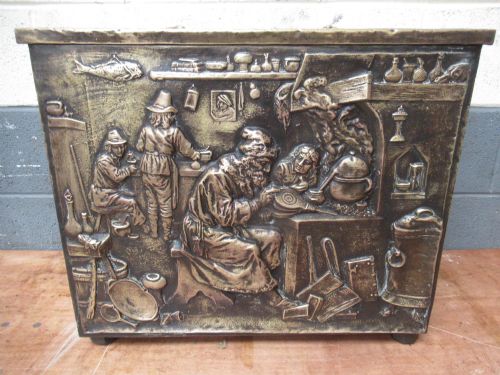
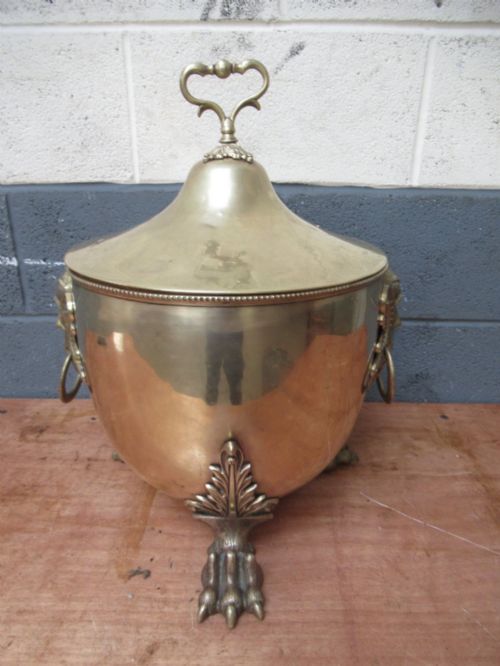
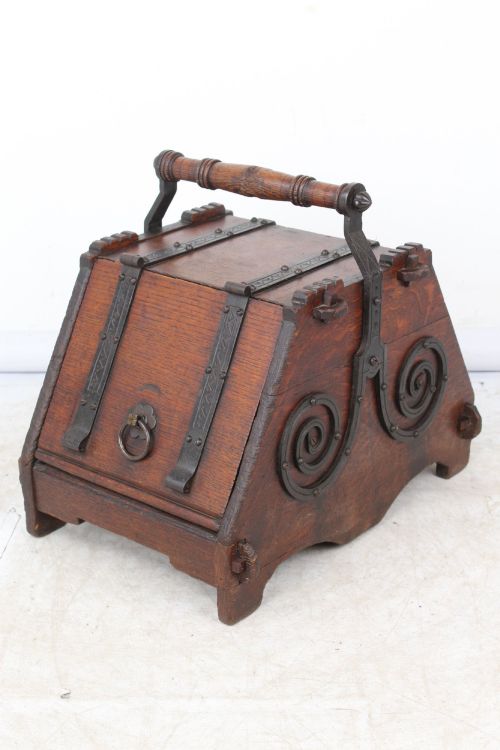
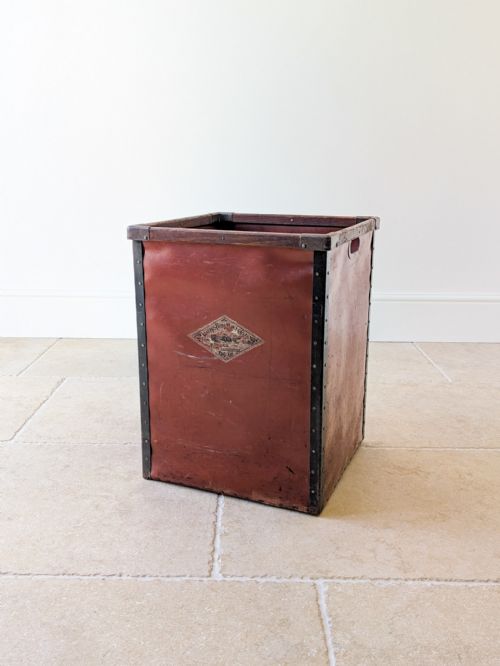
An antique log container serves the practical purpose of holding firewood by the hearth while doubling as a decorative fireside accessory. These pieces span utility items repurposed for domestic use and purpose-built coal or log holders from the nineteenth and early twentieth centuries.
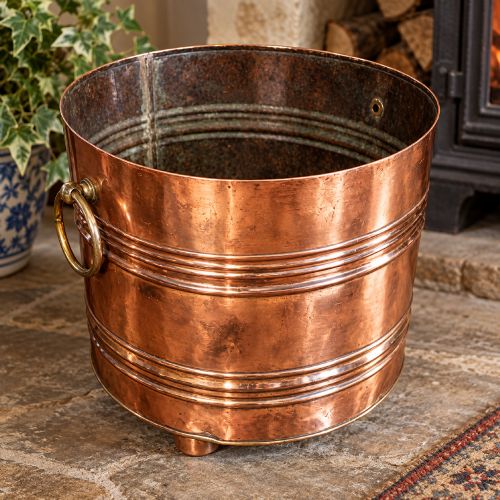
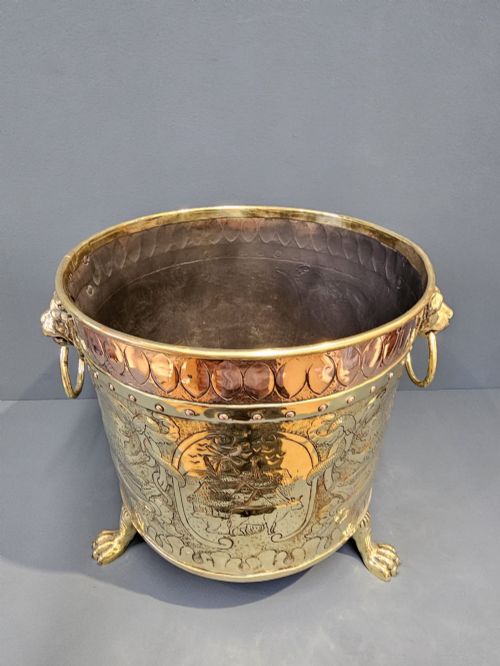
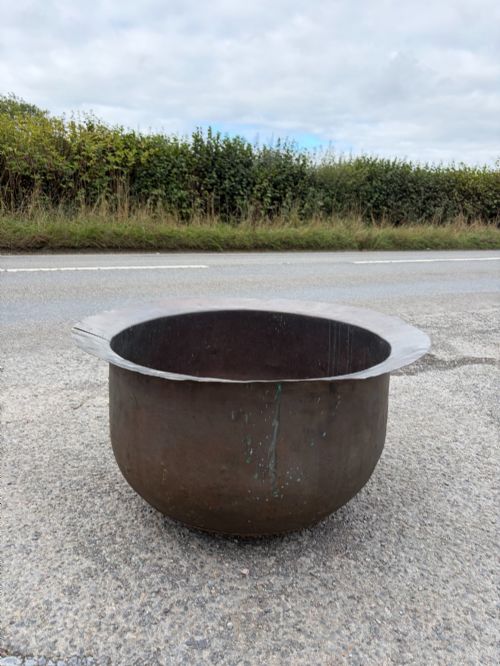
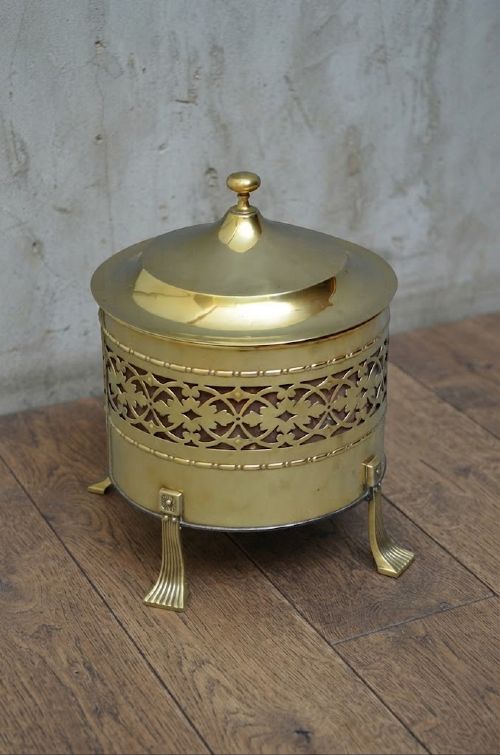
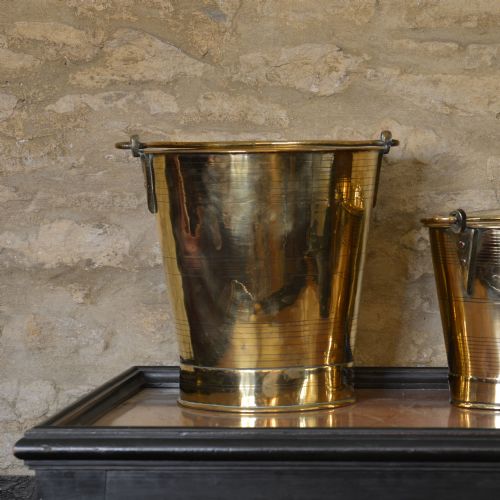
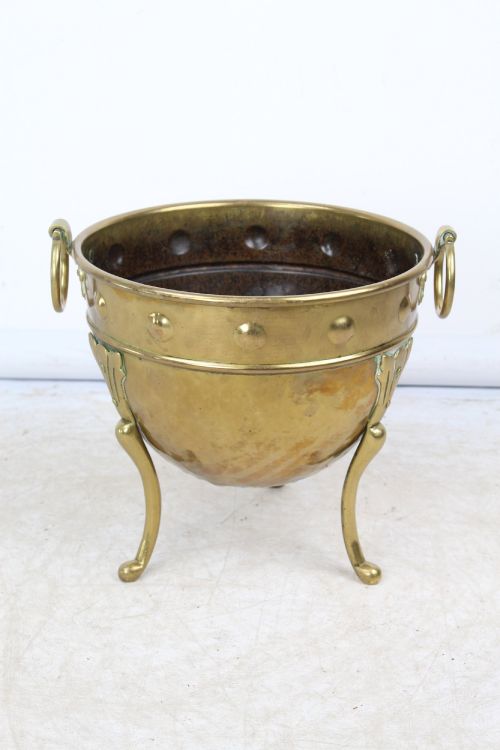
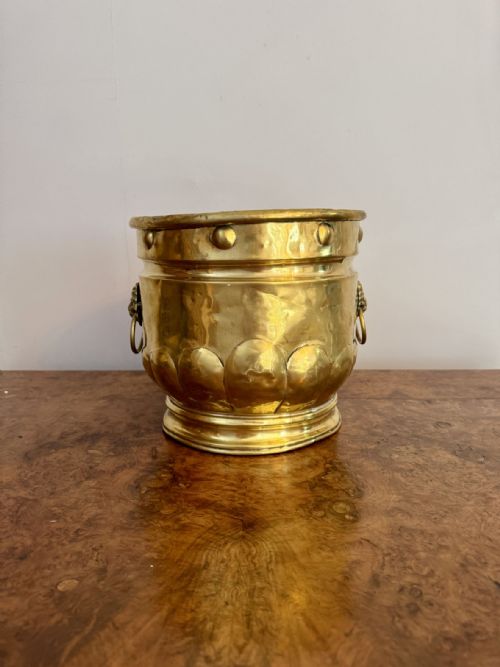
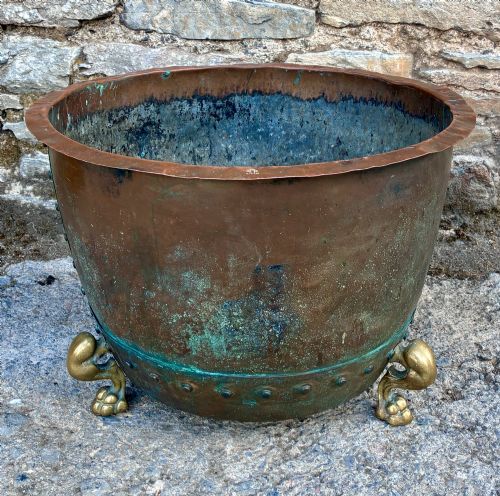
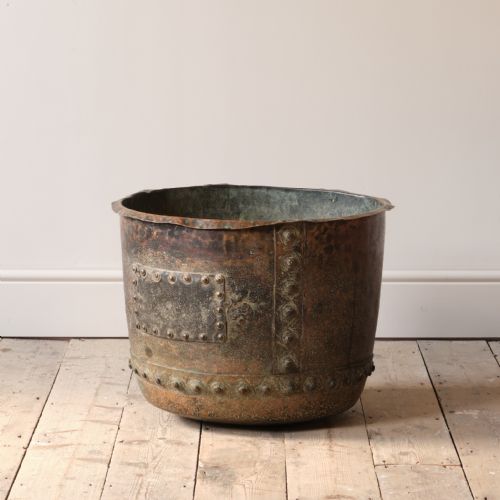
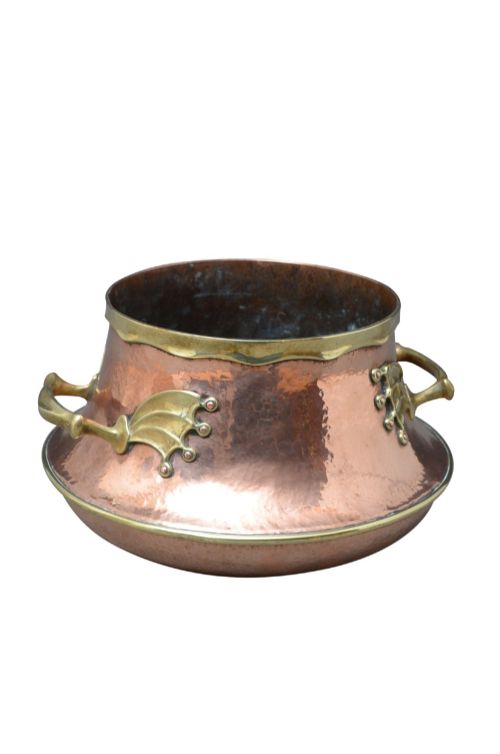
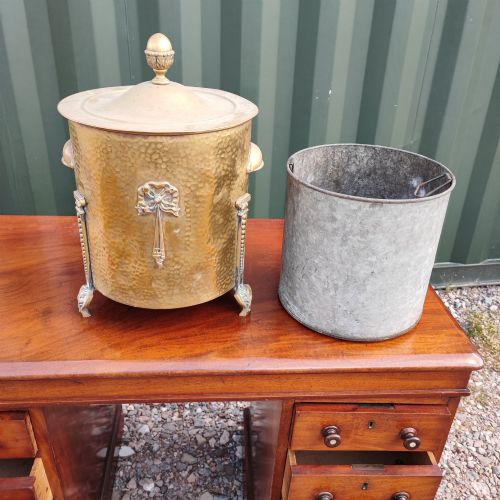
Buyers will most frequently encounter brass and copper buckets, cauldrons, and bins dating from the Victorian and Edwardian eras. Many pieces cross over in function, serving equally well as coal scuttles, planters, or general storage vessels.
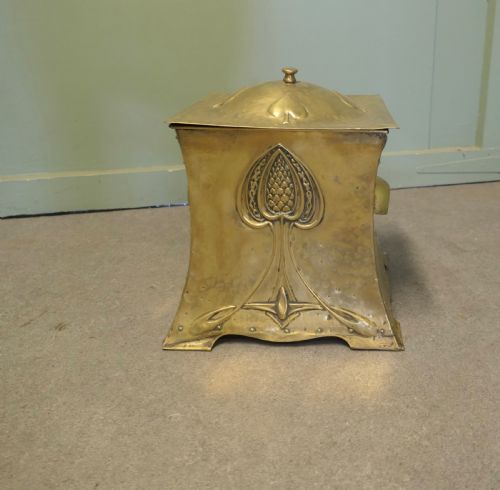
The material palette is robust, drawing heavily on heavy metals like brass, copper, and iron, alongside traditional timbers such as oak. Styles range from Arts and Crafts and Gothic Revival to rustic farmhouse and industrial mill pieces.
Materials and Technique
Sheet copper and brass form the body of many containers, joined by hand-hammered rivets and secured with iron or brass bands. Handles in wrought iron or swing-format brass provide sturdy transport for heavy loads of wood or coal.
Timber versions rely on coopered oak construction, utilising narrow wooden staves bound with metal hoops much like a traditional barrel. Details such as fretwork, embossed patterns, and applied brass decoration distinguish more elaborate domestic examples from utilitarian industrial bins.
Assessing Quality
Quality rests in the substance of the metal gauge and the integrity of the construction rather than surface shine. Heavier copper and thick brass retain their structural shape under daily use, whereas thin metal easily dents and loses rigidity.
Original elements dictate value, such as matching swing handles, riveted seams, and accompanying internal liners or original shovels. Finer examples display deliberate design choices like Arts and Crafts detailing or specific maker attribution, elevating them above standard utility buckets.
Henry Loveridge·Christopher Dresser·Richard Arkwright Masson Mills
The Antique Log Container Glossary
- Coal scuttle
- A container designed specifically for holding coal, often featuring a sloping opening and a handle for easy tipping onto the fire.
- Cauldron
- A round metal cooking or heating pot with a swing handle, frequently repurposed as a fireside log holder due to its deep bowl.
- Jardiniere
- An ornamental pot or receptacle, usually made of brass or copper, designed to hold plants but commonly used for logs.
- Coopered
- Made from shaped wooden staves fitted together and bound by hoops, a traditional method used for oak buckets and bins.
- Fretwork
- Ornamental design created by cutting patterns through metal or wood plates, often seen on Edwardian brass buckets.
Antique Log Container: Frequently Asked Questions
What is an antique log container?
An antique log container is a functional fireside vessel made from materials like copper, brass, iron, or oak to store firewood neatly beside the hearth.
These items range from repurposed industrial bins and grain measures to decorative Victorian coal buckets and Arts and Crafts log boxes.
How were these containers originally used?
They served practical roles in holding coal, peat, or logs for household fires, while some functioned as wash tubs, grain measures, or planters.
Many designs included swing handles and shovels to facilitate moving fuel directly to the fireplace grate.
How do I style a log container at home?
Place a metal or oak bin directly beside an active fireplace or wood-burning stove to keep fuel within arm's reach while adding period character to the room.
They also function well empty as decorative sculptural objects or repurposed as large indoor plant pots.
How do I tell Victorian pieces apart from later ones?
Victorian examples often feature heavy riveted copper construction, embossed brass detailing, or Gothic Revival influences, sometimes bearing maker attribution.
Later Edwardian and 1920s pieces frequently embrace simpler brass work, industrial iron frames, or utilitarian mill bin origins.