
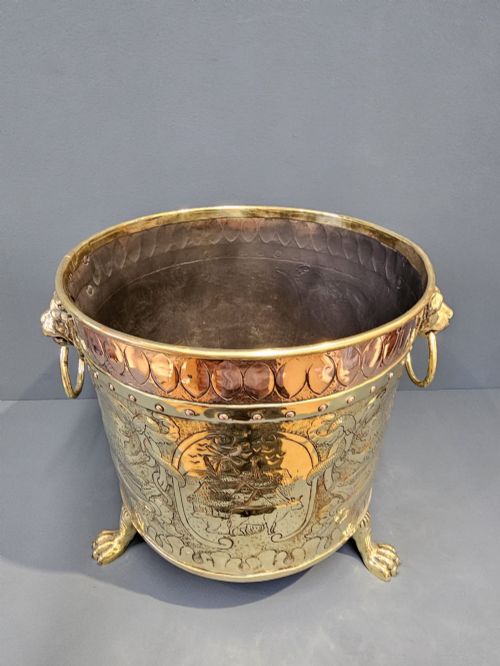
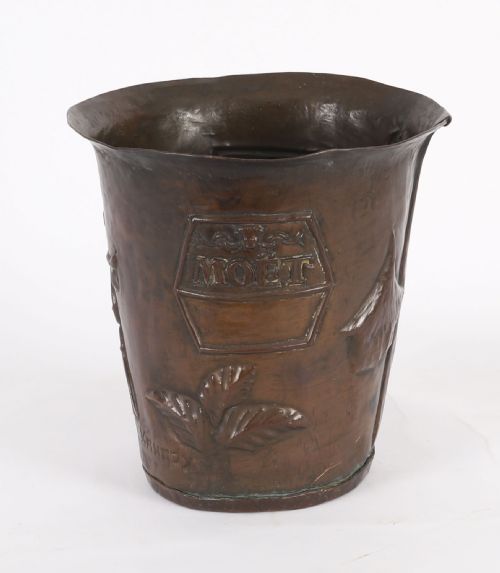


Repousse Copper Bucket
A repousse copper bucket brings warmth and hand-hammered texture to a room, whether holding logs beside a fireplace or cooling wine.
Repousse Copper Bucket
A repousse copper bucket encompasses a variety of functional metal vessels, including log bins, coal scuttles, wine coolers, and planters. These pieces originate from periods spanning the eighteenth century through to the early twentieth century, taking stylistic cues from Victorian, Art Nouveau, Arts and Crafts, and Dutch Baroque traditions.
The version most commonly met on this page is the nineteenth-century or Victorian copper bucket, frequently utilised beside the hearth for coal or logs. Alongside these, buyers will find wine coolers, jardiniere planters, and umbrella stands formed from hammered or embossed metal.
How they were made
The construction relies primarily on hand-worked copper sheet, often combined with brass bands, wrought iron handles, or wooden elements. Metalsmiths utilised repousse techniques to hammer designs from the reverse side, creating raised patterns such as floral motifs or galleon scenes on the surface.
Many examples integrate structural brass or iron components to support the weight of coal, wood, or water. The joining of seams and the attachment of handles reveal traditional metalworking methods suited to heavy domestic tasks.
The listings span the eighteenth century to the 1930s, incorporating copper, brass, wood, and wrought iron in various forms.
What varies in quality
Quality in a repousse copper bucket rests on the crispness and depth of the hand-embossed decoration rather than flat mechanical stamping. Pieces showing confident, detailed craftsmanship in the metalwork sit at the higher end of the range.
The weight of the metal sheet and the integrity of supplementary brass or iron fittings also distinguish finer examples. Substantial construction and balanced proportions separate utilitarian vessels from more decorative works.
The Repousse Copper Bucket Glossary
- Repousse
- A metalworking technique where the artisan hammers a design from the reverse side to create a raised relief on the front. This method gives decorative buckets their tactile, three-dimensional surface patterns.
- Jardiniere
- An ornamental pot or stand designed to hold growing plants or flowers. In metalwork, these often double as wine coolers or decorative table bowls.
- Log Bin
- A heavy-duty container designed to store firewood near a fireplace. These frequently feature sturdy brass or copper construction to withstand rough handling.
- Coal Scuttle
- A specialised bucket or box shaped for carrying and dispensing coal onto a fire. Many nineteenth-century versions incorporate decorative embossing or drop handles.
- Wine Cistern
- A large basin or cooler traditionally used to chill multiple bottles of wine or champagne. Eighteenth-century examples often display Dutch Baroque or Italian styling.
Repousse Copper Bucket: Frequently Asked Questions
How were these copper buckets originally used?
These vessels served practical household duties around the estate or home, functioning as coal scuttles by the hearth, log bins for firewood, or wine coolers at the dining table.
Others acted as planters and jardiniere containers for interior greenery, reflecting a blend of utility and decorative display.
How do I clean and polish an antique copper bucket?
Maintenance depends on personal preference regarding patina, as many collectors prefer to leave the aged surface untouched. If polishing is desired, a gentle metal cleaner suitable for copper should be applied sparingly to preserve the embossed details.
Harsh abrasives must be avoided to protect the hand-worked repousse patterns and the underlying metal structure.
How can I tell a Victorian bucket from an eighteenth-century one?
Dating relies on stylistic markers, construction techniques, and material combinations recorded in the design. Eighteenth-century pieces often exhibit Dutch Baroque or Italian decorative forms, while Victorian and Art Nouveau examples display nineteenth-century manufacturing traits.
Examining the joins, handle attachments, and hammer marks helps clarify the period of origin.
Can these antique buckets still hold water?
While many were designed to hold water or ice as wine coolers, older vessels require careful testing before actual use. Over centuries, seams and bases can develop micro-fractures, so inspection for leaks is necessary if utilised for liquids or plants.