




Antique Liquid Measures
These antique liquid measures are functional vessels of brass, copper, pewter, and glass that gauge volume accurately.
Antique Liquid Measures
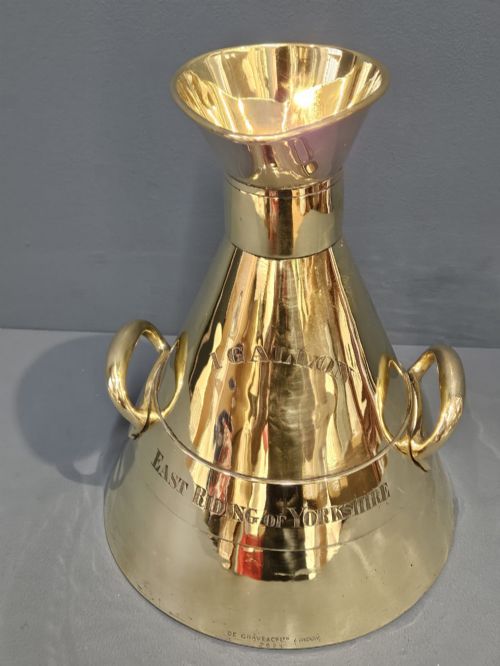
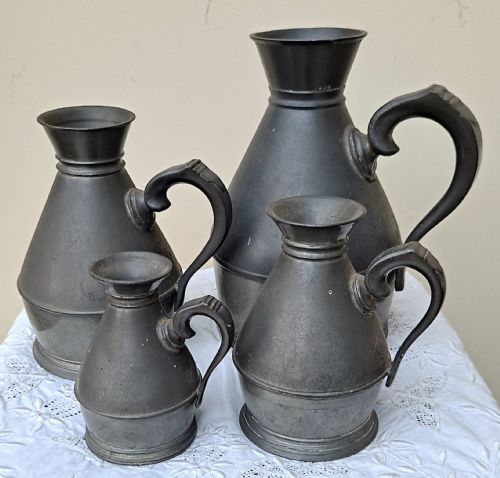
The selection on this page spans from small gill measures and spirit containers up to large one-gallon and two-gallon vessels designed for commercial and excise use. Regional forms such as Irish haystack measures and Channel Islands pieces also appear alongside standard English specimens.
Most examples originate from the nineteenth century, though earlier Georgian and later interwar items, including etched glass beakers, broaden the chronological scope of the available stock.
How they were made
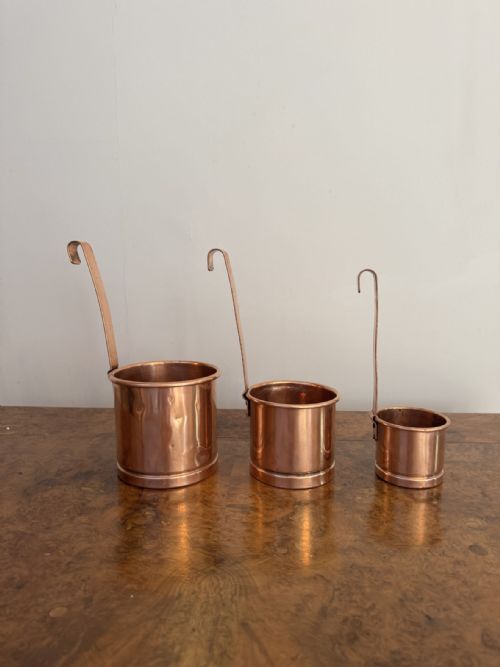
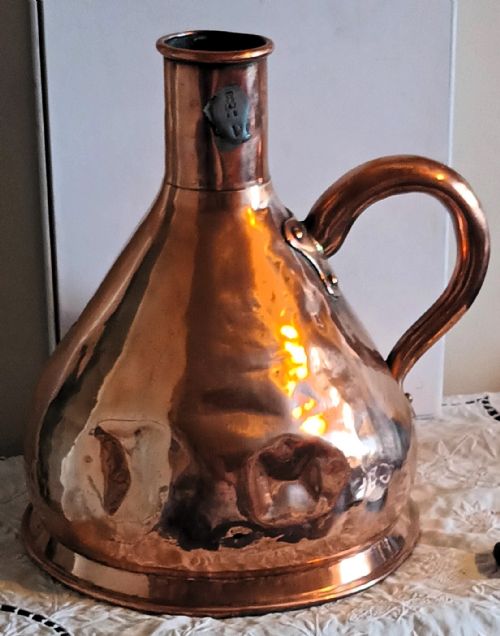
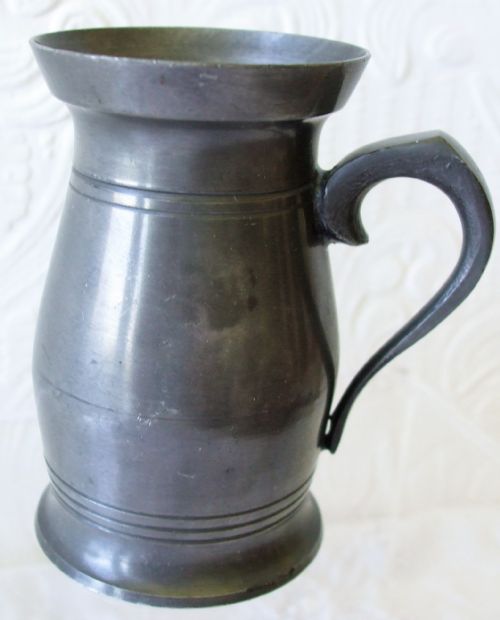
Pewter measures rely on a malleable metal alloy cast in moulds, often producing the characteristic soft lustre and heavy base seen in haystack forms and gill tankards. Copper and brass vessels involve sheet metal fabrication, where panels are joined, hammered, and fitted with sturdy handles for daily service in kitchens and taverns.
Glass measures utilise clear blown and moulded metal, frequently finished with etched markings to denote exact liquid capacity for customs and excise applications.
Antique Liquid Measures Retail Price Guide 2026
Typical asking prices for liquid measures among the pieces listed under this phrase on Sellingantiques today, from the lower quarter to the upper quarter. They describe what is for sale here now, not the wider market.
Even customs officers needed a drink, as proven by the etched glass beakers used by the service.
What varies in quality
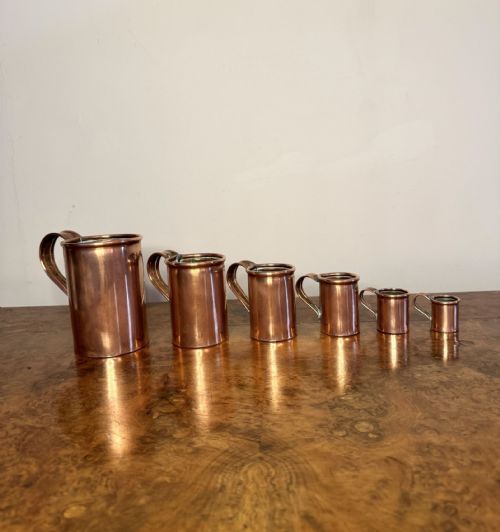
Quality in these vessels rests on the crispness of maker marks, verification stamps, and the preservation of original surface patination across copper and pewter bodies. Complete graduated sets demonstrate superior desirability compared to isolated single units.
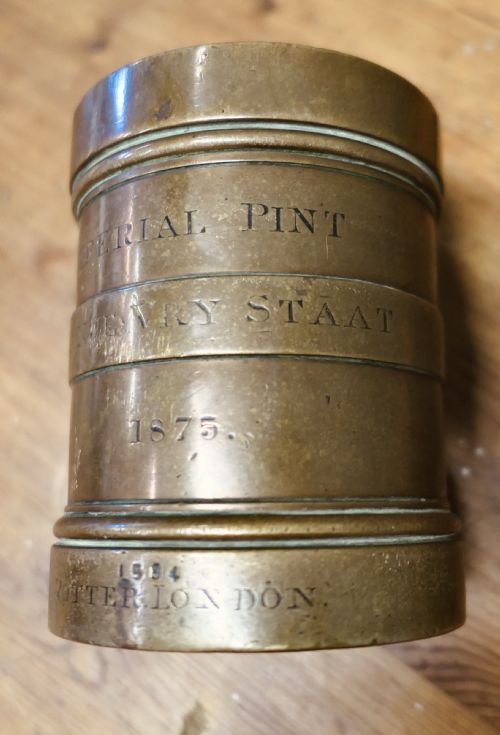
Subtleties in form, such as the balanced proportions of bell-shaped tankards or the precise assembly of heavy bronze Imperial pints, distinguish standard utilitarian wares from finer workshop productions.
Potter of London·John De St Croix
The Antique Liquid Measures Glossary
- Haystack measure
- A distinctive Irish or English pewter measure featuring a bulbous body that tapers toward the top, resembling a traditional stack of hay.
- Gill
- A traditional unit of liquid capacity equal to a quarter of a pint, commonly found in small tavern and spirit measures.
- Imperial measure
- A vessel manufactured to conform to the official British weights and measures standards established in the nineteenth century.
- Bell-shaped tankard
- A drinking vessel or measure characterised by a flared profile resembling an inverted bell, frequently encountered in Victorian copper sets.
- Pewterware
- Objects formed from a tin alloy containing copper and lead, widely utilised for domestic and tavern drinking vessels.
Antique Liquid Measures: Frequently Asked Questions
How were pewter measures used?
Pewter measures served primarily in taverns, inns, and domestic households for dispensing and serving ale, wine, and spirits accurately.
Their sturdy construction allowed them to withstand heavy daily use in commercial environments before the standardisation of modern barware.
How do I identify a Victorian measure?
Victorian measures often feature specific royal verification marks, such as VR stamps, alongside distinct forms like bell-shaped copper tankards and graduated sets.
Examining the metal composition and manufacturing techniques helps place these items within the nineteenth-century timeline.
Are these measures still accurate?
Many historical measures retain their precise volumetric capacity, though they are collected and displayed today as decorative antiques or historical artefacts rather than for trade.
Dents, wear, and past adjustments can alter the original internal volume over centuries of use.
How do I clean antique copper?
Antique copper measures generally require minimal intervention to preserve their natural surface patination and historical depth.
Harsh chemical polishes remove the aged finish that collectors value, so gentle dusting or wiping with a soft cloth is usually sufficient.