



Antique Life Drawing Paper
Antique life drawing paper bears the charcoal, chalk and graphite marks of academic study from the Georgian era down to the mid-twentieth century.
Antique Life Drawing Paper
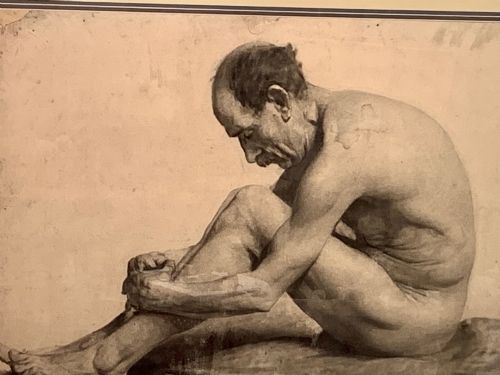
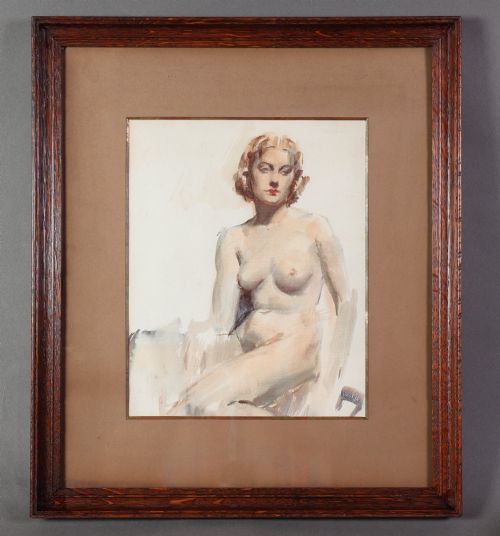
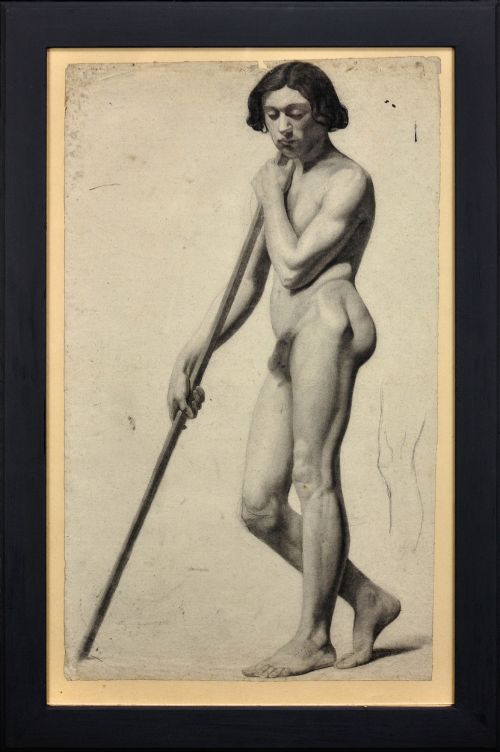
When you search for antique life drawing paper, you find academic studies of the human form executed across the nineteenth and twentieth centuries. These works record the rigorous training methods of art schools, capturing male and female nudes through observational practice.
The material surface itself carries the history of the studio, frequently presented within contemporary wood or glass frames. Surviving examples range from single graphite sheets to collections of sketch studies compiled by working artists.
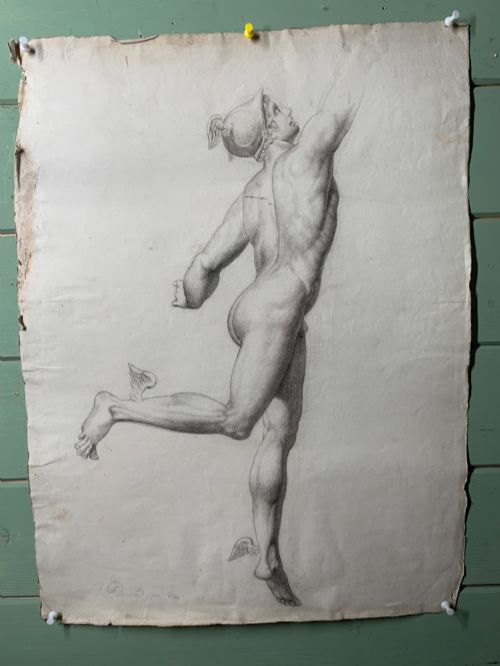
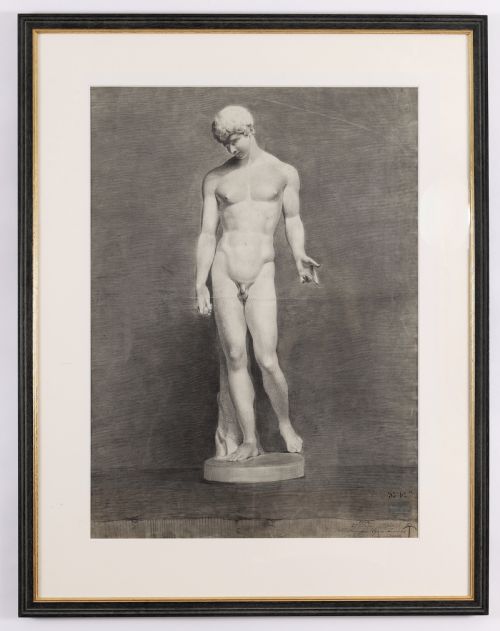
You are most likely to encounter nineteenth-century academic studies featuring figures such as the god Hermes or classical statuary like the Capitoline Antinous. These sheets document the foundational drawing exercises required of historical art students.
How these drawings were made
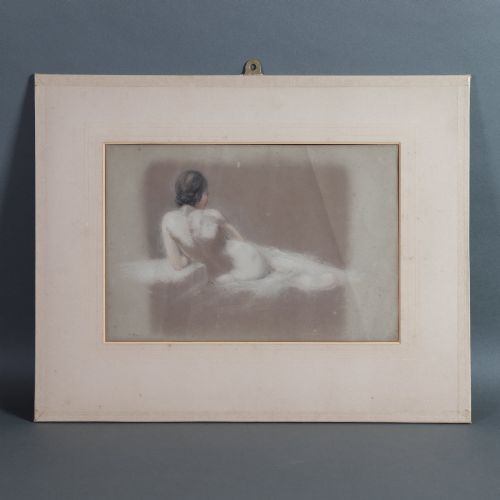
Artists worked primarily on paper using charcoal, chalk, graphite and pastel to render tonal depth and anatomical precision. Mixed media studies combine these dry mediums to build shadow and highlight upon the sheet.
The physical support consists of traditional paper housed within timber frames, sometimes protected behind glass. Framing materials such as oak support the preservation of these delicate works on paper.
Even a nursery poodle earned a formal portrait in pastel during the Victorian era.
What varies in quality
Quality rests upon the draughtsmanship and the accuracy of anatomical rendering achieved by the artist during studio practice. Stronger works demonstrate a secure command of proportion and light, whether depicting a recumbent nude or a full-size figure study.
The preservation of the paper surface and the clarity of the medium influence the visual impact of the drawing. Well-maintained sheets retain the crispness of the original graphite or charcoal lines without excessive fading.
William Etty·Henry Arthur Roberts·Winifred Eugene Ballard·Ted Halliday·John Parry
The Antique Life Drawing Paper Glossary
- Academic Realism
- A style of painting and drawing produced under the influence of European academies of art. It emphasises precise anatomical accuracy and classical subject matter.
- Charcoal
- A dry drawing medium made from organic carbonaceous material. Artists utilise it for deep blacks and broad tonal shading on paper.
- Graphite
- A crystalline form of carbon used as a drawing lead. It permits fine, controlled lines and subtle tonal gradation in preparatory sketches.
- Pastel
- A dry painting medium in the form of a stick, consisting of powdered pigment and a binder. It produces velvety colours upon textured paper sheets.
- Grand Prix De Rome
- A prestigious French scholarship for arts students. Submissions often involved rigorous academic life drawing exercises.
Antique Life Drawing Paper: Frequently Asked Questions
What is an academic life study?
An academic life study is a drawing or painting executed from a live model as part of formal art training. These exercises focused on mastering human anatomy and proportion.
Students drew classical figures or live models under the guidance of instructors in institutional settings.
How should I frame antique paper?
Antique paper requires conservation-grade framing to protect fragile charcoal, chalk and graphite surfaces from environmental damage. Acid-free mounts prevent chemical degradation over time.
Glazing shields the delicate medium from airborne pollutants and physical contact while allowing the study to be displayed safely.
What periods do these drawings cover?
The available pieces span from the Georgian period through the nineteenth century and into the mid-twentieth century. This timeline captures shifting approaches to academic art instruction.
Nineteenth-century examples frequently feature classical antique casts, while later works record direct sessions with live models in charcoal and pastel.
How do I identify a studio drawing?
Studio drawings often display notations, practice grids or multiple compositional attempts left behind during the working process. They represent the daily output of an artist or art student.
These sheets emphasise experimentation and technical training rather than a finished commercial commission intended for public exhibition.