


Antique Lid Tureen
An antique lid tureen brings formal nineteenth-century dining to the table with covered porcelain, ironstone, and silver plate.
Antique Lid Tureen
An antique lid tureen encompasses covered serving vessels designed for soups, sauces, vegetables, and entrees at the historic dining table. These pieces emerge primarily from eighteenth-century Georgian origins through Victorian and Edwardian periods, crossing domestic earthenware and refined metalwork. The visitor encounters sauce tureens with ladles alongside larger vegetable dishes and revolving breakfast warmers.
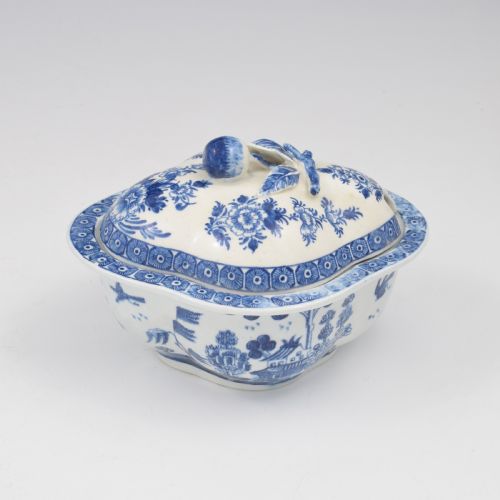
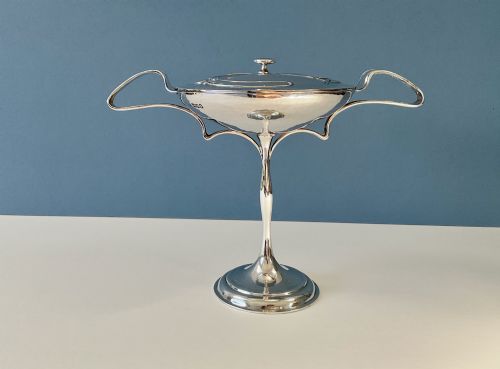
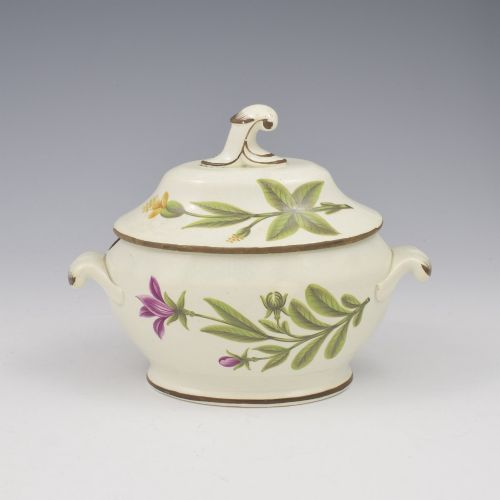
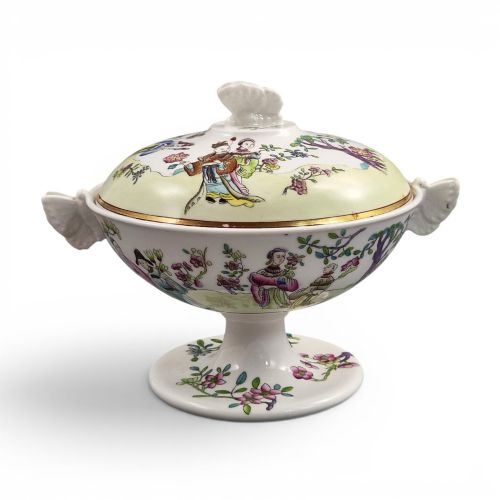
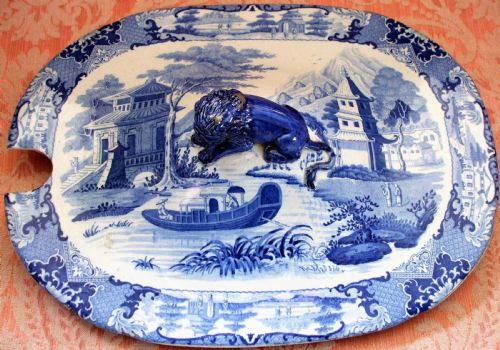
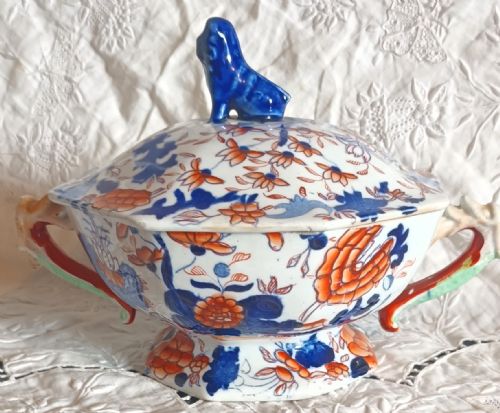
Ceramic examples range from early Derby porcelain and Worcester baskets to Mason's ironstone featuring Chinoiserie transfer prints. Metal alternatives span solid sterling silver and old Sheffield plate up to later silver-plated Edwardian entree dishes. Most selections reflect standard dining room services produced across English and continental workshops.
Materials and Technique
Makers shaped ceramic tureens using earthenware, ironstone, and soft-paste porcelain bodies finished with hand-painted enamels, gilding, and underglaze blue and white transfer printing. Ironstone provided a dense, durable body suited to heavy daily use, while porcelain accommodated delicate botanical and chinoiserie motifs.
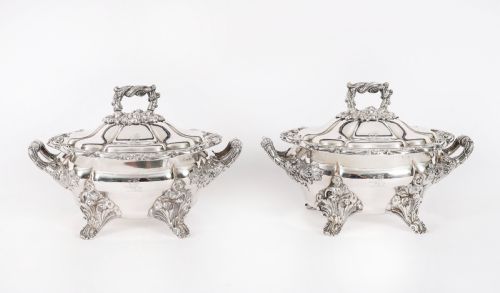
Metal vessels utilised sterling silver or fused old Sheffield plate and silver plating over copper bases. Craftsmen applied applied borders, cast handles, and engraved crests to finished metal bodies.
Butterflies perch on porcelain handles and painted peacocks gaze across chinoiserie garden scenes.
Standards of Craftsmanship
Quality rests in the crispness of moulded detail, the fidelity of transfer prints or hand-painted enamels, and the retention of original matching covers and ladles. Finer ceramic pieces display precise registration in transfer printing and minimal kiln distortion in large pedestal forms.
Metal tureens demonstrate superior quality through substantial weight in silver plate, crisp armorial engraving, and well-balanced handles that remain securely joined to the body.
Derby Porcelain·Spode·Robert Hamilton·John and Richard Riley·Mason·Worcester Dr Wall·Tiffany and Co·William Grundy·Hamilton and Inches·Mappin and Webb·Daniel and Arter·Flight Barr and Barr·Richard Ginori·Walker and Hall·Benjamin Laver
The Antique Lid Tureen Glossary
- Transferware
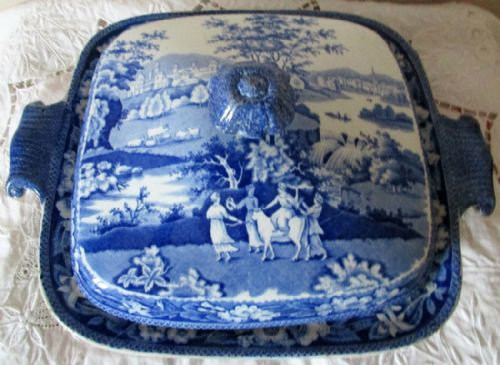
- Earthenware or porcelain decorated by applying a monochrome printed design from an engraved copper plate to the biscuit ceramic body before glazing. This technique allowed complex pictorial scenes like Canton River views to be produced consistently.
- Ironstone
- A heavy, durable patented ceramic body developed in the nineteenth century to resist chipping while mimicking oriental porcelain. Mason's popularised this dense material for decorative tableware.
- Old Sheffield Plate
- A composite material formed by fusing a thin sheet of sterling silver to a thicker copper base under heat and pressure. It was largely superseded by electroplating in the mid-nineteenth century.
- Entree Dish
- A shallow lidded vessel designed for serving individual courses at formal nineteenth-century dinners. These rectangular or oval dishes often incorporated warming stands or removable handles.
Antique Lid Tureen: Frequently Asked Questions
What is the difference between a sauce tureen and an entree dish?
Sauce tureens are smaller vessels traditionally designed for pouring gravies or sauces, often accompanied by matching ladles and fixed or pedestal bases.
Entree dishes are wider, shallower covered containers meant for holding meat or vegetable courses on the dining table.
How do I date a transferware tureen?
Transferware dates rely on maker marks, ceramic body composition, and the specific style of the blue and white transfer scenes.
Earlier eighteenth-century pieces often feature softer paste porcelains, while nineteenth-century ironstone bodies show stamped registry or maker marks underneath.
Can I use antique silver plated tureens for food?
Silver plated and sterling silver tureens remain suitable for serving food provided they are cleaned gently with non-abrasive polishes.
Old Sheffield plate items require particular care to avoid wearing through the thin silver layer to the underlying copper.
How do I identify old Sheffield plate?
Old Sheffield plate is identified by examining edges and worn spots where the reddish copper base metal shows beneath the silver surface.
Unlike nineteenth-century electroplate, fused plate often displays tiny lines of exposed copper along cut borders and seams.