

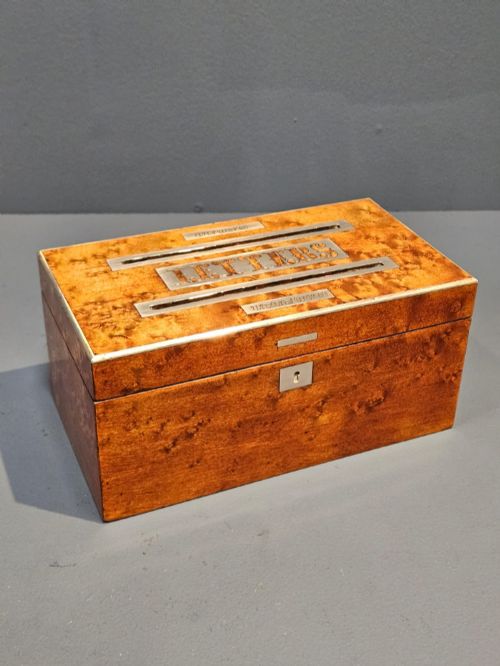


Antique Letter Post Box
An antique letter post box sorts domestic correspondence with sturdy charm, bringing period practicality straight to the desk or hallway.
Antique Letter Post Box
The antique letter post box bridges domestic management and decorative utility, emerging as desktop or wall-mounted accessories from country houses and hotels. Buyers searching this phrase meet everything from compact desk storage to substantial cast iron receptacles.
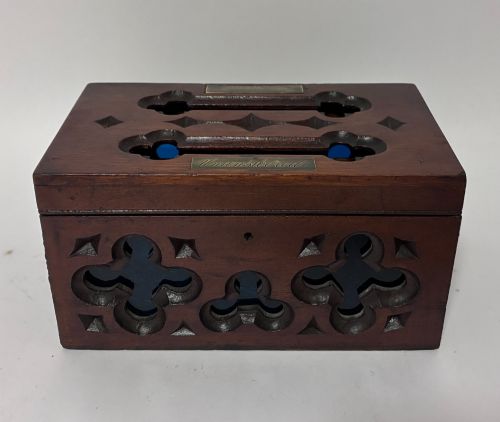
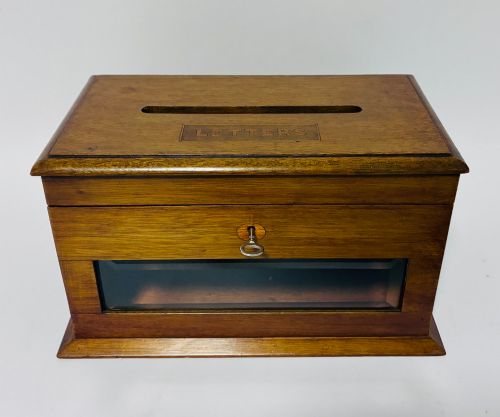
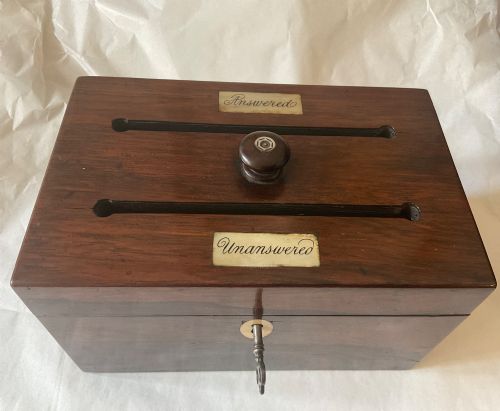
Most examples hail from the Victorian and Edwardian eras, constructed to gather daily mail before distribution. Oak and mahogany versions dominate the selection, often bearing brass mountings and designated slots for sorting post.
Country house models appear frequently, alongside specialised variants shaped like longcase clocks or pianos. These pieces reflect a period when household correspondence required formal organisation.
Materials and construction
Cabinet makers utilised dense hardwoods such as oak, mahogany and satinwood to build these receptacles. Brass hinges, mounts and glazed panels reinforce the wooden carcasses against daily handling.
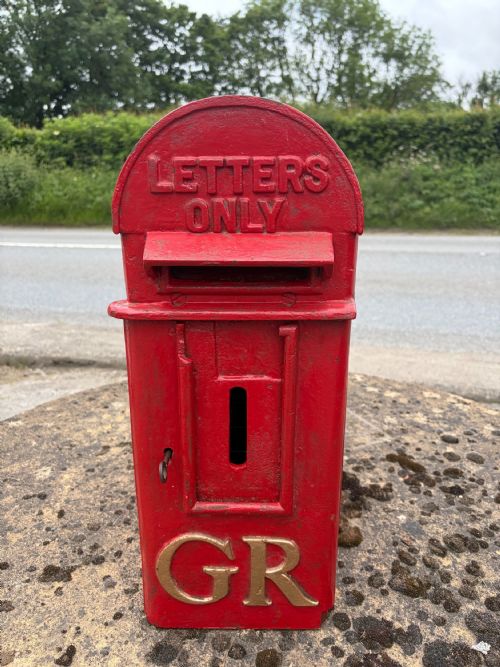
Heavy items rely on cast iron, particularly for wall-mounted or freestanding postal boxes bearing royal ciphers. Carved detailing, bone inlays and cut steel decoration frequently embellish the finer wooden boxes.
Antique Letter Post Box Retail Price Guide 2026
Typical asking prices for letter post box among the pieces listed under this phrase on Sellingantiques today, from the lower quarter to the upper quarter. They describe what is for sale here now, not the wider market.
The recorded inventory encompasses oak, mahogany, satinwood, cast iron, glass, and bone across Victorian, Edwardian, and earlier nineteenth-century periods.
Judging the standard
Superior examples display crisp carving, uncompromised joinery and heavy-gauge brass hardware rather than stamped plate. Maker signatures on locks or mounts elevate a piece significantly.
The weight and selection of the timber dictate the grade, with figured burr satinwood and substantial quarter-sawn oak representing the upper tier. Original glass panels and intact fitted interiors separate standard utility boxes from exceptional survivals.
Halstaff and Hannaford·Thornhill
The Antique Letter Post Box Glossary
- Correspondence box
- A fitted container designed to hold stationery, incoming letters and outgoing mail. These often include internal dividers labelled for organisation.
- Hovis top
- A distinctive curved roof profile found on certain cast iron post boxes, resembling a loaf of bread. This shape aids water runoff on exterior models.
- Cut steel
- Faceted steel studs riveted individually to a backing to simulate gemstones and catch the light. This decorative technique appears on Regency and Victorian luxury items.
- Longcase clock form
- A novelty casing designed to mimic a miniature grandfather clock, housing postal slots within the architectural wooden body.
Antique Letter Post Box: Frequently Asked Questions
What is an antique letter post box?
An antique letter post box is a lidded or wall-mounted container used historically to collect, sort and secure daily mail within a private residence, hotel or institution.
These pieces range from portable desktop accessories to heavy cast iron receptacles designed for constant household use.
How were these boxes used?
Households utilised them to gather incoming deliveries from the postal service or to corral outgoing correspondence before collection.
Multiple compartments inside often separated answered mail from unanswered letters or accommodated different household members.
How do I date an oak post box?
Dating relies on timber selection, brass hardware style, construction methods and any accompanying royal ciphers or maker marks.
Victorian and Edwardian examples show machine-sawn timber uniformity, whereas earlier 18th-century pieces display hand-planed surfaces and simpler joinery.
Where should I place one at home?
They suit entryways, studies or hallways as functional desktop storage for mail, keys and small stationery items.
Wall-mounted variants require secure fixings into studs or masonry due to the heavy oak and brass construction.