

Antique Leather Storage
Antique leather storage spans heavy campaign chests and travelling trunks designed to move property across rooms and oceans alike.
Antique Leather Storage
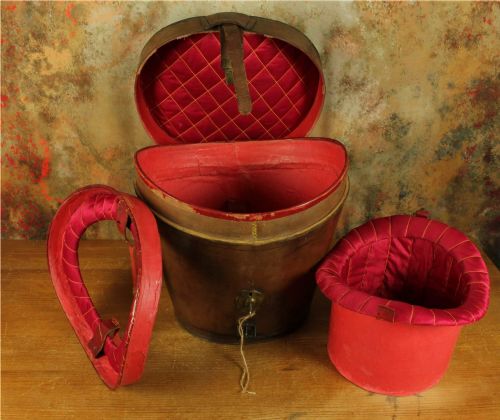
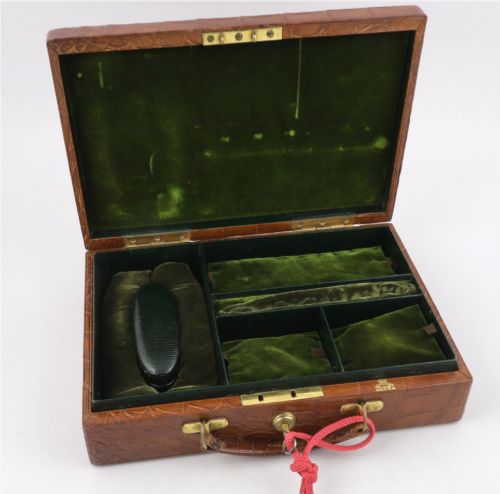
Antique leather storage encompasses heavy travelling trunks, dome-top chests, campaign boxes, and seated ottomans originating from the seventeenth century through to the early twentieth century. Buyers encounter robust domestic luggage alongside specialised containers intended for specific items like hats, jewellery, and stationery.
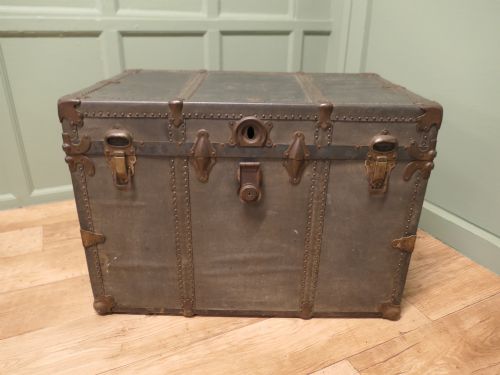
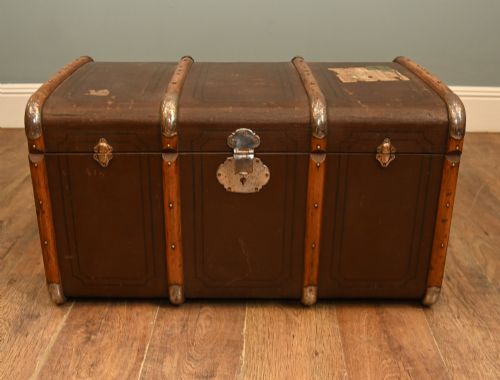
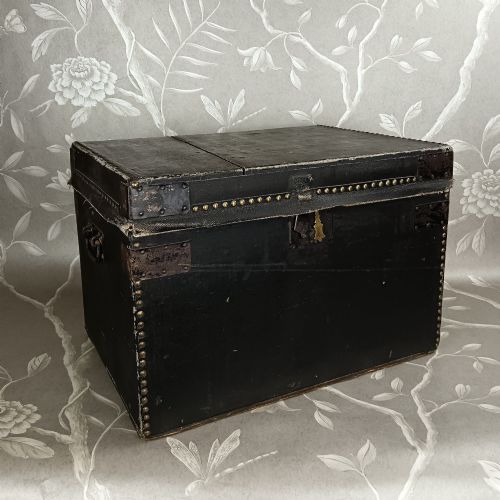
The nineteenth century yields the highest volume of trunks and ottomans, frequently combining wood carcasses with reinforced hide and brass fittings. Pieces range from large country house chests to compact cabin luggage suited for steamship and rail travel.
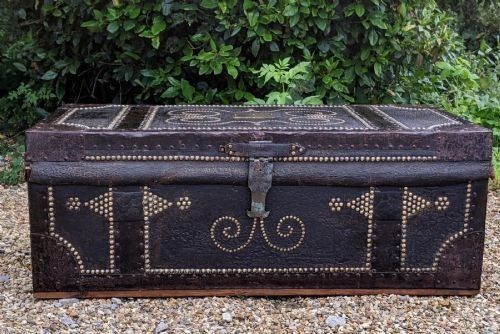
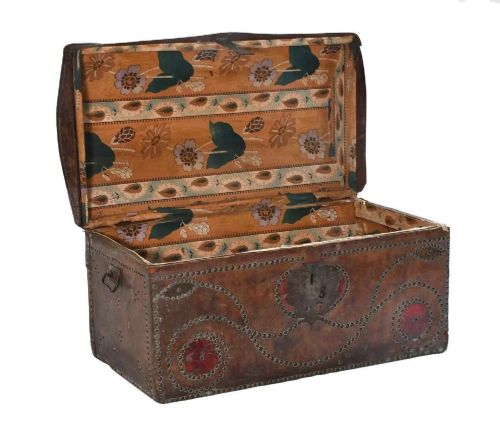
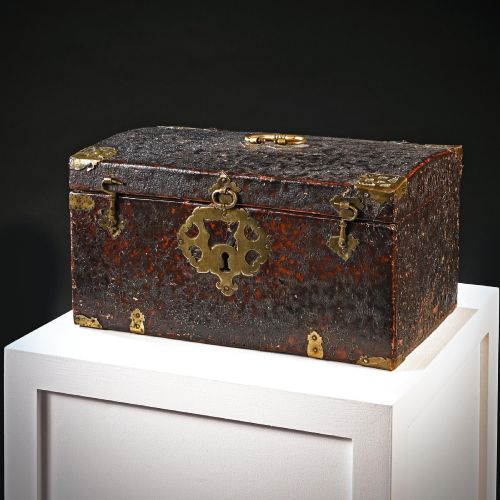
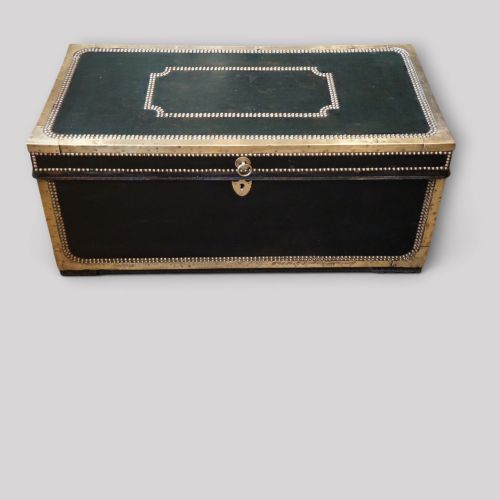
Earlier examples from the seventeenth and eighteenth centuries present heavy studded construction, often utilising oak or pine frameworks wrapped in hide and secured with iron or brass tacks. These regional pieces reflect domestic storage needs before the advent of modern mass transit.
Materials and construction techniques
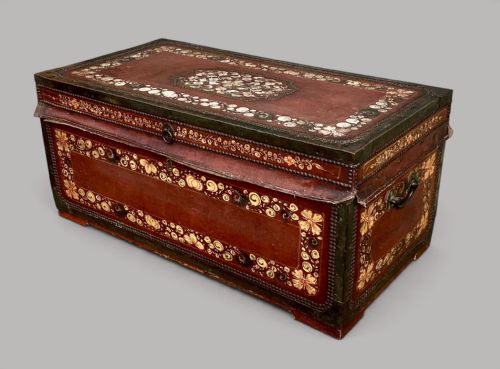
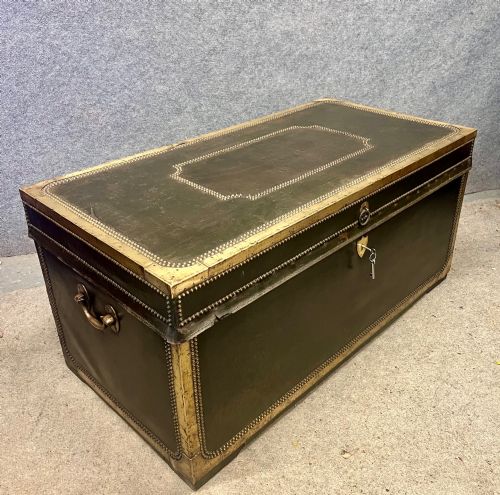
Craftsmen built these containers around sturdy wooden frames using timber such as oak, mahogany, camphorwood, or pine to provide structural integrity. Over this skeleton, they applied hides, leather, or canvas, securing the outer skin with rows of brass or iron studs and metal binding.
Hardware played a functional role in endurance, utilising brass carrying handles, corner brackets, and heavy locks designed to withstand long journeys. Finer boxes incorporated internal compartments lined in fabric, fitted wood trays, or tooled leather surfaces for delicate items.
Antique Leather Storage Retail Price Guide 2026
Typical asking prices for leather storage among the pieces listed under this phrase on Sellingantiques today, from the lower quarter to the upper quarter. They describe what is for sale here now, not the wider market.
The listings span multiple centuries, recording hide, canvas, and brass materials across Victorian, Regency, and Georgian periods.
Distinctions in manufacture and preservation
Quality rests in the integrity of the internal carcass, the thickness and preparation of the hide, and the retention of original hardware such as locks and carrying handles. Finer examples display meticulous hand-stitching, precise studwork, and branded maker details that confirm high-grade workshop production.
Condition and originality dictate standing, particularly where leather surfaces retain natural patination, original hand-dyeing, or authentic tool work without modern restoration masking the age of the piece.
Samuel Pratt·Wm. Insall of Bristol·J C Vickery·Lincoln Bennett·Army and Navy·Seabrook of St.Pauls·Huntley & Palmers
The Antique Leather Storage Glossary
- Campaign chest
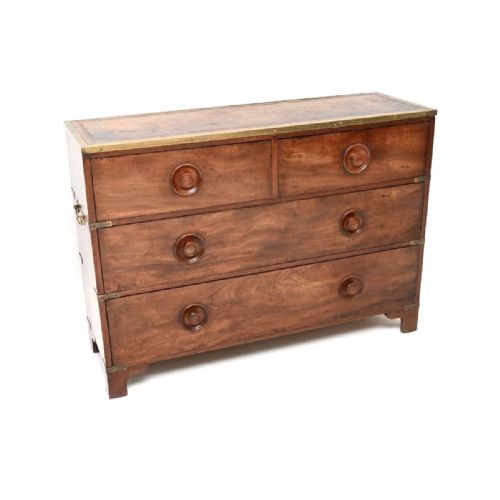
- A modular chest of drawers or trunk constructed for military officers on the move, featuring recessed brass handles and corner brackets to prevent damage in transit.
- Steamer trunk
- A lower-profile luggage case developed for passenger ship travel in the late nineteenth and early twentieth centuries, designed to fit beneath cabin berths.
- Ottoman
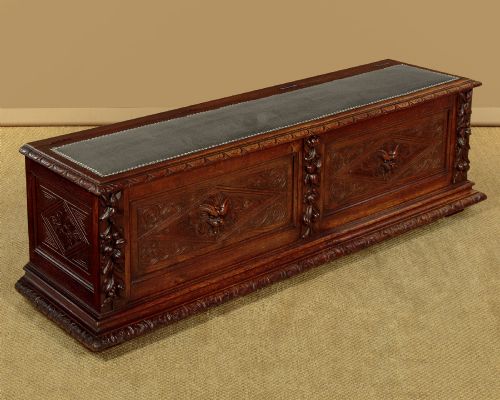
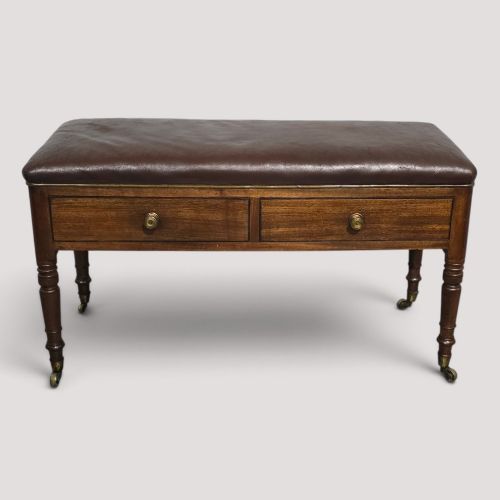
- A padded seat or footstool with a hollow interior accessed by a lifting lid, frequently upholstered in leather or hide for domestic reception rooms.
- Studded
- Decorated or reinforced with small metal nails or brass tacks driven through the leather into the wood framework in repeating patterns.
- Camphorwood
- An aromatic timber frequently utilised for the interior linings of campaign trunks exported from China to repel insects and protect stored fabrics.
Antique Leather Storage: Frequently Asked Questions
How do I clean antique leather storage?
Dust surfaces gently with a soft dry cloth and avoid modern chemical cleaners that strip natural oils from old hide. Professional wax formulations designed for historic leather help maintain suppleness without darkening the material.
Keep pieces away from direct sunlight and radiators to prevent the leather from drying out and cracking over time.
Were these trunks used for international travel?
Many of these pieces served as heavy luggage for journeys across land and sea during the Victorian and Edwardian eras. Robust brass bindings and iron reinforcements protected personal belongings carried on steamships, trains, and horse-drawn carriages.
Smaller boxes and hat cases remained indoors for domestic organisation, holding garments and accessories within country houses.
How can I tell the period of a leather trunk?
Dating relies on construction methods, hardware design, and internal linings characteristic of specific eras. Seventeenth and eighteenth-century examples often feature heavy domed lids and simple iron work, whereas Victorian pieces commonly use brass studs and complex internal trays.
Maker stamps and patent labels inside the lid offer the most reliable confirmation of date and origin.
Can I use an antique trunk as a coffee table?
Sturdy leather chests with flat tops provide practical surface space and internal storage for blankets or books in modern living areas. Placing a protective glass top prevents ring marks and spills from damaging the historic hide.
Ensure the internal structure remains stable enough to support weight before positioning items on the lid.