
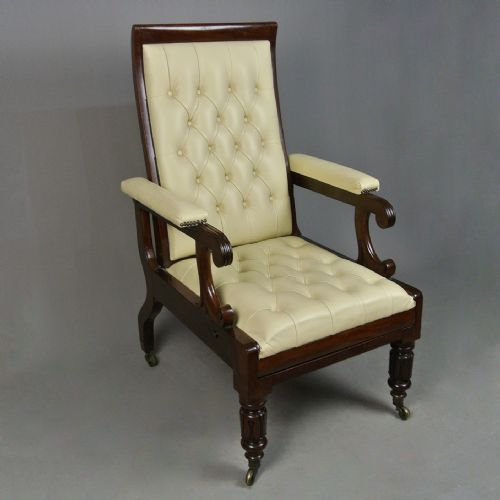


Antique Leather Reclining Chair
An antique leather reclining chair offers mechanical ingenuity and deep upholstery, combining nineteenth-century comfort with robust timber frames.
Antique Leather Reclining Chair
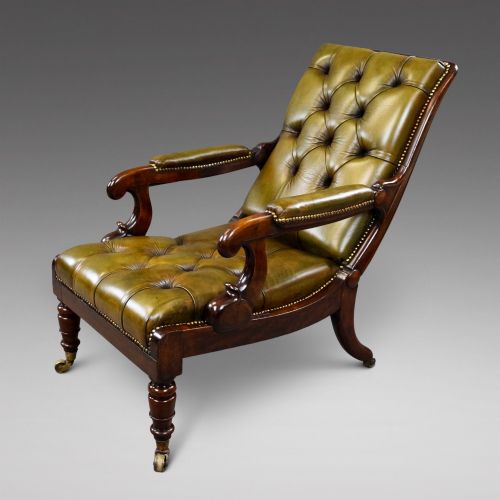
When searching for an antique leather reclining chair, buyers encounter nineteenth-century library armchairs, campaign seating, and colonial plantation forms designed for adjustable posture. The most common examples on this page date from the Victorian and William IV periods, often featuring buttoned leather upholstery and mechanical adjustments.
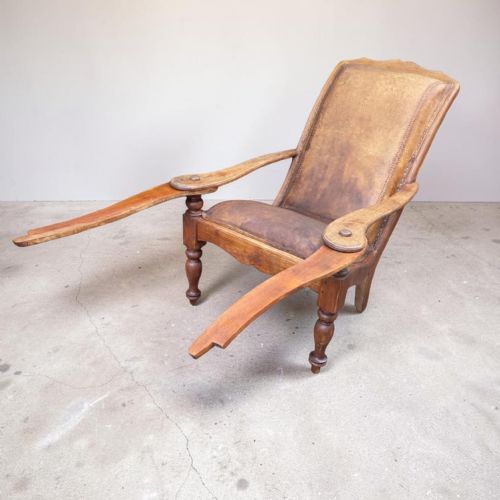
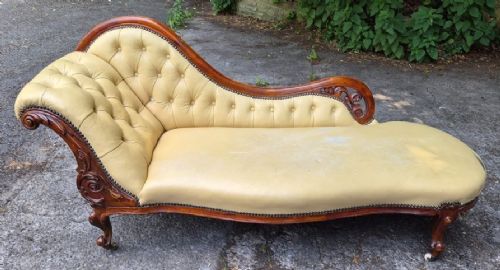
The selection ranges from Regency mahogany models and walnut armchairs to oak Arts and Crafts pieces and Anglo-Indian teak planter's chairs with extending arms. Alongside standard armchairs, related forms such as chaise longues and metamorphic library chairs appear across the inventory.
Materials and construction
Frames are constructed from dense timbers including mahogany, walnut, oak, teak, and rosewood, providing the structural strength required for moving mechanical components. These wooden elements are frequently carved, turned, or polished to a high finish.
Leather provides the primary upholstery material, complemented by brass castors, hinges, and ratchets that facilitate the reclining mechanism. Iron and hardwood elements occasionally appear in campaign and colonial variants built for durability.
The listings here span from the Georgian period through the Victorian era to early twentieth-century Arts and Crafts designs, utilising mahogany, oak, teak, walnut, and leather.
Evaluating the pieces
Quality rests primarily on the sophistication of the patent mechanism and the integrity of the timber frame. Pieces bearing identifiable attribution to makers demonstrate superior mechanical execution and fine cabinetmaking.
The condition and retention of original leather upholstery, alongside the precision of the adjusting ratchets, distinguish standard examples from top-tier library and metamorphic chairs.
Robert Daws·J Foot and Son·Heals of London·John Ward
The Antique Leather Reclining Chair Glossary
- Metamorphic chair
- A convertible piece of furniture that transforms from an armchair into a chaise longue or incorporates a writing slope. These items rely on hidden hinges and ratchets to alter their configuration.
- Planter's chair
- A colonial armchair featuring extended armrests designed for resting legs. They are typically made from tropical hardwoods like teak for resilience in warm climates.
- Campaign chair
- Portable folding furniture built for travel and military use during the nineteenth century. They utilise robust timbers and collapsible frames for ease of transport.
- Button leather
- Upholstery secured by deep indentations formed by tufting buttons through the leather. This technique keeps the internal stuffing evenly distributed across the backrest and seat.
- Patent chair
- A seating design protected by a formal nineteenth-century industrial patent. These pieces usually incorporate mechanical reclining systems invented by makers such as Daws or Foot and Son.
Antique Leather Reclining Chair: Frequently Asked Questions
How do the reclining mechanisms work?
Most nineteenth-century reclining chairs rely on internal ratchets, brass adjustment arms, or weighted pivots that allow the backrest to lock at various angles. Users manipulate levers or simply lean back to engage the adjustment.
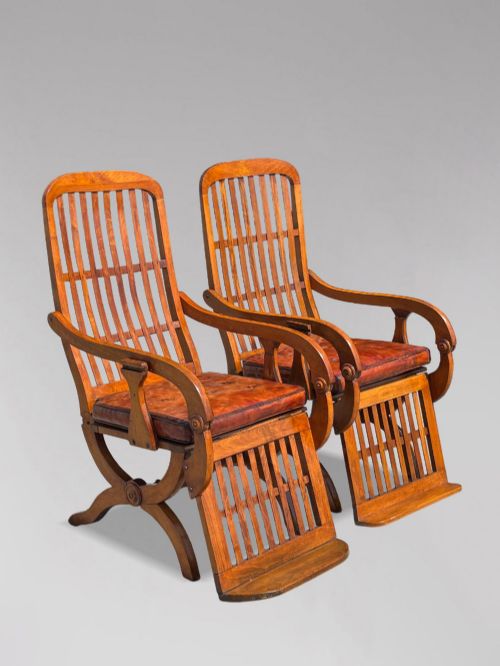
More complex metamorphic designs shift the seat and back simultaneously, sometimes incorporating extending footstools or fold-out reading desks.
How do I identify a William IV recliner?
William IV chairs typically display heavy mahogany or rosewood frames with bold carved details, robust scroll arms, and concealed or visible brass mechanical fittings. The proportions are generous, often paired with deep oxblood or brown buttoned leather.
Date attribution relies on the heavy classical revival style popular between the Regency period and early Victorian eras.
What is a metamorphic library chair?
A metamorphic library chair is a multi-functional piece built to serve both as a comfortable reading seat and an adjustable resting surface. These chairs often feature footrests that slide out or backs that lower completely.
They represent the peak of nineteenth-century seating innovation, combining upholstery with mechanical engineering.