





Antique Leather Panels
These antique leather panels and screens combine supple hides, painted finishes and timber frames to divide rooms with rich texture and historic character.
Antique Leather Panels
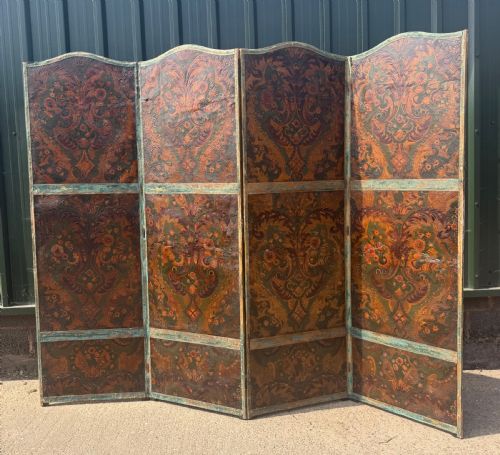
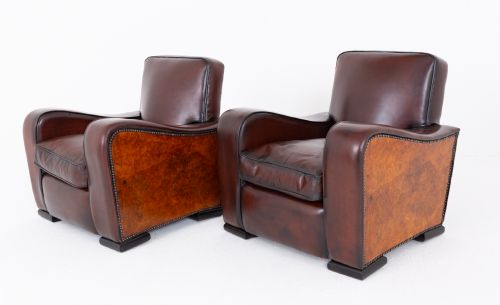
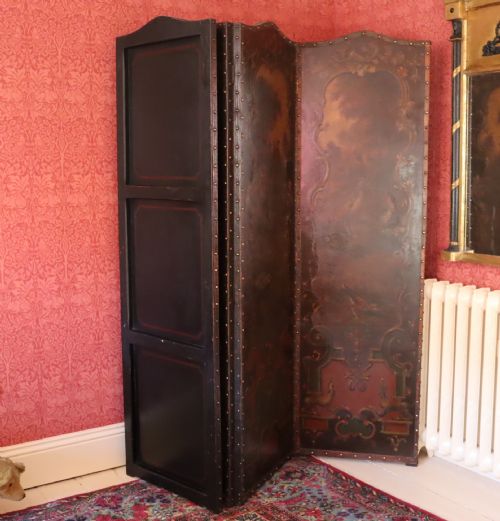
When you search for antique leather panels, you encounter folding room dividers, architectural decorations, and decorative panels integrated into furniture such as chairs, desks, and cabinets. The most common form on this page is the multi-fold screen, often spanning three or four folds and decorated with painted or tooled designs.
The materials span centuries of craftsmanship, connecting 18th century Cordoban and Dutch examples with 19th century Victorian, Edwardian, and later interpretations. Oak, mahogany, walnut, and canvas provide the structural framework or backing for the worked leather surfaces.
Styles range from Continental Baroque and French Chateau to Anglo-Moorish and Art Deco, reflecting how different eras adapted heavy hides to domestic interiors. Architectural salvage and smaller decorative panels also appear alongside larger room-dividing screens.
Materials and construction
Makers utilised heavy leather, canvas, and timber such as oak, walnut, and mahogany to build these durable panels. Hides were stretched over wooden frames or canvas backings, then secured with brass nailhead details or decorative taming.
Surface decoration involved oil paint, gilt embossing, and polychrome detailing, drawing on techniques from 18th century Dutch and Spanish traditions. Carved wood and inlaid frames frequently complement the worked leather surfaces.
Antique Leather Panels Retail Price Guide 2026
Typical asking prices for leather panels among the pieces listed under this phrase on Sellingantiques today, from the lower quarter to the upper quarter. They describe what is for sale here now, not the wider market.
Listings feature items spanning the 18th, 19th, and early 20th centuries, utilising oak, mahogany, walnut, canvas, and brass alongside leather.
Assessing quality and execution
The sophistication of the hand-painted or gilt-embossed ornamentation dictates the upper tiers of quality. Finely rendered chinoiserie, intricate polychrome decoration, and skilled tooling set superior decorative screens apart from simpler utilitarian pieces.
The integrity of the underlying timber frame and the condition of the stretched hide determine the structural longevity of the panel. Superior examples maintain stable joints and well-preserved paint layers across multiple folding sections.
Liberty and Co
The Antique Leather Panels Glossary
- Cordoban leather
- Heavy goatskin or leather originating from Spain, renowned for rich gilt embossing and deep tooling.
- Polychrome
- Painted in several colours, frequently seen on 19th century canvas and leather screens.
- Chinoiserie
- European decorative style inspired by Chinese artistic traditions, often found on painted screens.
- Mashrabiya
- Wooden lattice work panels, seen in Anglo-Moorish furniture alongside panelled details.
- Nailhead details
- Individual brass or metal tacks used to secure leather hides to wooden frames.
Antique Leather Panels: Frequently Asked Questions
How do I clean antique leather panels?
Dust gently with a soft, dry cloth to remove surface particles without disturbing aged paint or gilt surfaces. Avoid modern chemical cleaners and water, which can damage historic leather and brittle oil paint.
Consult a professional restorer if the leather requires conditioning or if the painted surface shows signs of flaking.
Where were these screens used originally?
Large multi-fold screens divided grand rooms, creating intimate seating areas or blocking draughts in high-ceilinged country houses and drawing rooms. Smaller panels were incorporated into desks, cabinets, and seating.
They functioned as both moveable architecture and decorative art in Victorian and earlier interiors.
How many folds do these screens have?
The screens listed here typically feature three or four folding sections, hinged together for flexibility in positioning.
Larger four-fold versions provide substantial visual impact and wide coverage for room division.