




Antique Landscape Wall Hanging
An antique landscape wall hanging brings monumental foliage and pastoral scenes into a room through woven wool, silk, and carved wood.

Antique Landscape Wall Hanging
When searching for an antique landscape wall hanging, buyers primarily encounter grand tapestries alongside framed oil paintings, carved wood panels, and gilt mirrors. The material record centres heavily on large woven textiles from Flemish and French workshops.
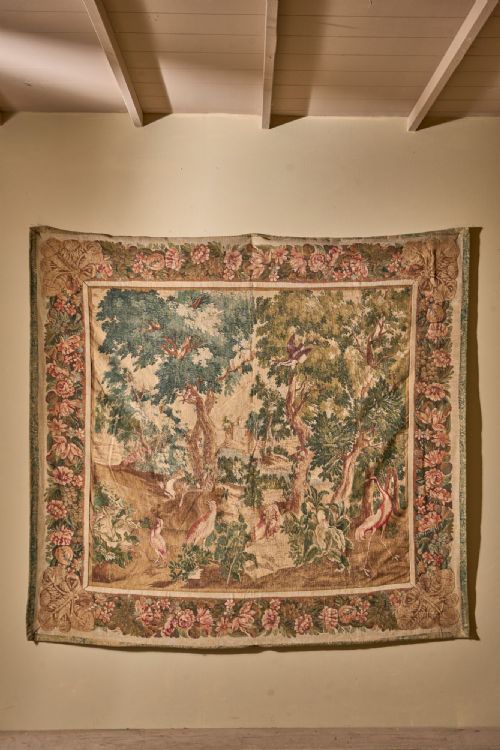
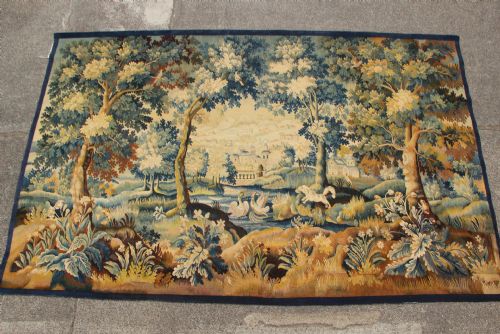
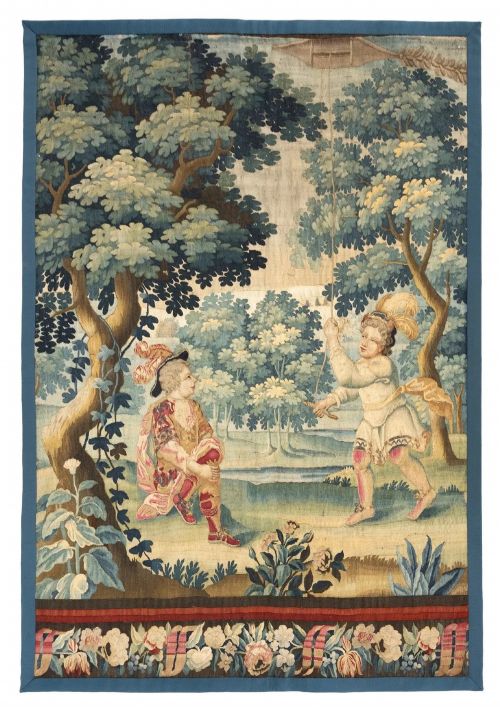
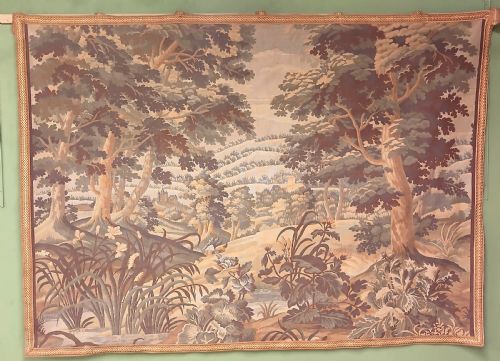
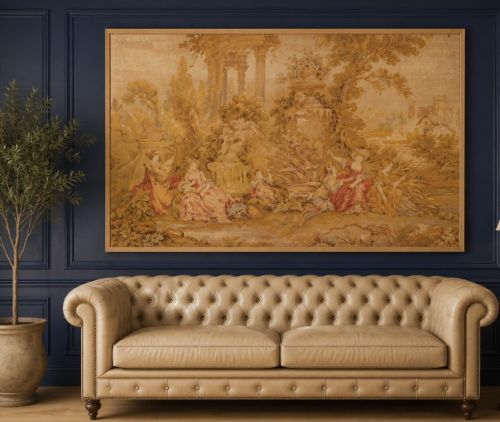
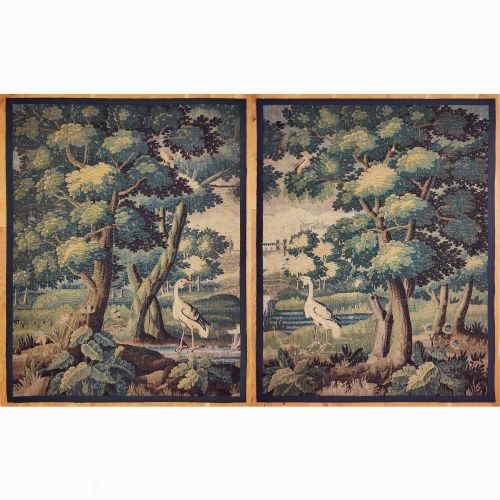
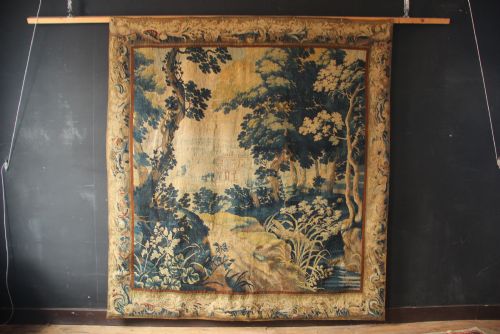
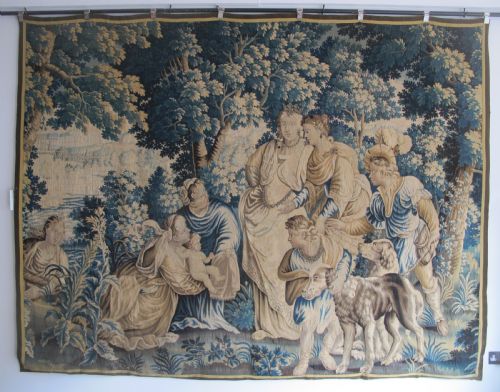
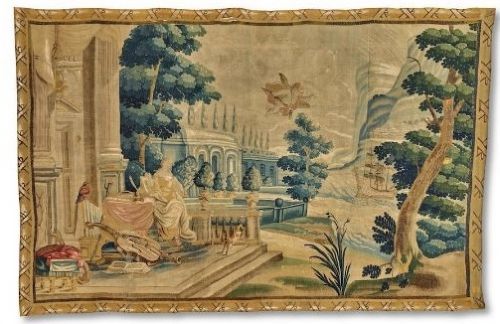
The dominant form is the verdure tapestry, which depicts dense woodland, garden vistas, and mythological or biblical scenes across expansive wool and silk surfaces. These textiles date predominantly from the seventeenth and eighteenth centuries, though nineteenth-century interpretations appear frequently.
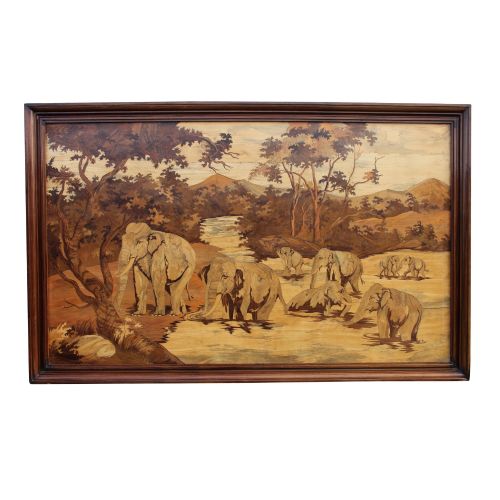
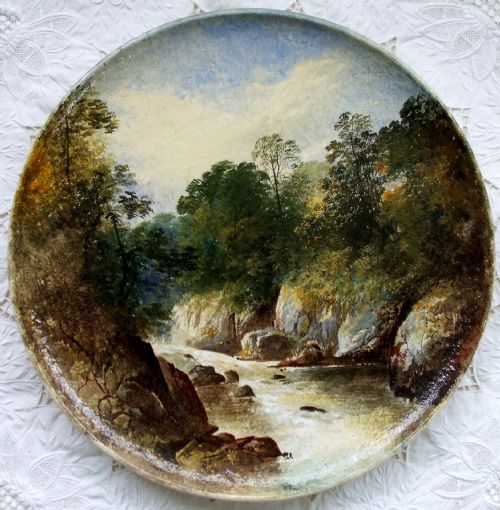
Beyond textiles, the category encompasses oil paintings on canvas depicting river banks and figurative scenes, alongside carved marquetry panels and giltwood overmantel mirrors. These diverse objects share a common purpose as significant decorative works designed for prominent interior display.
How they were made
The construction of woven wall hangings relies on hand-worked wool and silk threads, manipulated on vertical or horizontal looms to build complex pictorial depths. Master weavers in centres such as Aubusson, Audenarde, and Flanders blended dyed yarns to create naturalistic shadows and layered foliage.
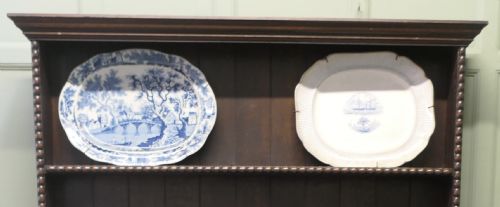
Rigid supports involve carved timber frameworks, utilised in giltwood pier mirrors and intricate marquetry panels containing varied wood veneers. Oil paintings employ applied pigments on stretched canvas, while ceramic elements utilise fired earthenware with detailed glaze work.
Subtle woodland creatures, from hidden birds to mythical beasts, peer out from the dense foliage of seventeenth-century verdure weaves.
What varies in quality
Visual depth separates standard woven examples from masterworks, determined by the subtlety of the dye palette and the density of the wool and silk weave. Finer pieces retain intricate leaf detailing and harmonious tonal transitions across the landscape rather than flat colour blocks.
Preservation of the textile ground dictates long-term structural integrity, distinguishing stable weaves from those compromised by fibre thinning or historical restoration. In carved and painted works, the crispness of the original detail and the stability of the support material determine overall execution.
The Antique Landscape Wall Hanging Glossary
- Verdure tapestry
- A woven wall hanging dominated by plant motifs, foliage, trees, and landscape views, frequently featuring distant architecture or animals. These scenes form the majority of large textiles seen in this category.
- Aubusson
- A town in France renowned for its production of hand-woven tapestries and carpets since the seventeenth century. Pieces from this origin often display refined floral and pastoral designs.
- Marquetry
- The art of applying pieces of veneer to a structure to form decorative patterns and pictorial designs. This technique appears in large wooden wall panels.
- Giltwood
- Wood that has been treated with a thin layer of gold leaf or gold paint for decorative effect. It is commonly found on seventeenth and nineteenth-century mirror frames.
- Overmantel
- A large decorative mirror or painting designed to be hung specifically above a fireplace mantelpiece. These pieces often feature heavily carved wooden frames.
Antique Landscape Wall Hanging: Frequently Asked Questions
How were antique tapestries hung originally?
Historic textile wall hangings were typically suspended from iron hooks or wooden battens using discreet loops sewn along the upper reverse edge.
This method distributed the weight evenly across the entire span of the heavy wool and silk fabric to prevent distortion.
Where should I hang a large wall tapestry?
These grand textiles require substantial wall space away from direct sunlight to protect the natural dyed wool and silk fibres from fading.
Placing them in principal reception rooms or hallways allows the scale of the landscape composition to be fully appreciated.
What is a verdure tapestry?
A verdure tapestry is a woven wall hanging that focuses primarily on botanical subjects, featuring lush trees, thickets, and leafy undergrowth.
They often incorporate small figures, birds, or distant chateaux nestled within the woodland scenery.
How do I care for an antique textile?
Maintenance involves gentle surface dusting with a soft brush and avoiding exposure to high humidity or excessive artificial heat.
Professional textile conservators should be consulted for any deep cleaning or structural reinforcement of the weave.