



Antique Ladder Back
An antique ladder back offers honest timber framing and woven seating, bringing traditional country comfort and enduring upright support to any room.
Antique Ladder Back
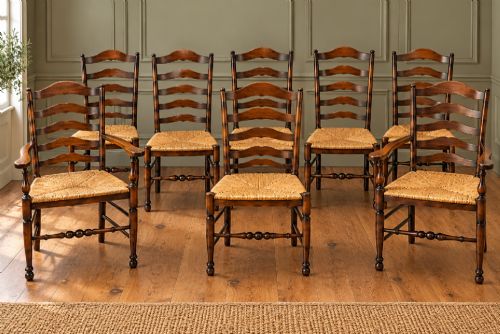
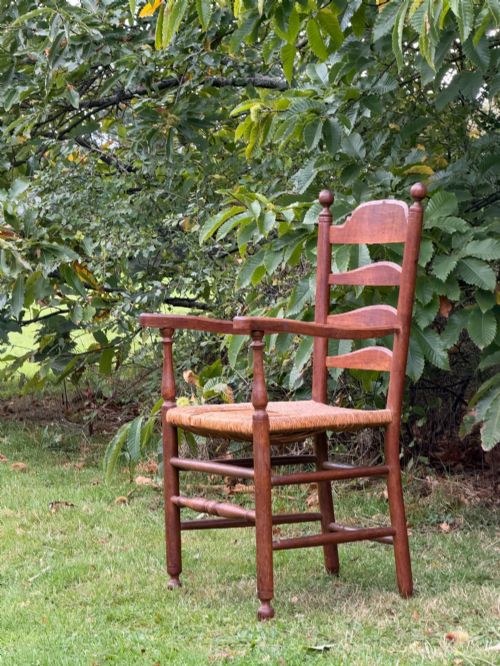
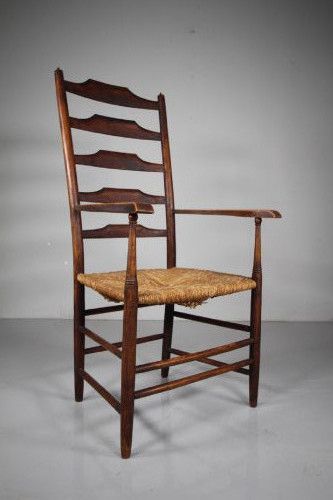
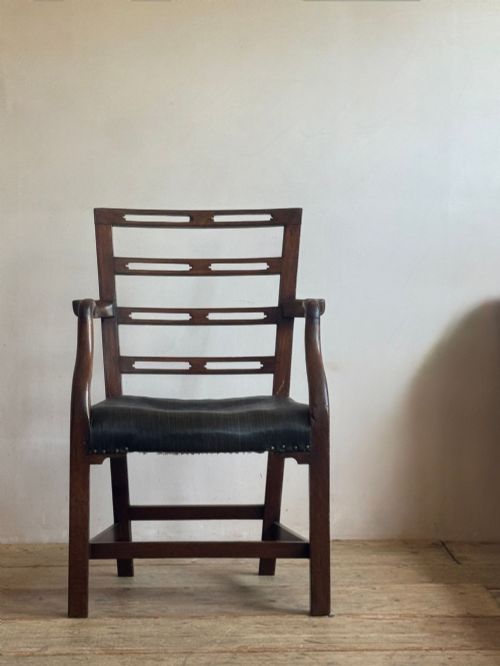
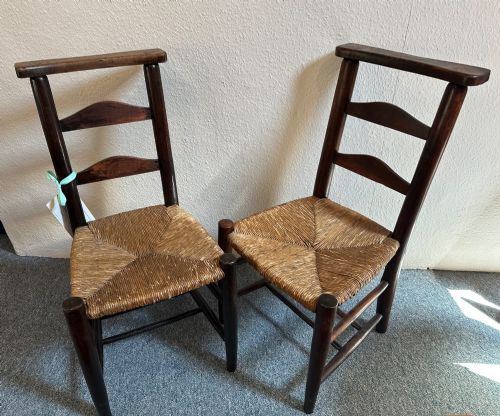
When you search for an antique ladder back, you encounter practical seating framed by horizontal wooden slats resembling the rungs of a ladder between the upright posts. These pieces originate primarily from country workshops, provincial makers, and formal cabinet makers adapting regional vernacular designs.
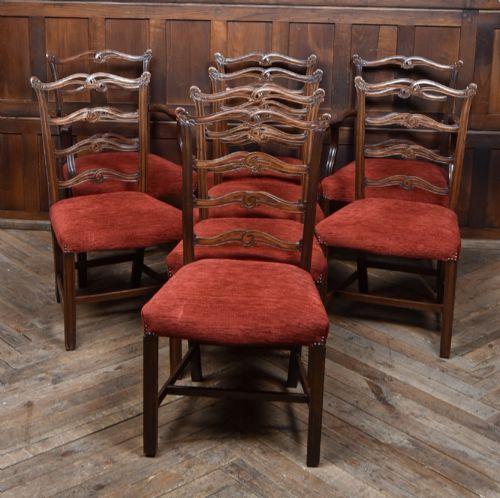
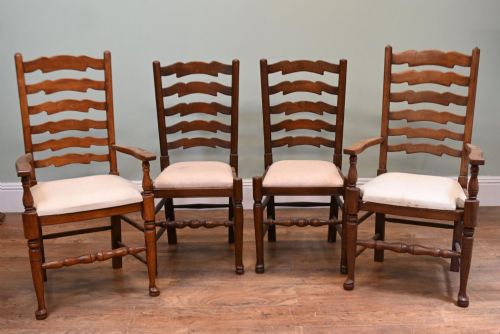
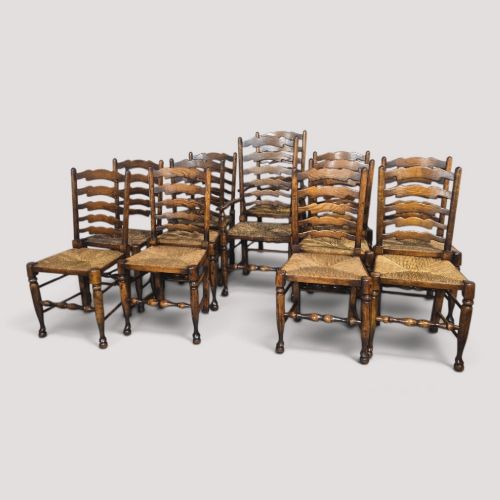
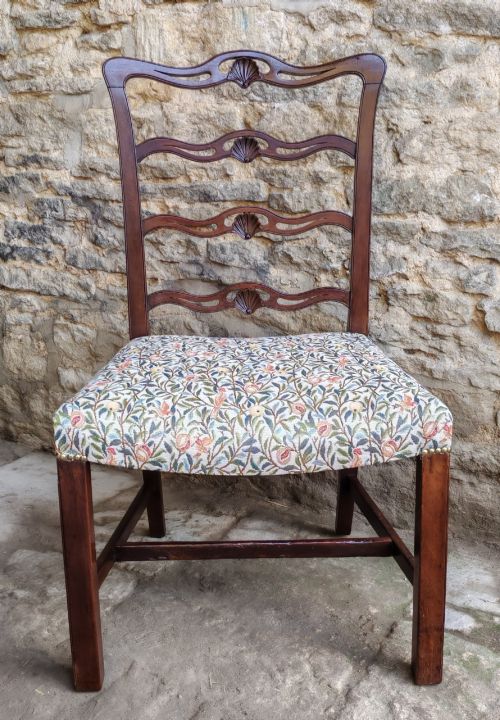
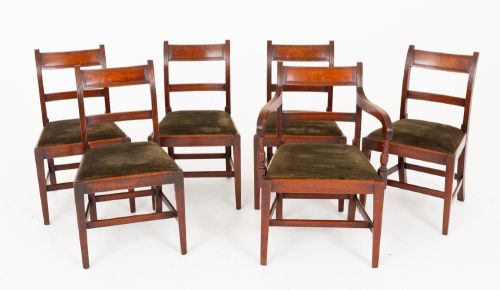
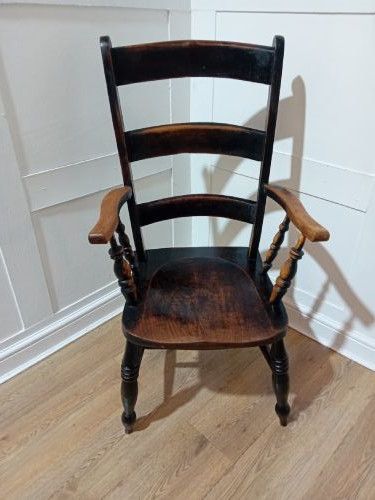
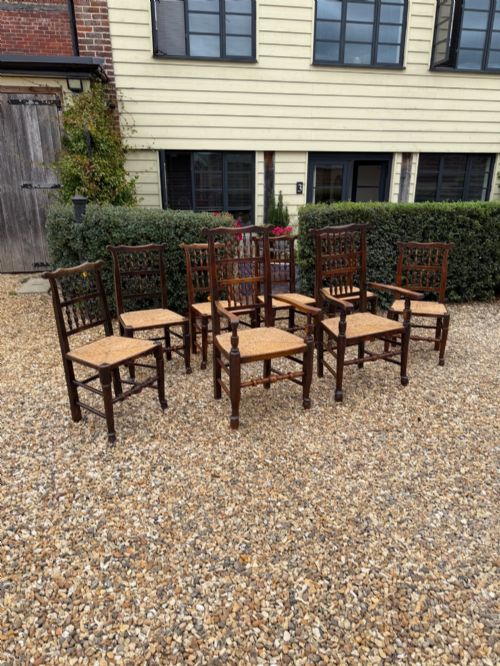
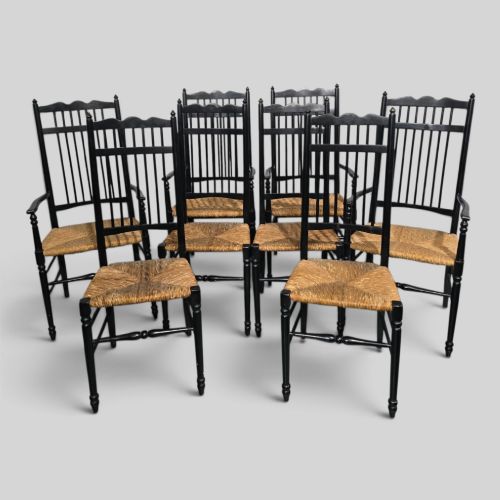
The selections on this page span several centuries and styles, ranging from robust oak and ash dining sets to refined mahogany versions styled after Georgian patterns. You will find dining chairs, armchairs, rocking chairs, and even occasional high chairs sharing this distinctive slatted architecture.
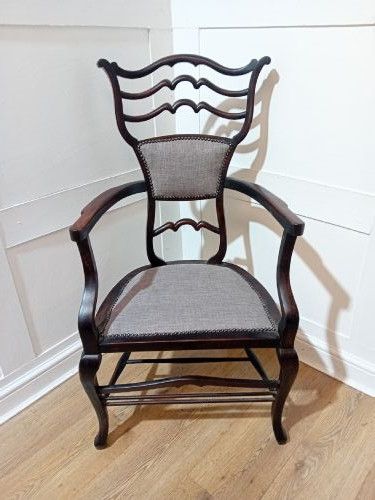
Regional variations appear frequently, including Lancashire and Cheshire designs alongside Dutch and American slat-backs. Many examples retain their original rush seating, while others display later fabric or velvet upholstery.
Evaluating Quality
Quality rests upon the integrity of the timber selection and the precision of the turning on the upright posts and back rails. A superior piece displays balanced proportions, crisp slat shaping, and tight joinery that has survived centuries without excessive timber shrinkage.
The condition and tightness of the rush seating also dictate the overall standard of the piece. Original surface patination and untouched timber finishes elevate the standing of an antique ladder back far above heavily sanded or modernly rebuilt examples.
Antique Ladder Back Retail Price Guide 2026
Typical asking prices for ladder back among the pieces listed under this phrase on Sellingantiques today, from the lower quarter to the upper quarter. They describe what is for sale here now, not the wider market.
Certain ladder back chairs were constructed tall enough for village elders to supervise tavern debates above the crowd.
Philip Clissett·Edward Gardener
The Antique Ladder Back Glossary
- Ladder back
- A chair style characterised by horizontal wooden slats set between the rear upright posts. These slats are often curved to fit the spine.
- Rush seat
- A seating surface woven from dried marsh grasses wound tightly around a wooden frame. This technique creates a durable, flexible platform common in country vernacular furniture.
- Vernacular furniture
- Domestic objects made by local craftsmen using regional traditions and native timbers rather than following strict metropolitan design rules.
- Splats
- The horizontal wooden rails forming the backrest of a chair. In ladder back seating, multiple splats rise sequentially from the seat to the crest rail.
Antique Ladder Back: Frequently Asked Questions
What is an antique ladder back?
An antique ladder back is a traditional wooden chair distinguished by horizontal slats spanning the back posts. These seating pieces date from the eighteenth century through the early twentieth century and originate from various English and continental regions.
They combine utilitarian construction with rhythmic slatted aesthetics, serving as functional dining or occasional seating in period and modern interiors alike.
How do I care for rush seats?
Rush seats require gentle maintenance to prevent the dried marsh grass from drying out and snapping. Keep them away from direct heat sources and excessive moisture.
Cleaning should involve only a soft brush to remove dust. Applying specialised wax or moisture treatments is generally unnecessary and can damage natural cord.
Are these chairs comfortable for daily dining?
These chairs provide upright and supportive seating well suited for prolonged gatherings around a dining table. The horizontal back slats are often slightly curved to cradle the back.
Adding loose squab cushions can increase softness if desired, though many users appreciate the firm support of the traditional woven rush base.
How do I date an antique ladder back?
Dating relies on examining the turning style of the legs, the shaping of the back slats, and the type of timber used. Earlier examples from the eighteenth century often feature heavier oak or ash frames with hand-turned details.
Later nineteenth and twentieth-century versions may show lighter proportions, factory-assisted turning, or mahogany construction influenced by formal Georgian revival styles.