




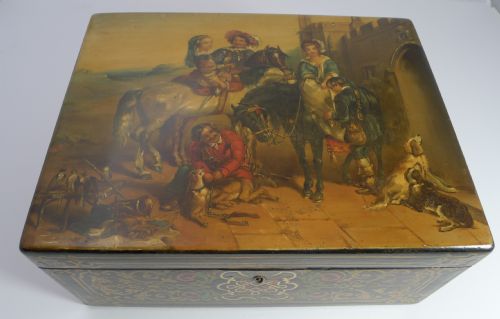


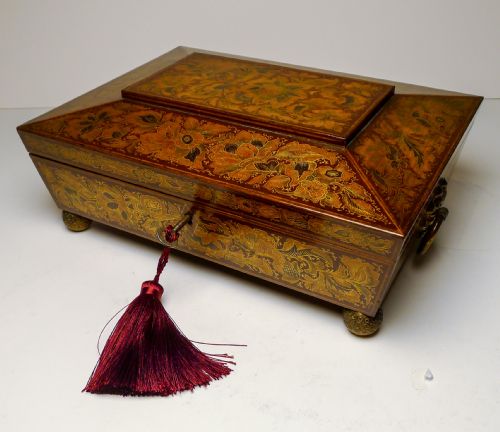

Antique Lacquered Work Box
An antique lacquered work box brings refined 19th-century craftsmanship into your home, offering a decorative vessel for sewing and letters.
Antique Lacquered Work Box
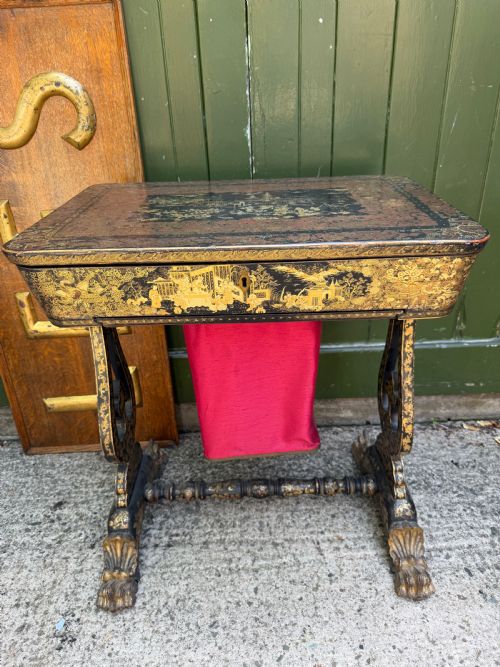
When you search for an antique lacquered work box, you encounter refined portable caskets and freestanding tables designed for domestic needlework and correspondence. These pieces span the Georgian, Regency, and Victorian eras, demonstrating centuries of decorative utility.
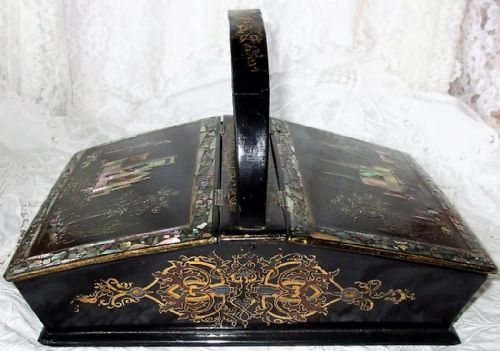
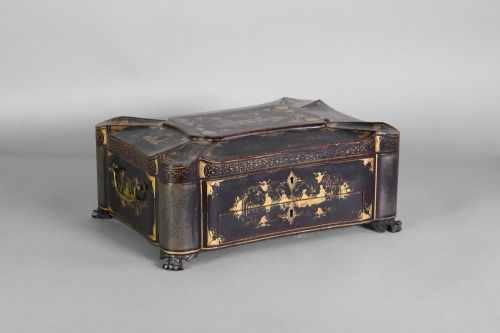
The selections on this page predominantly showcase Chinese Export lacquer and English papier-mâché work tables, alongside smaller lidded caskets. Formats range from compartmented tabletop boxes with gilt decoration to elaborate bamboo and tiered sewing tables.
Origins stretch from Regency workshops to Victorian parlours, incorporating hand-painted motifs, Japanned finishes, and penwork details. Each example reflects the domestic requirements of a bygone era, pairing functional storage with ornamental visual appeal.
How they were made
Makers utilised wood, papier-mâché, and bamboo as structural substrates, applying successive layers of lacquer to build durable, lustrous surfaces. Artisans frequently integrated ebonised wood and brass fittings to reinforce and accent the primary material.
Decoration relied on hand-painting, penwork, and gilding, with certain pieces incorporating mother-of-pearl inlay and intricate japanning techniques. These surface treatments required steady hands and specialised knowledge of varnishes and metallic pigments.
Interior compartments utilised finely fitted wood framing, often lined with silk or velvet to house sewing implements, threads, and personal letters. The harmonious union of cabinetmaking and surface art defined the production process.
Antique Lacquered Work Box Retail Price Guide 2026
Typical asking prices for lacquered work box among the pieces listed under this phrase on Sellingantiques today, from the lower quarter to the upper quarter. They describe what is for sale here now, not the wider market.
Tiger bamboo framing supports Victorian sewing tables, adding a touch of exotic wildlife to the parlour.
What varies in quality
The sophistication of the surface decoration largely dictates the distinction between standard examples and superior specimens. Finely executed penwork, crisp hand-painting, and well-preserved gilding elevate the visual impact of the piece.
Structural integrity of the lacquer and papier-mâché surfaces separates robust items from those bearing heavy wear. The complexity of internal fittings, such as tiered compartments and lidded trays, also signals the ambition of the original maker.
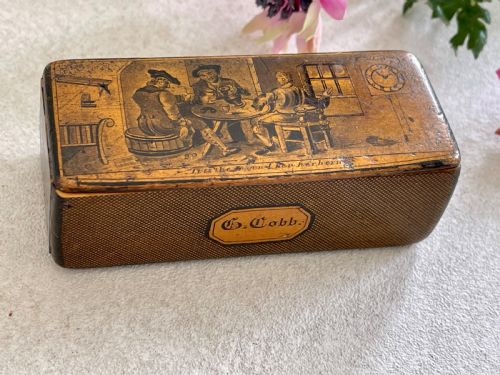
G Cobb·Jennens & Bettridge
The Antique Lacquered Work Box Glossary
- Japanning
- A European imitation of East Asian lacquerwork, created by applying layers of varnish and heating the surface to achieve a hard, glossy finish.
- Papier-mâché
- A composite material made from paper pulp or layers of paper reinforced with glue, moulded and dried to form durable boxes and tables.
- Penwork
- A decorative technique utilising India ink and fine pens to draw intricate monochrome designs onto treated wood surfaces before varnishing.
- Chinese Export
- Goods manufactured in China specifically for Western markets, frequently featuring distinctive black and gilt lacquer ornamentation.
- Boulle
- An elaborate marquetry technique using brass and tortoiseshell, often associated with French Napoleon III and Victorian decorative objects.
Antique Lacquered Work Box: Frequently Asked Questions
What is an antique lacquered work box?
An antique lacquered work box is a lidded container or freestanding table finished with varnish or lacquer, historically used for storing sewing tools, needlework, and correspondence.
These pieces date primarily from the Georgian, Regency, and Victorian periods, combining practical compartmentalised interiors with decorative exterior finishes.
How do I date an antique work box?
Dating relies on examining the core materials, such as papier-mâché or solid timber, alongside the decorative style and hardware.
Regency pieces often display delicate penwork and classical motifs, whereas Victorian examples frequently utilise papier-mâché and mother-of-pearl inlay.
How were work boxes used originally?
They served as portable or stationary storage for domestic sewing implements, threads, pins, and letters during the 19th century.
Ladies kept them in parlours or bedrooms, utilising the fitted trays and compartments to keep their needlework organised and close at hand.
How do I care for lacquered wood?
Protect lacquered surfaces by keeping them away from direct sunlight, extreme temperature fluctuations, and excessive moisture.
Dust gently with a soft, dry cloth and avoid chemical polishes that can damage the historical varnish or painted details.