
Antique Kneehole Vanity Table
An antique kneehole vanity table is a fitted pedestal dressing piece or desk designed to hold mirrors and small necessaries, bringing compact symmetry to a bedroom.
Antique Kneehole Vanity Table
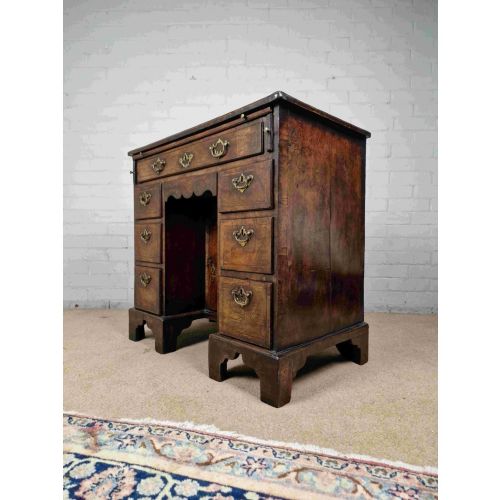
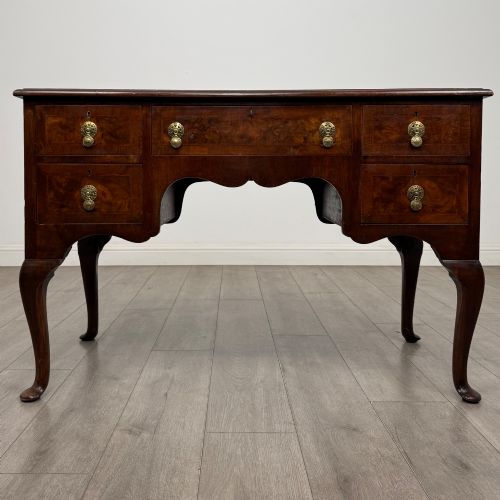
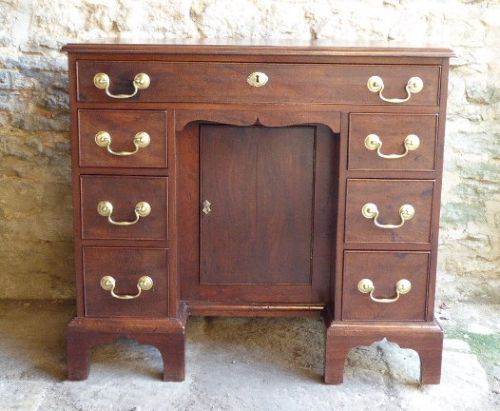
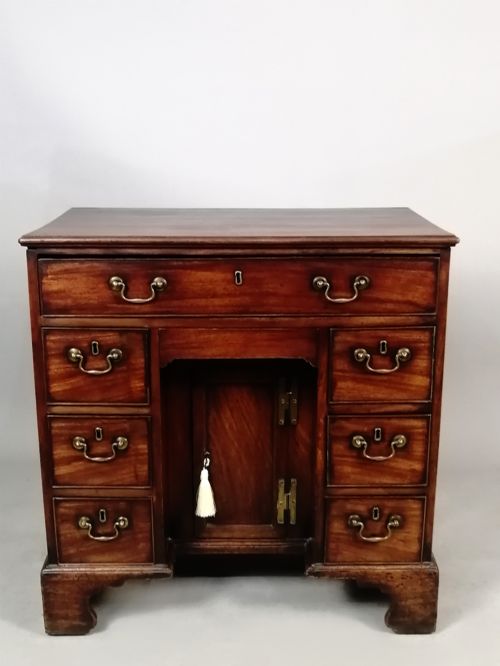
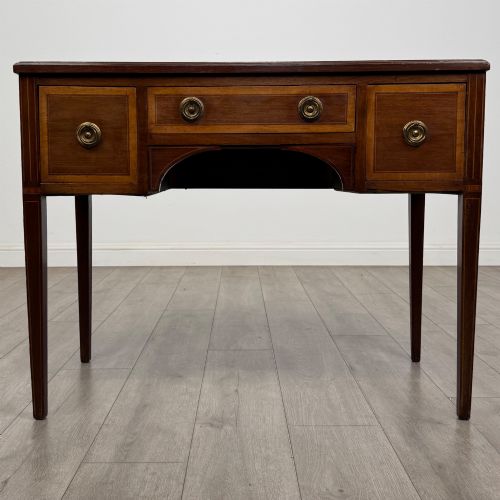
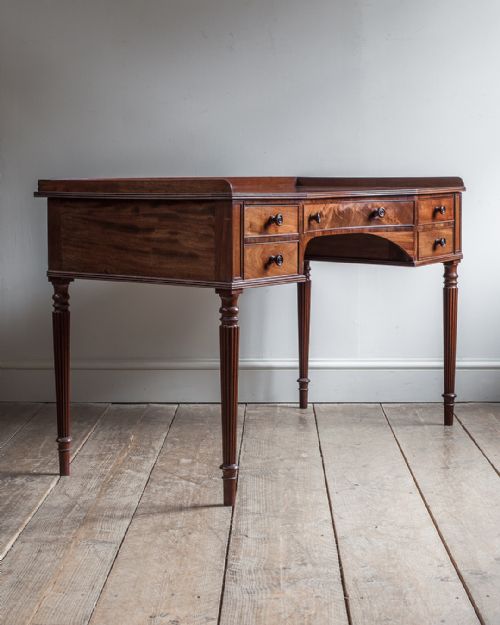
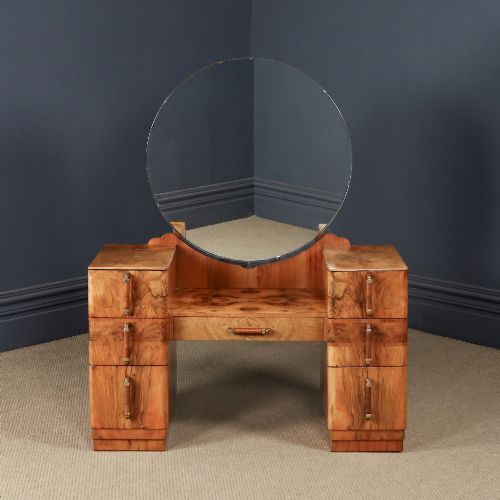
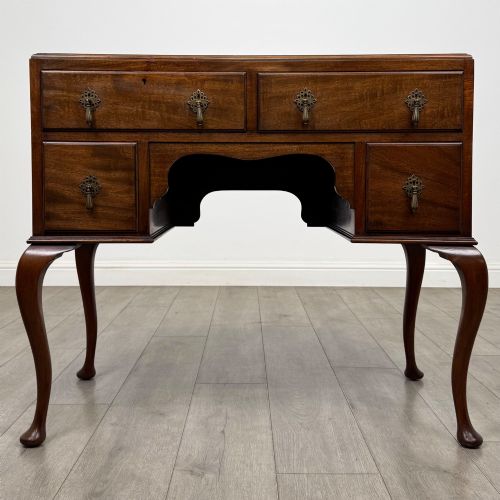
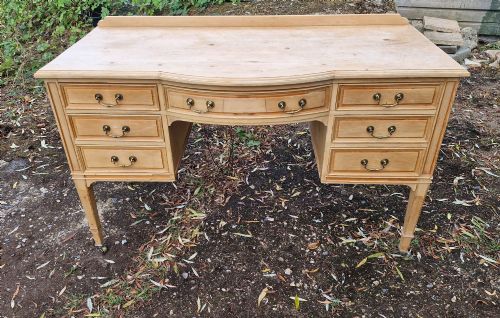
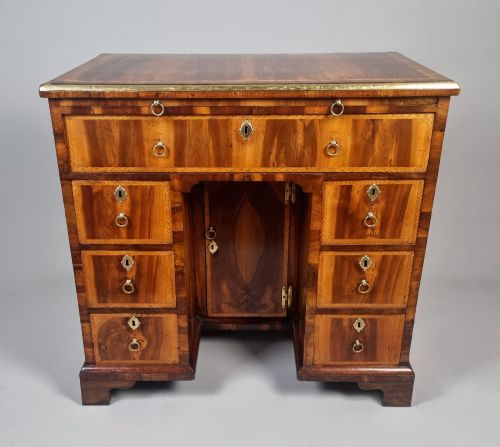
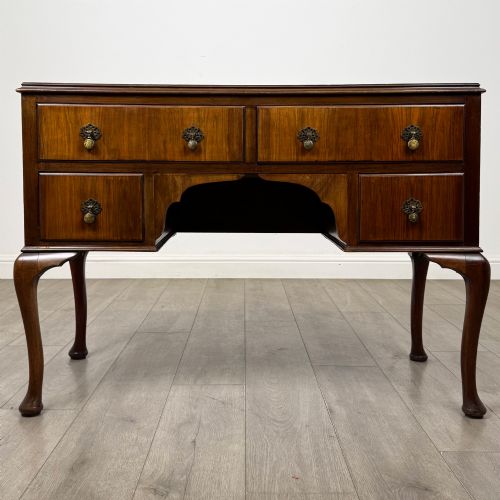
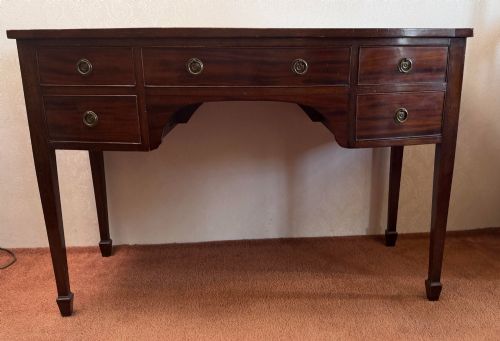
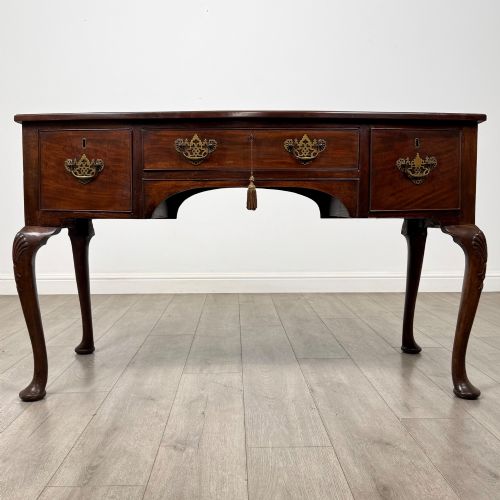
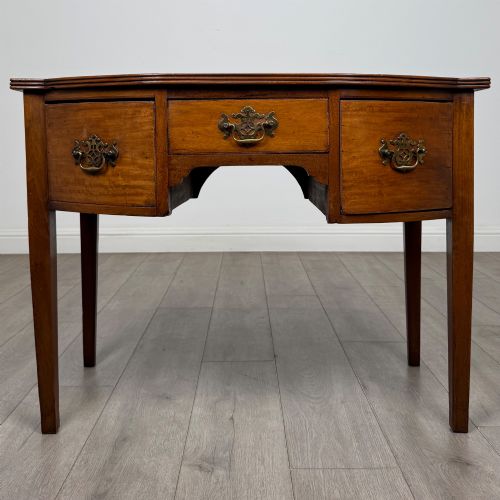
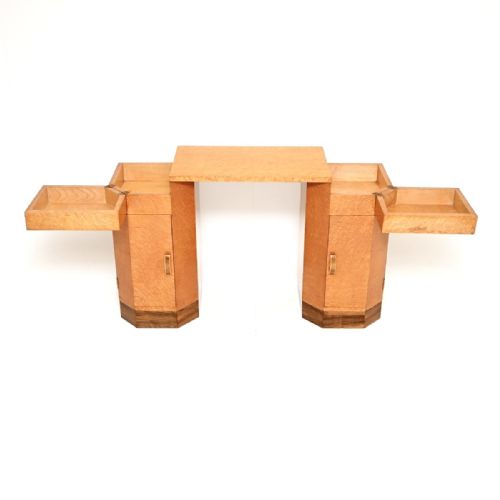
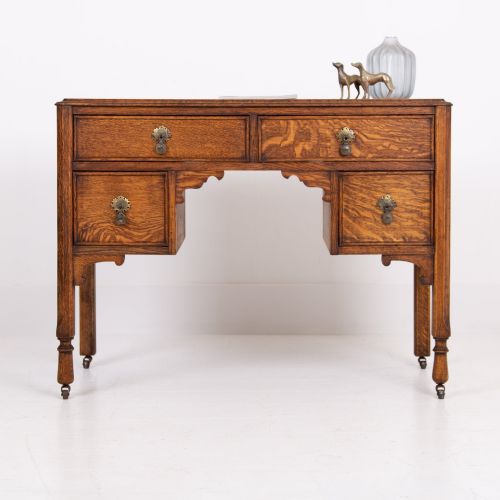
An antique kneehole vanity table is typically encountered as a compact pedestal form featuring a recessed central recess flanked by banks of drawers, serving as both a dressing table and a writing desk. The selection spans formal 18th-century Georgian and George II examples in rich mahogany and yew wood through to later Edwardian and Art Deco interpretations.
Makers often adapted the pedestal layout with five or more drawers, sometimes incorporating folding mirrors, serpentine fronts, or tooled leather inserts. Alongside these formal iterations appear simpler pine washstands and wash-down desks spanning the Victorian and 19th-century periods.
Buyers will find that the category encompasses pieces crossing between dressing tables, writing desks, and low console forms. Their shared characteristic remains the central kneehole space, which allows a chair to tuck neatly beneath the top surface.
Materials and Construction
Cabinetmakers utilised robust primary timbers such as mahogany, oak, and walnut, often applying figured burr walnut, birdseye maple, or satinwood veneers to the principal surfaces. Solid timber carcases were jointed carefully, whilst decorative veneers relied on animal glues that demand careful conservation over the centuries.
Hardware such as brass handles, escutcheons, and drawer pulls were cast and chased by hand on earlier Georgian pieces, whilst later Edwardian and Art Deco iterations feature simpler stamped brass or wooden knobs. Original brasses remain a hallmark of untouched integrity on mid-18th-century examples.
Secondary structural elements often include oak or pine drawer linings with hand-cut dovetails, revealing the bench methods of period workshops. Surface finishes range from traditional hand-rubbed wax polishes to later polished lacquer and varnishes.
Listings feature antique kneehole vanity tables spanning the 18th, 19th, and 20th centuries, executed in mahogany, walnut, oak, and satinwood.
Judging Quality and Craftsmanship
Quality rests principally in the selection and matching of timber veneers, where symmetrical burr walnut or flame mahogany grain elevates a standard carcase into a piece of high design. Finer examples display continuous grain wrapping across drawer fronts and uninterrupted mouldings.
The sophistication of internal drawer construction also distinguishes superior pieces, notably hand-cut dovetailing and the use of substantial secondary woods like oak rather than thin modern laminates. Structural joinery should remain tight, ensuring the central kneehole pedestal bears weight without sagging.
Proportion and stylistic purity separate provincial work from pieces designed in metropolitan workshops by notable cabinetmakers. Restraint in carved ornament, crisp cockbeading around drawers, and retention of period-correct hardware elevate the status of an individual table.
Wylie & Lochhead Glasgow·Heal & Sons Heals·maples of London·Shapland and Petter
The Antique Kneehole Vanity Table Glossary
- Kneehole
- A recessed space beneath the central section of a desk or dressing table designed to accommodate a person seated on a chair. This architectural arrangement allows pedestals of small drawers to flank both sides.
- Cockbeading
- A narrow raised moulding fixed around the edges of drawer fronts to protect the vulnerable end grain and provide a neat decorative border. It is frequently found on quality Georgian and Victorian case furniture.
- Escutcheon
- A protective plate surrounding the keyhole of a drawer or cabinet door, often cast in brass or inlaid in contrasting wood. It prevents the surrounding timber from splitting around the lock.
- Dovetail
- A traditional interlocking woodworking joint formed by interlocking wedge-shaped pins and tails. Hand-cut dovetails are a reliable indicator of age and craftsmanship in antique drawer construction.
- Serpentine
- A gently curving front contour that undulates outward in the centre and inward toward the edges. This fluid shape required considerable skill from the cabinetmaker when applied to solid or veneered timber.
Antique Kneehole Vanity Table: Frequently Asked Questions
How were these tables used originally?
These tables served as private dressing stations where individuals could sit to apply cosmetics, arrange hair, and store personal grooming items within the flanking drawers. Many doubled as writing surfaces for correspondence and household accounts.
The central kneehole allowed the user to sit comfortably close to the surface, often facing a matching tabletop or wall mirror placed above the top.
Can I use an antique kneehole vanity table as a desk?
Yes, many examples listed as dressing tables function perfectly well as writing desks due to their comfortable knee clearance and practical flat working surfaces. Some period pieces were built specifically with leather writing inserts for this dual purpose.
Buyers simply need to check the internal height and width of the kneehole recess to ensure adequate leg room for daily seating.
How do I distinguish an 18th-century piece from a later revival?
Examining the secondary timbers inside the drawer linings and the nature of the hand-cut dovetails provides clear clues to a piece's true age. 18th-century examples typically show shrinkage cracks, oxidation on interior oak or pine, and old hand- forged iron or brass fixings.
Revival pieces from the Edwardian period often feature machine-sawn timber and more uniform internal construction methods.
Where should I place a vanity table in a modern home?
These versatile pieces suit bedrooms as dressing tables, studies as compact writing desks, or hallways as console tables. Their finished backs occasionally allow them to float away from walls, though most sit comfortably flat against a bedroom or study partition.
Pairing the table with a low upholstered stool or a period chair completes the traditional arrangement.