
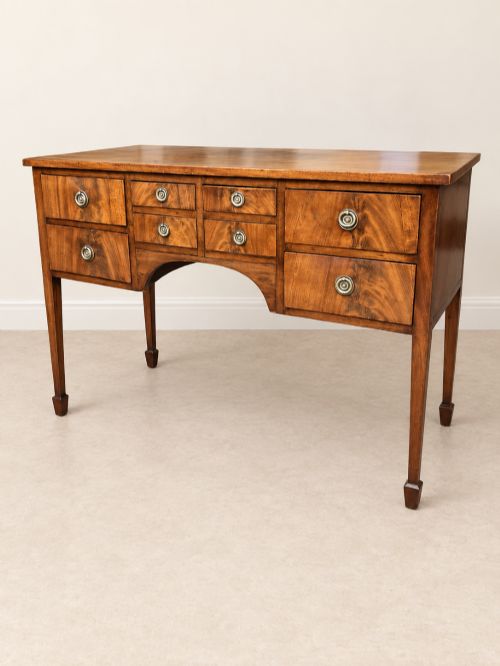
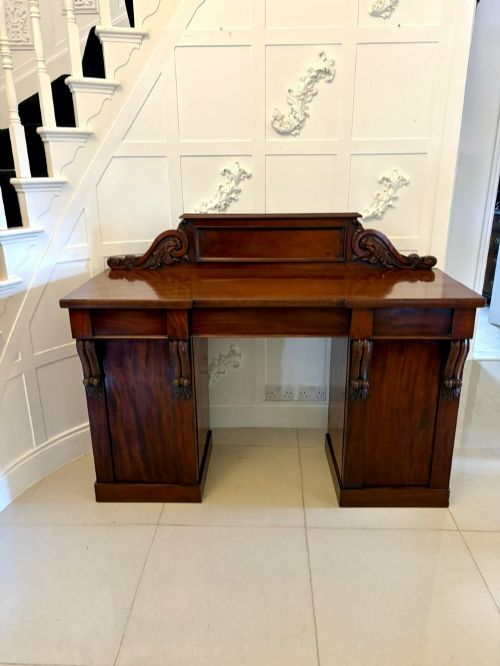
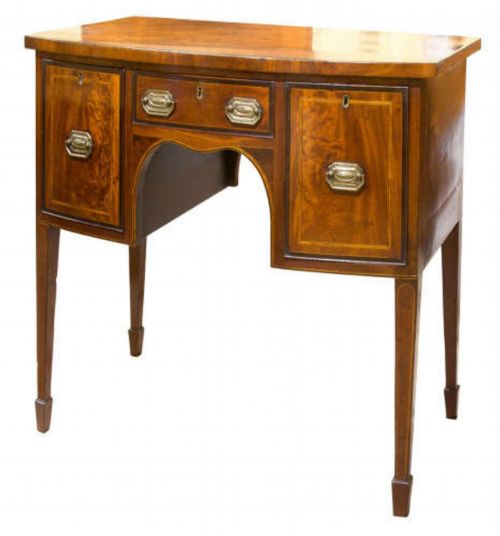
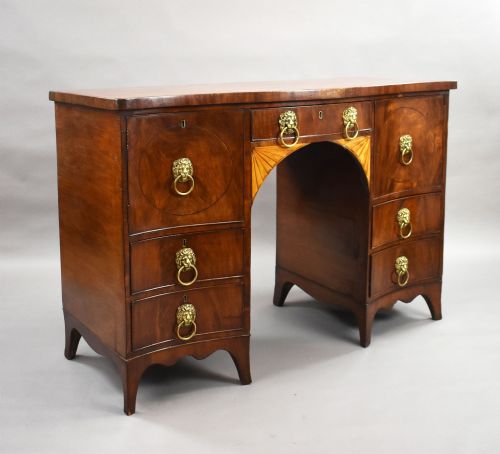




Antique Kneehole Credenza
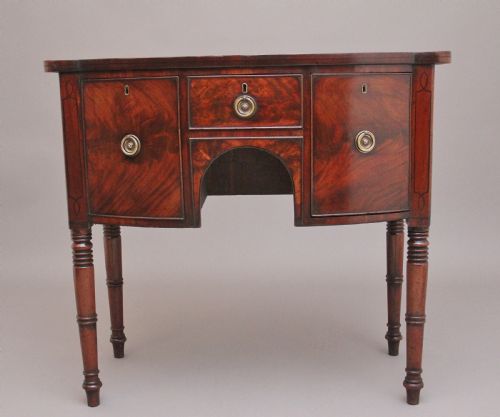
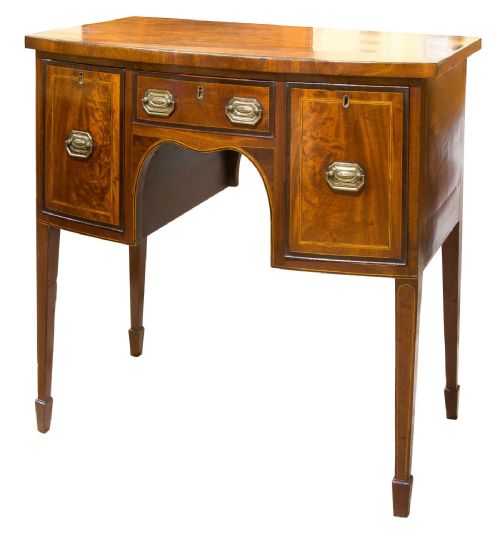
These antique kneehole credenza pieces are substantial sideboards, desks, and dressing tables designed for practical storage and refined period interiors.
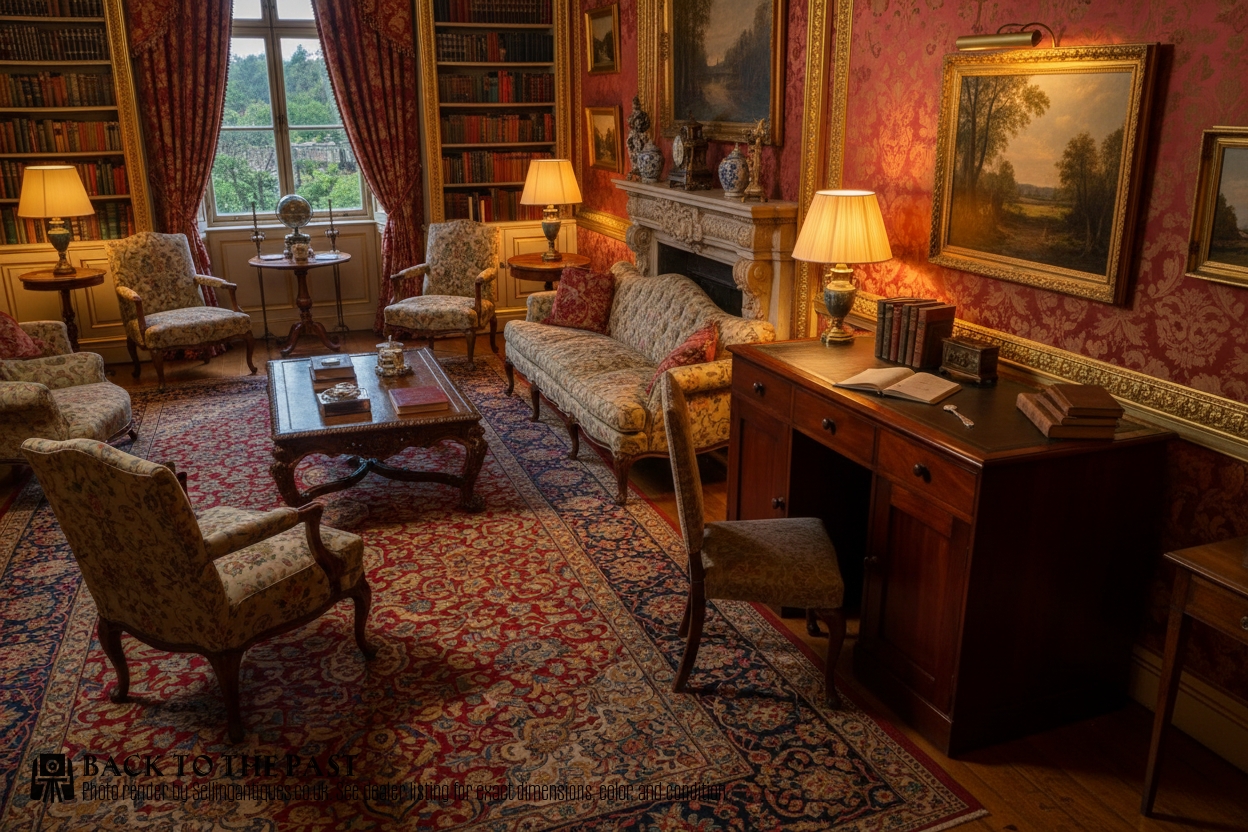
Antique Kneehole Credenza
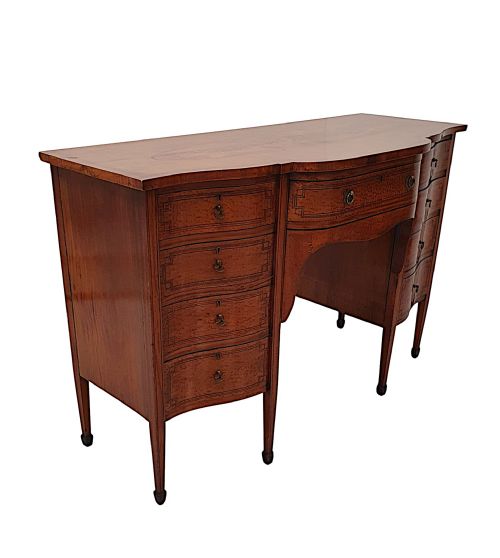
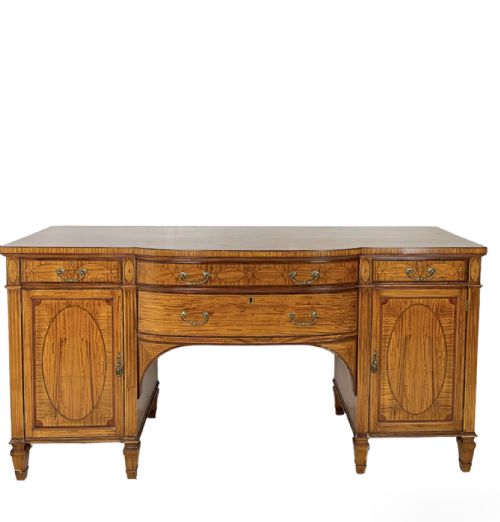
When you search for an antique kneehole credenza, you encounter forms that span sideboards, kneehole desks, and dressing tables originating from the Georgian, Regency, Victorian, and Edwardian periods. The selection on this page relies primarily on sideboards alongside specific kneehole desk and dressing table variants.
The dominant material across these listings is mahogany, often encountered in flame mahogany or bow-front configurations, supplemented by oak, satinwood, and purpleheart. These forms reflect the design standards of English country house interiors and formal dining rooms throughout the eighteenth and nineteenth centuries.
How they were made
Construction relies heavily on solid mahogany and oak timbers, frequently enhanced with veneers and detailed wood inlay utilising boxwood and satinwood banding. Cabinetmakers shaped bow-front and serpentine carcases using traditional joinery methods suited to large dining room sideboards and smaller kneehole furniture.
Surface ornamentation incorporates carved details, such as those found on Victorian Renaissance Revival and Gothic pieces, alongside brass hardware. Painted finishes appear on specific English examples, demonstrating the range of decorative techniques applied across the periods.
Early cabinetmakers occasionally hid secret drawers behind decorative mouldings to guard family silver.
What varies in quality
Quality separates ordinary utility pieces from those exhibiting superior timber selection, such as highly figured flame mahogany or finely matched satinwood veneers. The precision of the wood inlay and the crispness of carved wooden elements indicate the skill of the original workshop.
Structural integrity and the preservation of original brass handles and fitted interiors dictate the standing of individual items. Pieces retaining their early surfaces and proportions command greater attention from collectors.
The Antique Kneehole Credenza Glossary
- Bow-front
- A convex curved cabinet front that projects outward at the centre. This configuration was particularly popular on Georgian and Regency sideboards.
- Kneehole
- A central recessed space beneath a desk, dressing table, or sideboard designed to accommodate the legs of a seated person.
- Satinwood
- A durable, light-yellow timber imported from the tropics, utilised extensively for veneers and banding during the Edwardian period.
- Purpleheart
- A dense hardwood possessing a distinct violet-brown hue, often employed for contrasting banded details on eighteenth-century furniture.
- Serpentine
- A front profile characterised by a gentle concave central section flanked by two convex ends, requiring precise cabinetmaking.
Antique Kneehole Credenza: Frequently Asked Questions
What is a kneehole credenza?
A kneehole credenza or related sideboard provides surface space and concealed storage, frequently featuring a central recessed opening beneath the drawers.
These items served dining rooms and studies across the Georgian, Victorian, and Edwardian eras.
How do I date an antique sideboard?
Dating relies on identifying the primary wood species, construction techniques, and characteristic styles such as Georgian bow-fronts or Victorian carved oak.
Changes in hardware design and veneer application also assist in placing a piece within its correct nineteenth or eighteenth-century context.
Where were these pieces used?
Sideboards were positioned in formal dining rooms to store cutlery, linen, and serving dishes during meals.
Kneehole desks and dressing tables occupied studies and bedrooms as functional writing and grooming stations.
How should I care for mahogany furniture?
Keep wooden surfaces away from direct sunlight and excessive heat sources to prevent timber splitting and veneer lifting.
Apply traditional wax polishes sparingly and buff gently with a soft cloth to maintain the natural finish.