


Antique Kitchen Stools
Antique kitchen stools bring tactile warmth to domestic spaces, combining robust utility with enduring vernacular design.
Antique Kitchen Stools
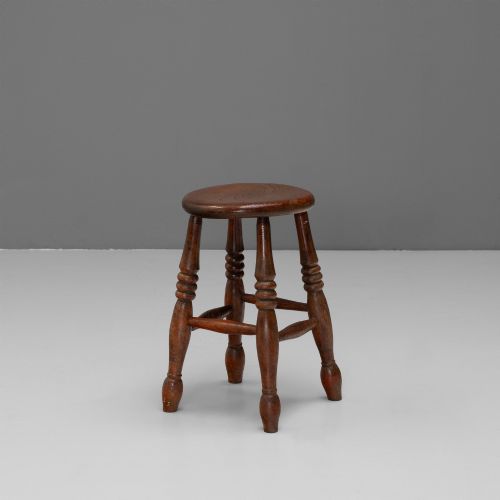
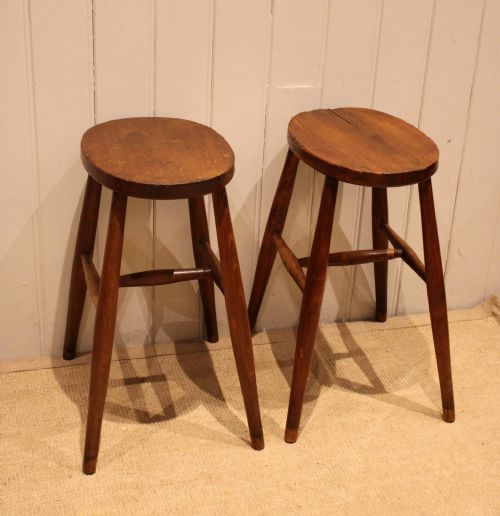
Antique kitchen stools are functional domestic and working seats shaped by practical demands across the nineteenth and twentieth centuries. The examples met most frequently on this page belong to the nineteenth century and the Edwardian era, spanning rustic farmhouse, country, and industrial origins.
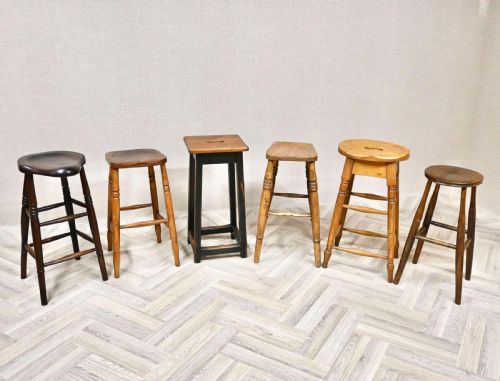
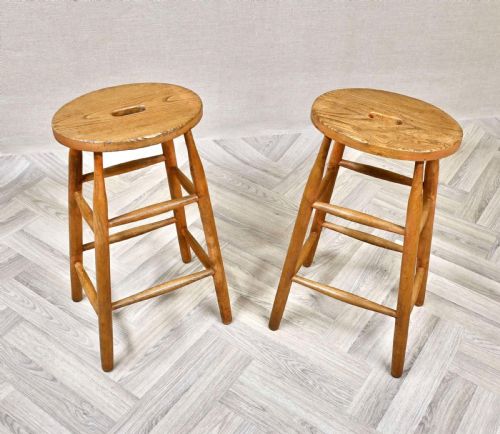
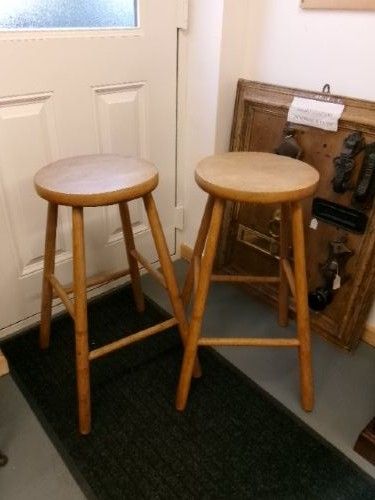
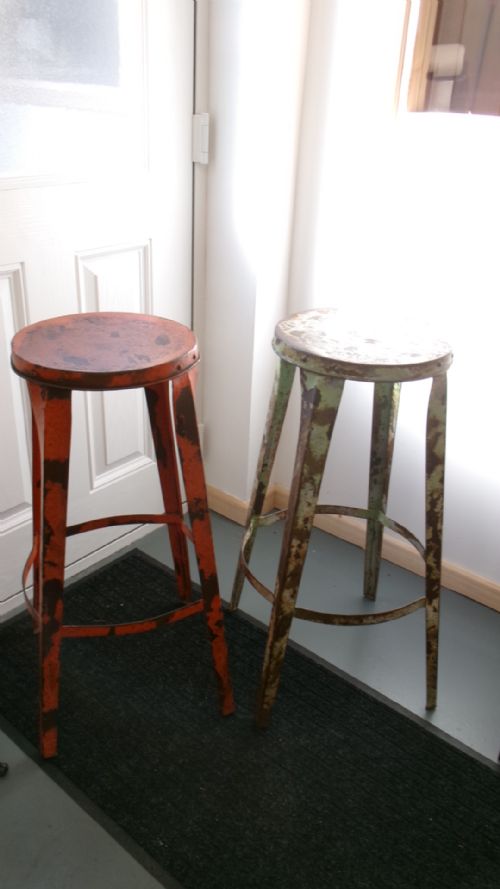
The selection encompasses diverse forms including tall bar stools, dairy stools, lab stools, clerk's stools, and dining stools. Many are recorded in regional English and French country styles, alongside industrial metal and riveted iron variants.
Makers often utilised local timbers for utility, resulting in sturdy three or four-legged designs intended for heavy daily use. Alongside standard seating, related forms such as library steps and chopping blocks occasionally appear within the broader kitchen category.
How they were made
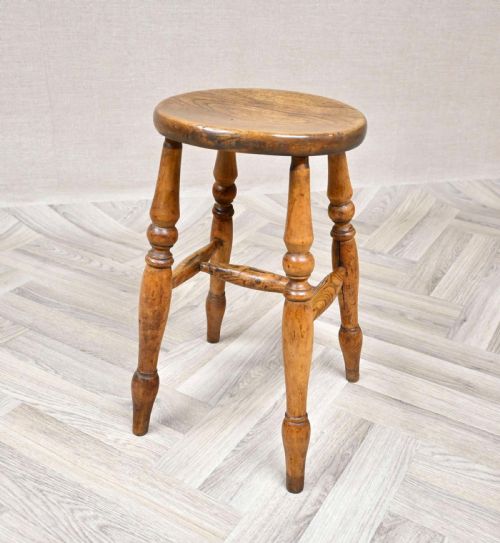
Makers relied heavily on solid hardwoods like elm, beech, oak, pine, and walnut, often pairing different woods within a single piece such as beech legs with elm seats. Turning, steam bending, and metal riveting defined the construction methods for both traditional country stools and industrial variants.
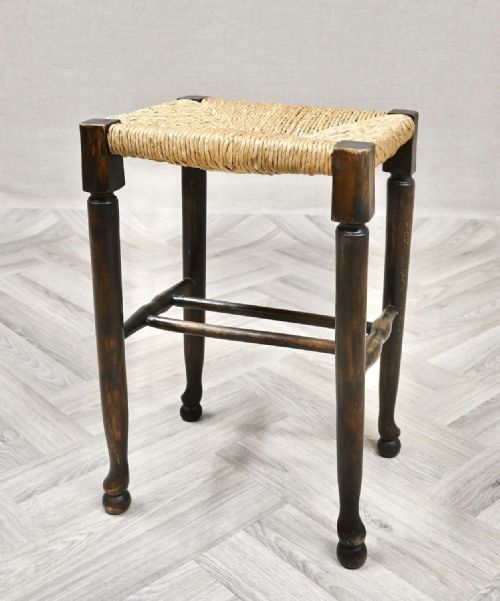
Surface finishes range from natural grained wood and polished walnut to historical layers of paint and tan leather upholstery. Rush seating also occurs, demonstrating traditional weaving techniques applied to sturdy wooden frames.
Current listings feature solid elm, beech, oak, and pine constructions alongside industrial iron and painted finishes spanning the nineteenth and twentieth centuries.
What varies in quality
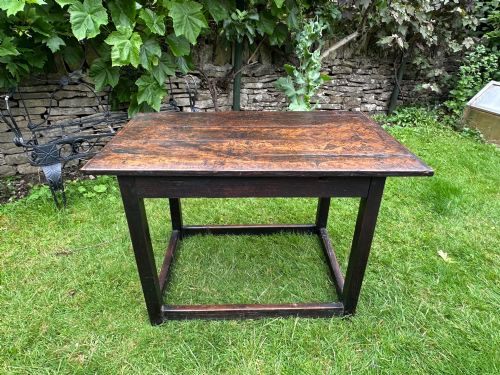
Quality in these pieces rests upon the integrity of the timber selection and the rigidity of the joinery. Solid plank tops, particularly those fashioned from wild elm or sycamore with strong grain patterns, elevate a piece above standard utility items.
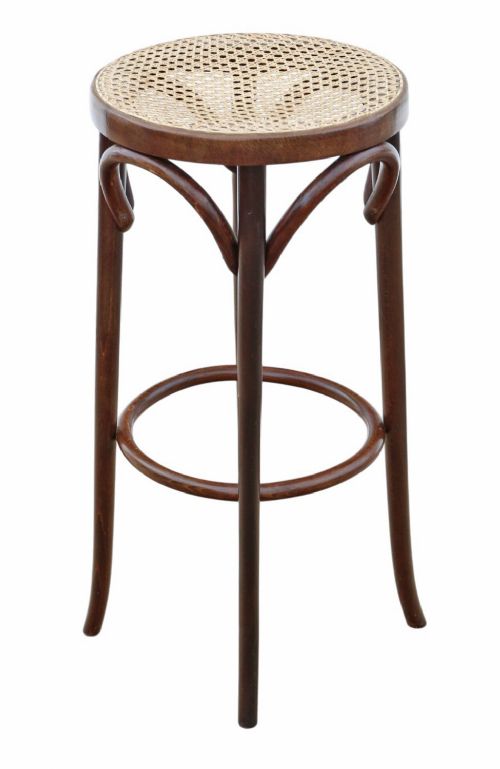
Original surface preservation distinguishes finer examples, whether that involves untouched historical paint on a dairy stool or the refined curves of a bentwood high stool. Matched sets command distinct interest compared to single pieces due to the survival rate of complete groups over time.
The Antique Kitchen Stools Glossary
- Bentwood
- Wood that has been rendered pliable via steam and shaped into curved structural forms. This technique produced lightweight yet robust frames for early twentieth-century high stools.
- Dairy stool
- A low, three-legged utilitarian seat used during milking and general farm labour. These pieces often feature simple turned legs wedged directly into thick wooden seats.
- Clerk's stool
- A tall seating form designed for high desks in offices and counting houses. They typically feature turned beech legs and sturdy foot rails for prolonged seated work.
- Rush seat
- Seating constructed from dried marsh grasses woven tightly across a wooden frame. This method provided a resilient and slightly flexible surface for traditional kitchen and dining stools.
- Windsor stool
- A sturdy seating form featuring turned legs and spindles wedged into a solid carved wooden seat. This traditional construction method ensures exceptional long-term stability.
Antique Kitchen Stools: Frequently Asked Questions
How were antique kitchen stools used originally?
These stools served demanding functional roles in domestic kitchens, farmhouses, dairies, and industrial workshops. They provided elevated or grounded seating for food preparation, milking, and daily labour.
Over time, many transitioned from purely utilitarian workshop items into casual seating around domestic tables and breakfast bars. Their robust construction was engineered entirely to withstand heavy everyday demands.
How do I identify a nineteenth-century stool?
Nineteenth-century pieces typically display traditional hand-turned legs, visible wedged tenons, and dense timbers like elm, oak, or pine. Tool marks and surface wear often reveal manual construction methods predating mass-produced factory standards.
Comparing the joinery and timber patination against dated examples helps clarify the era of manufacture. Country pieces frequently retain simpler, sturdier framing than later Edwardian or industrial designs.
Are matched sets common for kitchen stools?
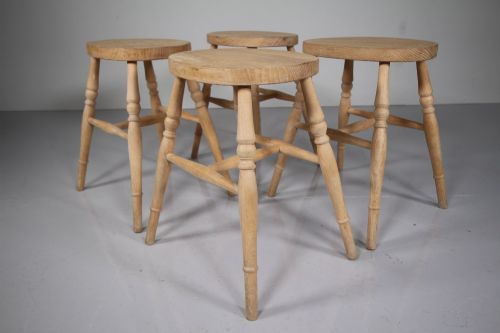
Finding matched sets of four, six, or more is uncommon because these utilitarian items were usually acquired individually as needed. Sets that do survive intact are typically prized by collectors for unified dining or bar use.
Individual stools appear far more frequently on the market than complete original groups. Mixing complementary single stools of similar height is a traditional way to assemble a varied seating arrangement.
How do I care for wooden stool surfaces?
Maintain wooden surfaces by dusting gently with a dry cloth and occasionally applying traditional beeswax to nourish the timber. Avoid placing antique stools near direct heat sources or in damp environments to prevent wood splitting.
Preserving original painted or waxed finishes requires avoiding harsh chemical cleaners. Gentle upkeep ensures the historical patination developed over decades remains intact.