


Natural Wood Stool
A natural wood stool brings tactile warmth and honest utility into a room, shaped from timber by makers who valued function above all.
Natural Wood Stool
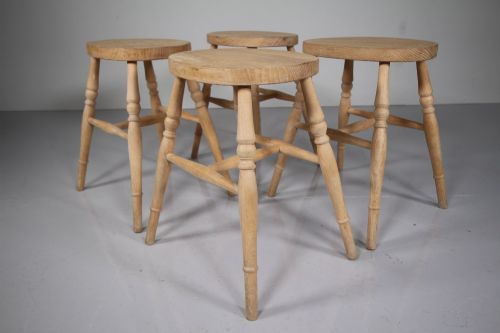
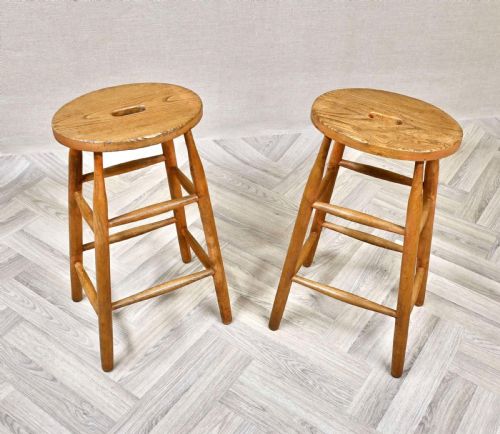
A natural wood stool represents a diverse category of utilitarian seating and surface pieces shaped from unpainted timber, ranging from primitive milking seats to industrial lab stools. When searching for a natural wood stool, buyers encounter formats spanning the eighteenth, nineteenth, and twentieth centuries, built for specific daily labour rather than formal display.
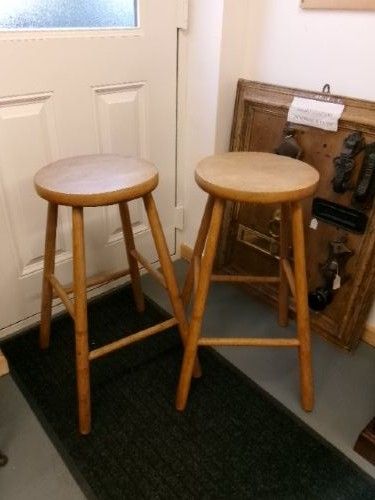
The selections available here lean heavily into vernacular and rustic traditions, featuring materials like oak, elm, pine, and beech fashioned into simple seats, bar stools, and step ladders. These pieces carry the marks of their working origins, often displaying heavy patination and straightforward joinery.
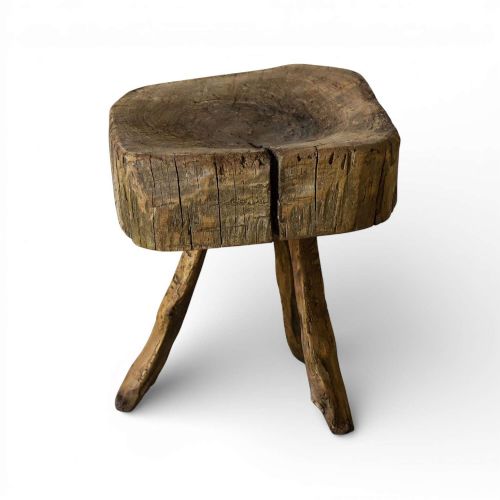
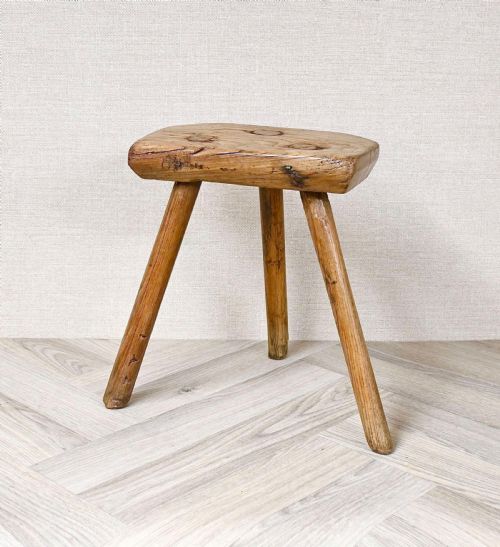
Forms vary from low three-legged milking stools and chopping blocks to tall bar stools and dining sets, originating from English, French, Chinese, and Japanese traditions. Each object reflects the specific timber available to the maker and the demands of the workshop, farm, or railway.
Materials and construction
Construction relies upon solid timbers such as elm, oak, pine, and beech, chosen for their toughness and availability rather than decorative grain. Makers utilised thick slabs for seats and sturdy branches or turned sections for legs, securing joints with simple wedges or pegging.
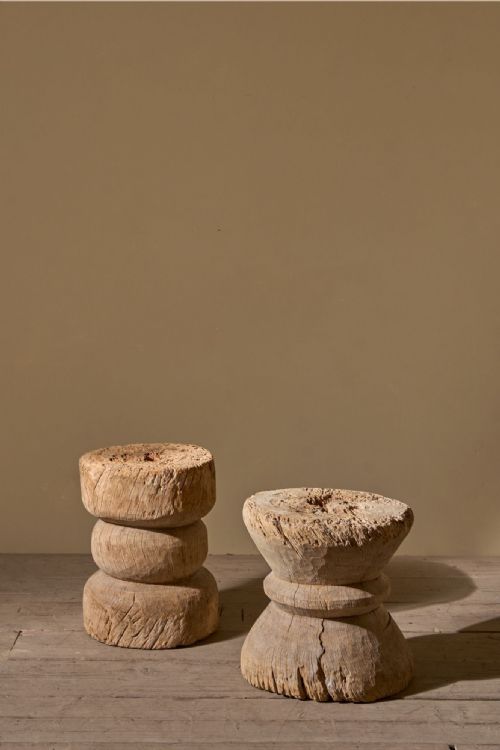
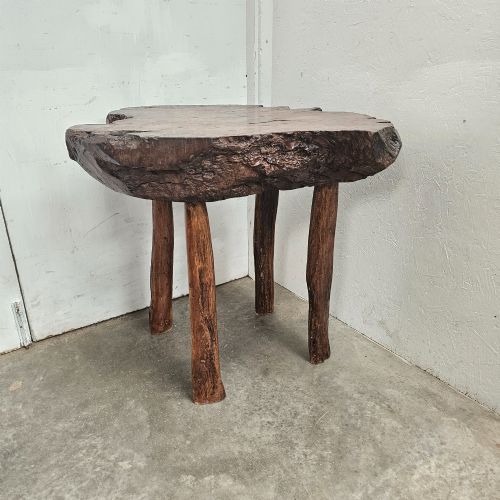
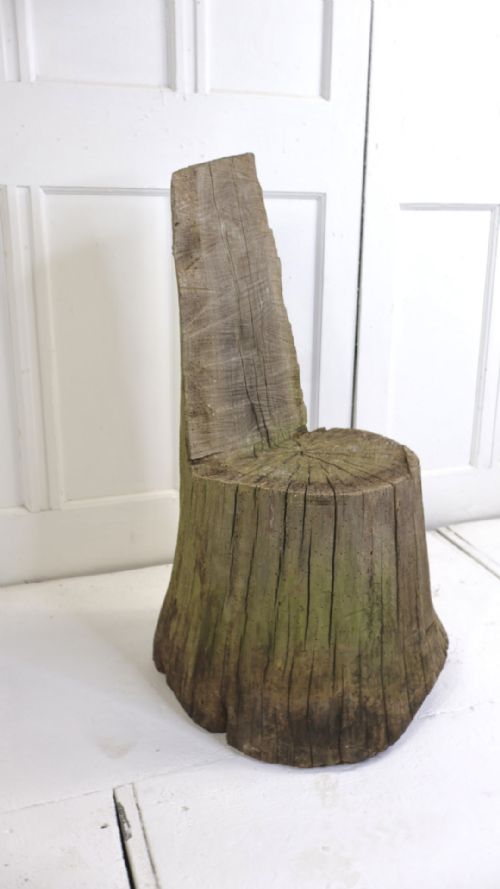
Surfaces frequently show the direct evidence of hand tools, from adze marks on chopping blocks to the gnarled natural forms of rootwood and live edge slices. Metal components appear occasionally in iron bracing or hardware, anchoring the wooden elements for heavy industrial or domestic utility.
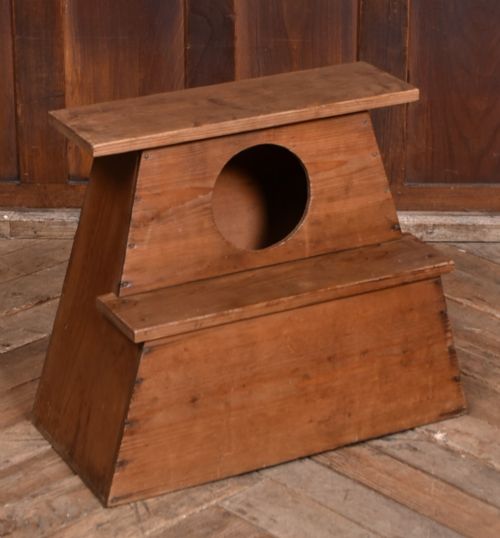
The selection includes specialised items like milking seats, cobbler work stools, chopping blocks, and railway steps.
Assessing quality and character
Quality in these utilitarian pieces rests upon the integrity of the timber, the honesty of the wear, and the balance of the proportions. A superior example retains its original surface patination, untouched by modern stripping, and shows structural stability despite centuries of heavy use.
The distinction between standard workshop output and exceptional folk art lies in the sculptural presence of the piece, whether seen in the organic sweep of gnarled legs or the careful selection of an elm seat top. Authenticity of use remains paramount, where every knock and repair contributes to the narrative of the object.
The Natural Wood Stool Glossary
- Vernacular rural
- Objects designed by local craftsmen for practical use without academic architectural influence. These pieces prioritise regional materials and functional forms over fashionable trends.
- Milking stool
- A low three-legged seat traditionally used by agricultural workers for sitting close to livestock. The three-legged design ensures stability on uneven earthen floors.
- Live edge
- A furniture edge that retains the natural contour of the tree trunk rather than being sawn straight. This technique highlights the organic form of the wood.
- Chopping block
- A heavy timber block or thick slice used for food preparation in kitchens and butcher shops. They are typically hewn from dense hardwoods to withstand heavy impact.
- Primitive
- Describes items of simple, unrefined construction dating from earlier periods. Such objects display direct, unpretentious building methods.
Natural Wood Stool: Frequently Asked Questions
How do I clean a wooden stool?
Maintain the surface by dusting with a dry cloth and occasionally feeding the timber with a traditional beeswax. Avoid harsh chemical cleaners that strip the historic patination.
Keep these pieces away from direct heat sources and severe moisture fluctuations to prevent the old wood from splitting or warping.
Are these stools sturdy enough for daily seating?
Most of these pieces were constructed for demanding daily labour, meaning their frames are inherently robust and built to bear weight. Check the joints and leg stability before regular use.
Lighter decorative or rootwood items may be better suited as display stands or occasional side tables rather than heavy seating.
How can I tell the age of a wooden stool?
Dating relies on examining the tool marks, joinery methods, and the natural wear accumulated on the timber over generations. Hand-cut pegging and deep patination usually point to earlier centuries.
Later industrial and twentieth-century examples often incorporate machine-sawn elements or simpler iron bracing while retaining honest utilitarian charm.
Where should I place a rustic stool in my home?
These versatile pieces work well as bedside tables, extra seating in a kitchen, or display surfaces for plants and lamps in a living space. Their varied heights allow them to function flexibly across different rooms.
Letting the honest wood texture contrast against clean, modern walls highlights the sculptural quality of the object.