


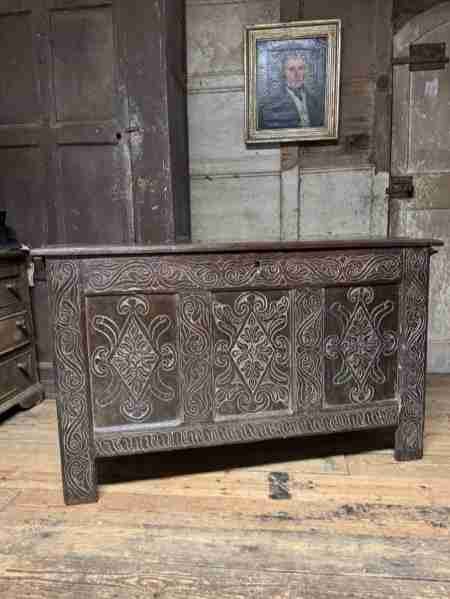
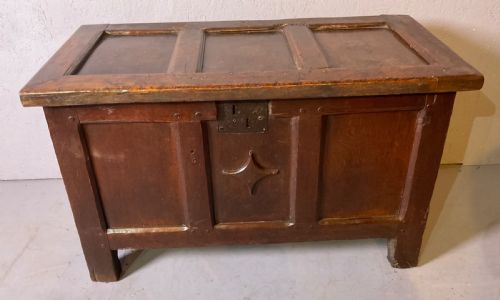
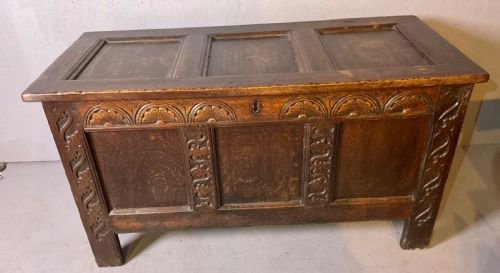
Antique Joined Chest
An antique joined chest brings solid seventeenth-century oak timber and rigid frame construction directly into a modern interior.
Antique Joined Chest
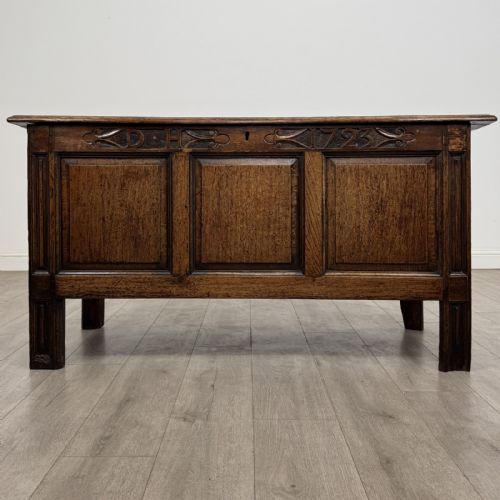
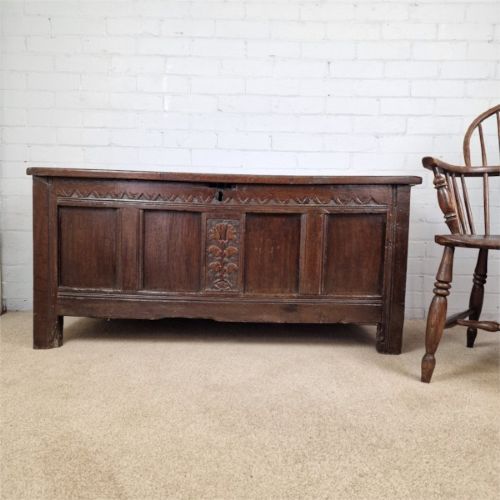
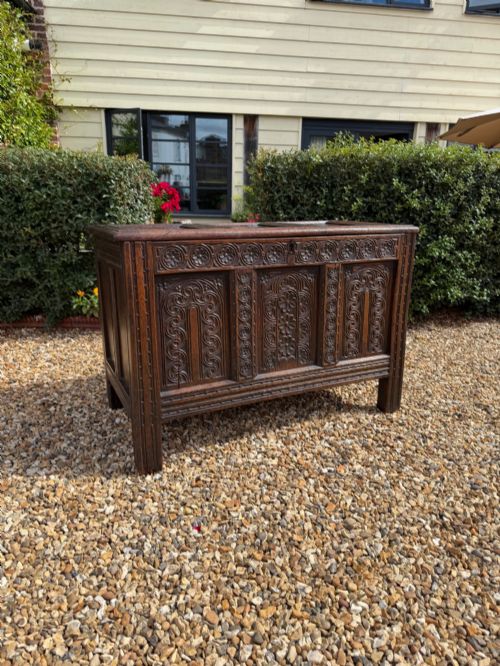
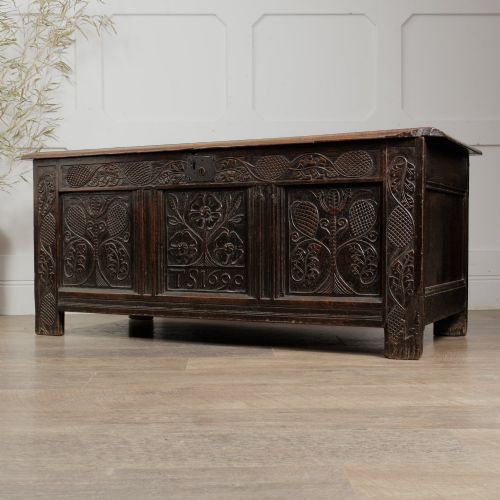
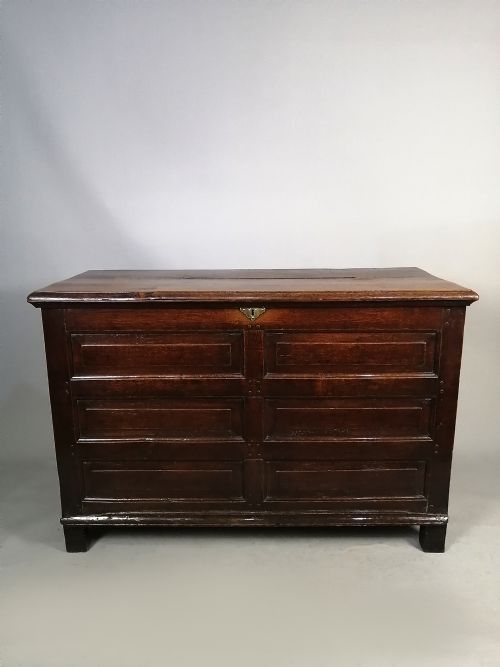
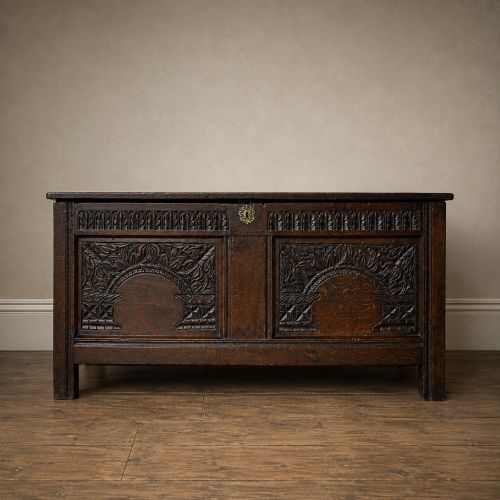
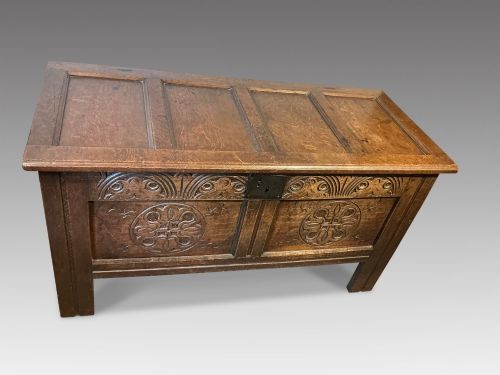
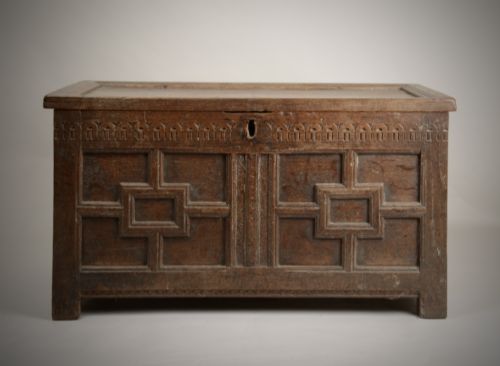
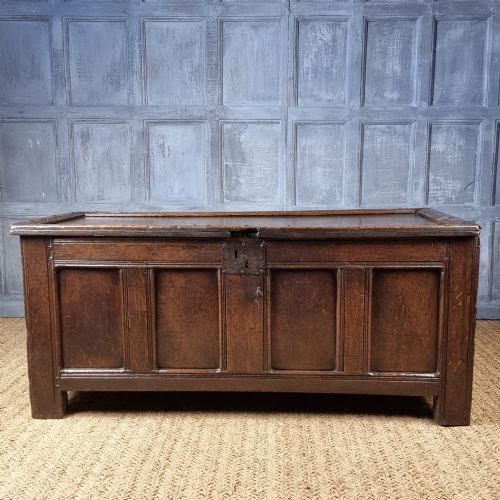
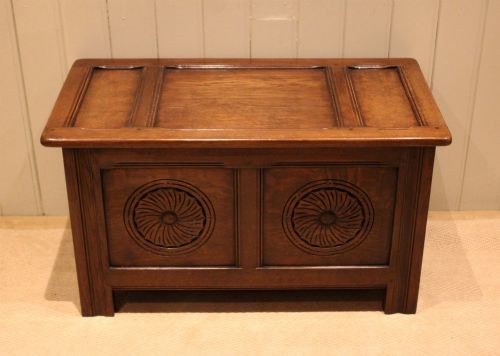
An antique joined chest is a sturdy timber storage box built with frame and panel construction rather than simple boarded joints. These pieces serve as blanket chests, blanket boxes, coffers, and early forms of drawer storage originating primarily from the sixteenth, seventeenth, and eighteenth centuries. The version you meet most often on this page is the seventeenth-century oak coffer, frequently featuring panelled sides and carved detail.
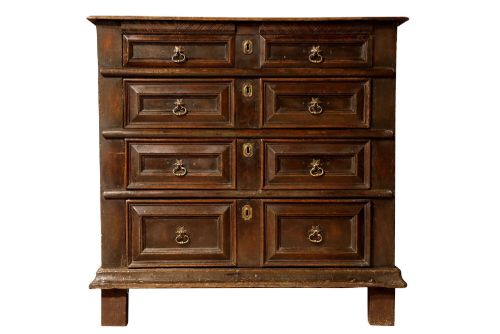
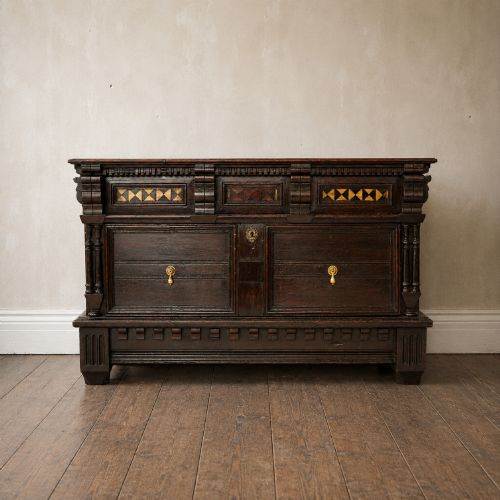
Makers constructed these storage vessels to hold domestic textiles, valuables, and household documents in principal rooms or chambers. Regional variations appear across England and Wales, with specific pieces linked to areas such as Lancashire, the Gower Peninsula, South Gloucestershire, and Lakeland. Certain examples incorporate a single drawer at the base, evolving toward the mule chest and the chest of drawers.
Periods represented stretch from sixteenth-century Tudor and Elizabethan eras through Jacobean, Charles I, and Charles II reigns into the Georgian period. Regional workshops utilised local timber stocks and traditional joinery methods that survived centuries of domestic use. Surviving examples display the functional evolution from simple storage coffers to fitted accommodation for clothing and personal items.
What varies in quality
Quality in an antique joined chest rests upon the integrity of the original oak frame and the crispness of surviving hand carving. Pieces retaining their original top boards, bottom boards, and wooden hinges stand apart from those altered or rebuilt during later centuries. The depth and clarity of regional decorative motifs, from geometric mouldings to figural carving, distinguish standard regional output from master workshop production.
The survival of original surface patination and colour defines the visual distinction at the upper end of the range. Untouched joined surfaces display the natural grain and oxidation accumulated over hundreds of years, whereas over-restored timber loses the textural depth prized by collectors of early oak furniture.
Antique Joined Chest Retail Price Guide 2026
Typical asking prices for joined chest among the pieces listed under this phrase on Sellingantiques today, from the lower quarter to the upper quarter. They describe what is for sale here now, not the wider market.
Listings feature oak material spanning the sixteenth, seventeenth, and eighteenth centuries, incorporating periods from Elizabethan to Georgian.
Thomas Dennis apprentice workshop
The Antique Joined Chest Glossary
- Joined chest
- A storage box constructed using rigid frame and panel joinery with mortises and tenons, distinguishing it from boarded or nailed trunks. This method provides superior structural stability for heavy oak furniture.
- Coffer
- A heavy wooden chest traditionally used for storing valuables, money, or precious textiles. The term is frequently used interchangeably with chest in early inventories.
- Mule chest
- An antique storage chest featuring one or more drawers built into the base beneath the primary upper compartment. This form bridges the traditional coffer and the chest of drawers.
- Linenfold
- A style of carved wooden panelling popular in the sixteenth century that mimics folded linen fabric. It appears frequently on Tudor and Elizabethan oak pieces.
Antique Joined Chest: Frequently Asked Questions
What is an antique joined chest used for?
These pieces served historically to store household textiles, woollens, and valuables securely within domestic chambers.
Today, they function as practical storage furniture that doubles as low seating or a coffee table in living spaces.
How do I identify a seventeenth century oak coffer?
Seventeenth-century examples feature visible frame and panel construction fastened with wooden trunnels, alongside characteristic pegged joints.
Decoration often includes geometric mouldings, chip carving, or arcaded panels typical of Jacobean and Caroline cabinet-making.
What is the difference between a coffer and a mule chest?
A standard coffer provides a single top-opening compartment enclosed by boarded or panelled sides.
A mule chest incorporates one or more functional drawers beneath the main lift-top box, offering more accessible storage.
How should I care for an antique oak chest?
Keep the timber away from direct heat sources and sudden humidity fluctuations to prevent the oak panels from splitting.
Apply traditional bees-wax polish sparingly to maintain the natural surface sheen without building up heavy chemical residues.