


Antique Jockey Racing Artwork
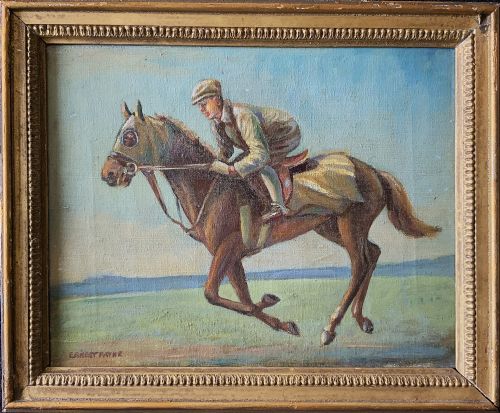
These antique jockey racing artwork pieces capture the intensity of the turf through oil paintings and early prints.
Antique Jockey Racing Artwork
When you search for antique jockey racing artwork, you find a focused selection of equestrian depictions spanning the Georgian era to the early twentieth century. The inventory on this page consists primarily of oil paintings, framed prints, and engravings.
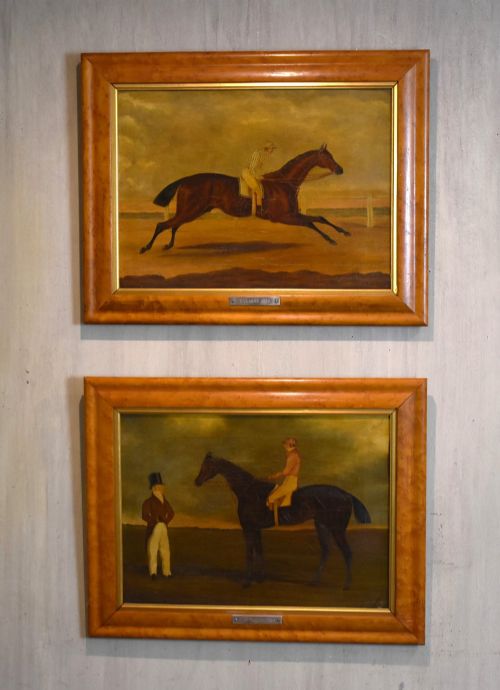
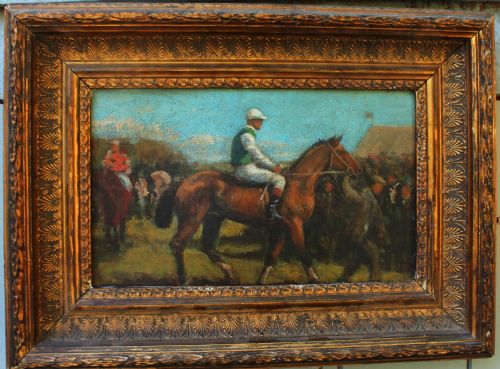
Most pieces capture named racehorses and jockeys, often noting famous mounts like Diamond Jubilee or Creeping Molly alongside notable riders. Victorian and nineteenth-century sporting art dominate the selection, offering framed portrayals of race paddocks, historic courses, and portraits with jockeys up.
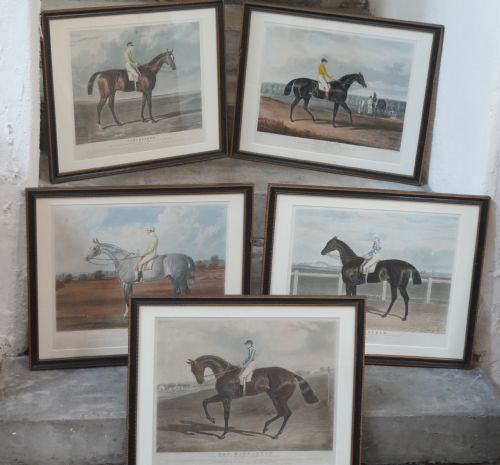
Buyers will encounter both original oil paintings on canvas and various print formats, including chromolithographs and engraved works. These artworks range from intimate studies by known painters to paired Victorian portraits and published periodical plates.
How they were made
Artists utilised oil paint on canvas or paper to build detailed studies of horses and riders, often employing visible brushwork to convey motion in the manner of sporting realists. Other works rely on ink and printing techniques to produce detailed engravings and chromolithographs.
Framed pieces typically combine glass protection with wooden surrounds, preserving paper prints and delicate oil surfaces from environmental wear. These traditional framing methods suit the domestic display styles common in British equestrian interiors.
Master Walter, a nineteenth-century racehorse, won the Governor's Cup at the Colombo Races wearing the colours of owner Horace Deane-Drummond.
What varies in quality
Quality rests upon the artist's ability to render the precise anatomy and musculature of the racehorse alongside the accurate posture of the jockey. Hand-painted oil studies by listed artists command greater attention than mass-produced prints.
The historical documentation associated with a piece influences its standing, particularly when specific races, owners, or jockeys are identified in the title or inscription. Preservation of the original canvas, paper, ink, and period frame also defines the superior examples.
Ernest Payne·John Frederick Herring Snr·Alfred Munnings·Alfred Wheeler·John Atkinson·Isaac Cullin·John Parker Davis·Frank Giggs
The Antique Jockey Racing Artwork Glossary
- Chromolithograph
- A multicoloured print produced through a specialised lithographic process that uses multiple stones or plates. This technique allowed nineteenth-century publishers to replicate the rich hues of original paintings.
- Engraving
- An intaglio printmaking technique where an artist cuts lines directly into a metal plate to hold ink. These works offer exceptional fine detail suited to nineteenth-century sporting scenes.
- Oil study
- A preliminary or finished painting executed in oil on canvas or paper. Artists often created these to capture quick observations of racehorses before producing larger compositions.
- Sporting art
- A genre dedicated to depicting animals, equestrian events, and field sports. This tradition values anatomical accuracy and a clear record of racing history.
Antique Jockey Racing Artwork: Frequently Asked Questions
What periods do these pieces date from?
The collection spans from the mid-eighteenth century through the Georgian and Victorian eras into the early twentieth century. Most works date across the nineteenth century and the decades immediately following 1900.
Examples include mid-nineteenth-century engravings, Victorian oil portraits, and twentieth-century prints by named sporting artists.
How do I display these pieces at home?
These framed prints and oil paintings suit studies, libraries, and hallways traditionally associated with equestrian and sporting decor. Most arrive ready to hang with their existing frames.
Keep them away from direct sunlight and excessive moisture to protect the canvas, paper, oil paint, and gilt surrounds.
How can I tell the different print types apart?
Engravings show fine, incised lines under close inspection where ink sits within the paper fibres. Chromolithographs display tiny dot patterns or layered flat colours characteristic of multi-stone printing.
Original oil paintings present textured brushwork and visible paint layers on canvas or paper rather than flat printed surfaces.