


Antique Japanese Display Vases
Antique japanese display vases bring traditional ceramic artistry and rich hand-painted detail into a room.
Antique Japanese Display Vases
When you search for antique japanese display vases, you encounter a diverse group of ceramic and metal vessels created for interior decoration. These pieces range from towering floor-standing jars to intricate miniature vessels designed during the Meiji period and the wider nineteenth century.
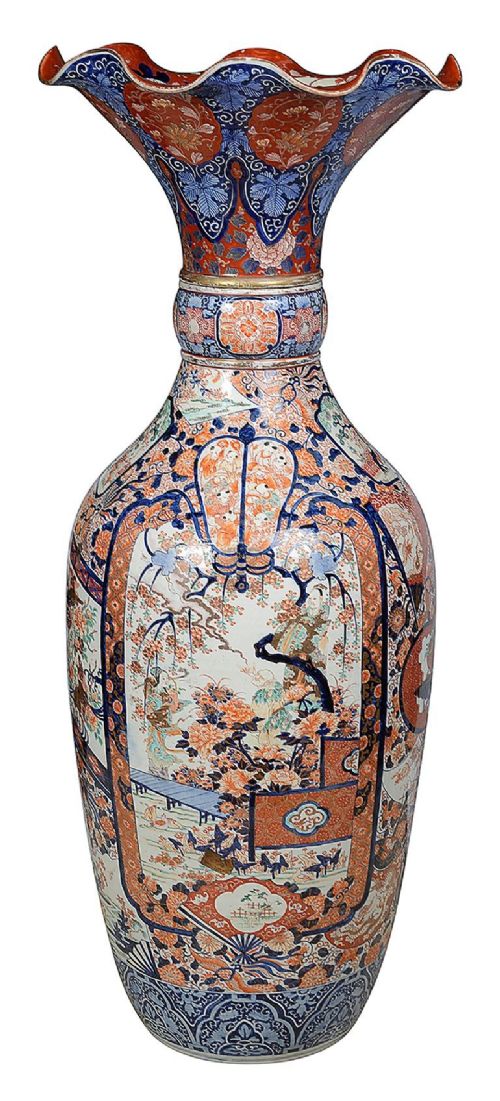
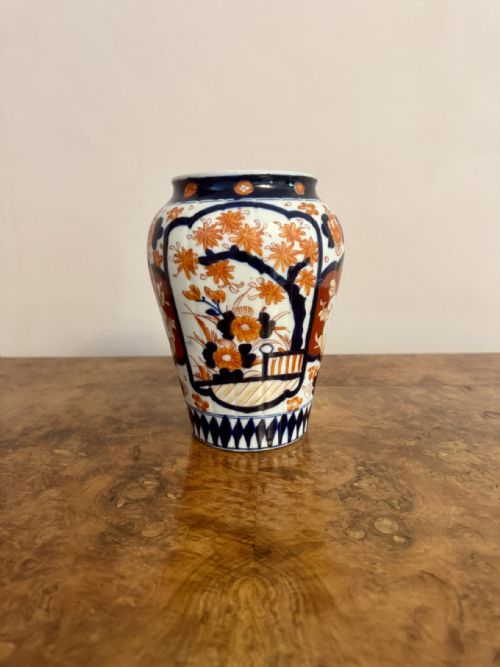
The most common examples on this page are Imari and Satsuma wares produced in various sizes, often featuring characteristic palette work, cobalt grounds, and gilded panels. Alongside these ceramic pieces, the selection includes bronze and cloisonné examples spanning the late nineteenth and early twentieth centuries.
How they were made
Potters shaped these vessels using porcelain and earthenware bodies, applying glazes and underglaze pigments before secondary firing. Many pieces received elaborate overglaze enamel decoration combined with gold leaf and gilt work.
Moriage techniques introduced raised paste details to create tactile figural and floral reliefs on the surface. Specialised workshops also employed lacquer finishes over black paint and bronze casting methods for metal vessels.
Materials represented across the inventory include porcelain, earthenware, bronze, gold leaf, and enamel.
What varies in quality
The distinction between standard and exceptional pieces rests upon the precision of the hand-painted detail and the density of the gilding. Works bearing specific workshop signatures or mon symbols demonstrate higher artistic ambition.
Scale and ambition also dictate standing, with monumental floor vases and matched pairs requiring greater technical mastery during the kiln firing process than smaller individual vessels.
Kinkozan·Seiko-en Chokei·Kinrin Workshop
The Antique Japanese Display Vases Glossary
- Imari
- A style of Japanese porcelain featuring a distinct palette of underglaze blue, iron red, and gold, named after the port from which the wares were exported.
- Satsuma
- A type of earthenware pottery with a pale, ivory-coloured cracked glaze, typically decorated with polychrome enamels and rich gilding.
- Moriage
- A ceramic technique using slip applied from a tube to build up raised decorative dots and lines on the surface.
- Kutani
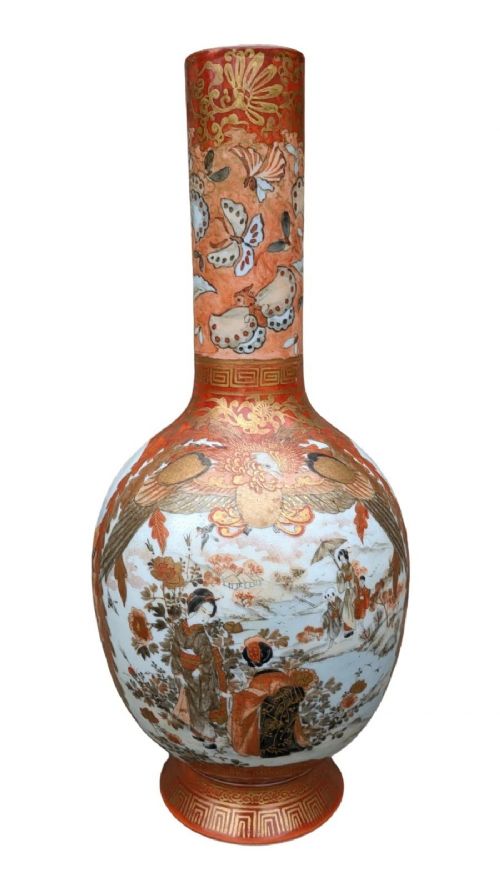
- Japanese porcelain and pottery originating from Kaga province, known for bold overglaze enamel designs often dominated by iron red and gold.
- Cloisonné
- A metalwork technique where compartments are created on a bronze or copper body using soldered wire and filled with enamel paste.
Antique Japanese Display Vases: Frequently Asked Questions
How do I identify Imari ware?
Imari wares are recognised by their characteristic blue, red, and gold colour scheme applied over porcelain bodies. They often display intricate floral and geometric patterns developed during the Edo and Meiji periods.
Many examples feature lidded forms or ginger jar shapes, utilised historically for storage and interior decoration.
What is Satsuma pottery?
Satsuma pottery consists of earthenware pieces covered with a finely crackled cream glaze. Artisans painted these surfaces with detailed figural processions, court scenes, and landscapes.
These decorative vessels were frequently produced for export during the nineteenth century to satisfy international demand.
How should I display large vases?
Large floor-standing vases and monumental pieces require stable placement away from high-traffic areas to ensure safety. Pairing symmetrical vases on low pedestals highlights their proportions and decorative panels.
Adequate natural light helps reveal the subtle gold leaf and moriage relief work on the ceramic surface.