


Antique Italian Nightstand
An antique Italian nightstand brings centuries of regional woodworking and distinct European design directly beside the bed.
Antique Italian Nightstand
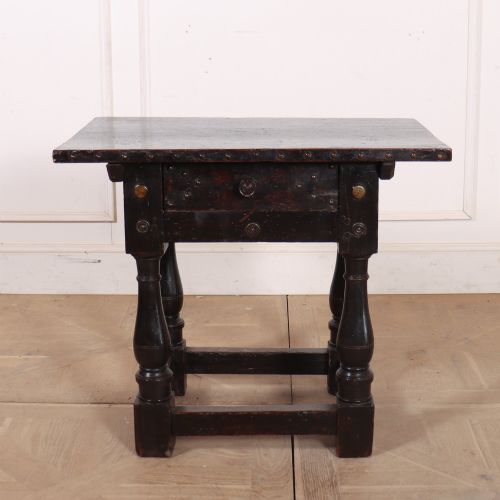
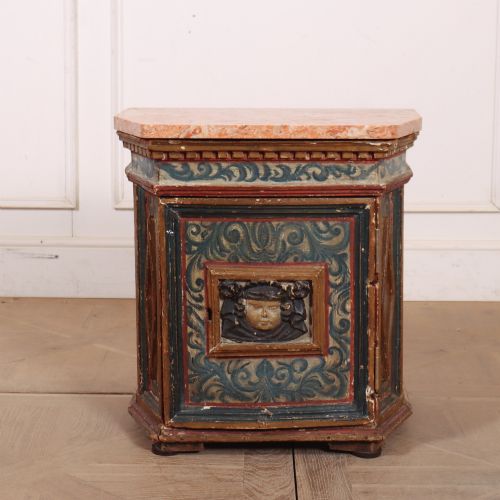
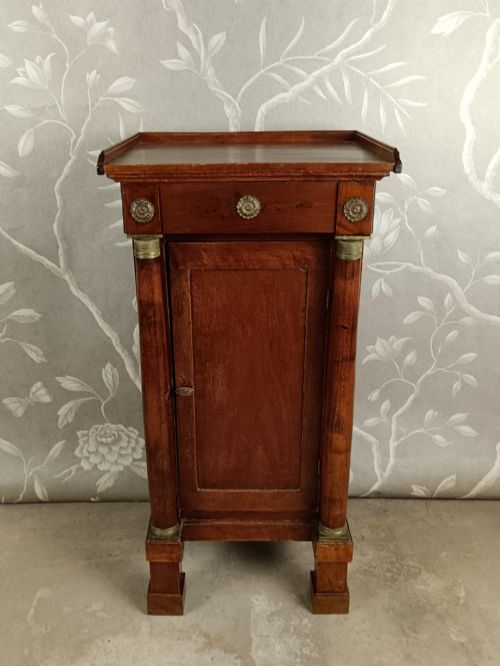
An antique Italian nightstand spans a range of bedside forms, from walnut commodes and pedestal cupboards to serpentine chests and marble-topped bedside cabinets. You will frequently encounter matched pairs originating from the eighteenth and nineteenth centuries, alongside twentieth-century Art Deco drum shapes and painted finishes.
The materials reflect traditional cabinet-making across Italian regions, pairing walnut, burr walnut, and fruitwood with marble tops and brass mounts. These bedside tables serve functional storage needs while displaying distinct stylistic lineages from Baroque and Rococo to Neoclassical and Empire.
Materials and Technique
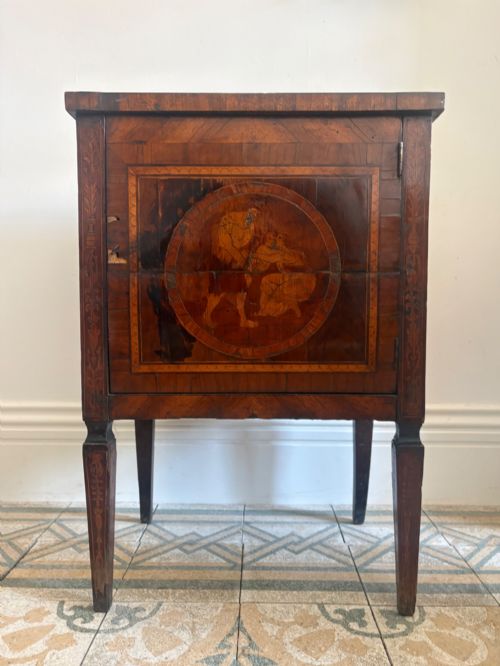
Cabinet-makers relied on solid walnut, burr walnut, and kingwood, often constructing foundational carcasses with secondary fruitwoods. Inlaid marquetry and finely figured veneers define the decorative surface work across many eighteenth and nineteenth-century examples.
Marble slabs provide durable, polished tops for numerous bedside cabinets and nightstands, while giltwood accents and painted wood finishes offer alternative surface treatments. Structural hardware typically incorporates cast brass handles and escutcheons.
Walnut and marble dominate the material palette across these eighteenth and nineteenth-century pieces.
Evaluating Quality
Quality rests in the precision of the cabinet-making, visible in the selection of burr walnut veneers and the crispness of carved details like Rococo curves or Neoclassical pilasters. Superior pieces demonstrate harmonious proportions and integration between wooden structures and fitted marble tops.
The sophistication of surface enrichment distinguishes finer examples, whether through intricate marquetry inlay, original painted decoration, or the weight and finish of cast brass hardware.
The Antique Italian Nightstand Glossary
- Commodino
- A small Italian commode or bedside chest of drawers. These miniature case pieces frequently feature marquetry inlay and marble tops.
- Bombe
- A bulging, outward-curving chest or cabinet shape popular in continental furniture design. This swelling profile requires advanced woodworking skill to construct.
- Marquetry
- The art of applying decorative veneer pieces to a structure to form geometric or pictorial designs. Craftsmen select contrasting timbers to create tonal variation.
- Giltwood
- Wood that has been coated with gold leaf or gold paint. This finish highlights carved architectural details on frames and furniture.
Antique Italian Nightstand: Frequently Asked Questions
What is an Italian commodino?
A commodino is a small bedside chest or cabinet traditional in Italian interior design. It provides compact storage for personal items beside a bed.
These pieces often feature marble tops, drawers, and intricate walnut marquetry.
Are these nightstands usually sold in pairs?
Many listings feature matching pairs of bedside cabinets and tables. This makes them suitable for placing on either side of a larger bedstead.
Singular pieces also appear, often taking the form of apothecary cabinets or pedestal cupboards.
What woods were commonly used?
Walnut is the predominant timber found across these Italian pieces, frequently utilised in both solid form and as burr walnut veneer. Fruitwood, kingwood, and beech also appear in regional constructions.
Cabinet-makers paired these woods with marble and brass.
How do I identify the period?
Stylistic cues such as exuberant Rococo curves, restrained Neoclassical symmetry, or geometric Art Deco drum shapes help determine the era. Construction methods and wood ageing further indicate whether a piece dates to the eighteenth, nineteenth, or twentieth century.